
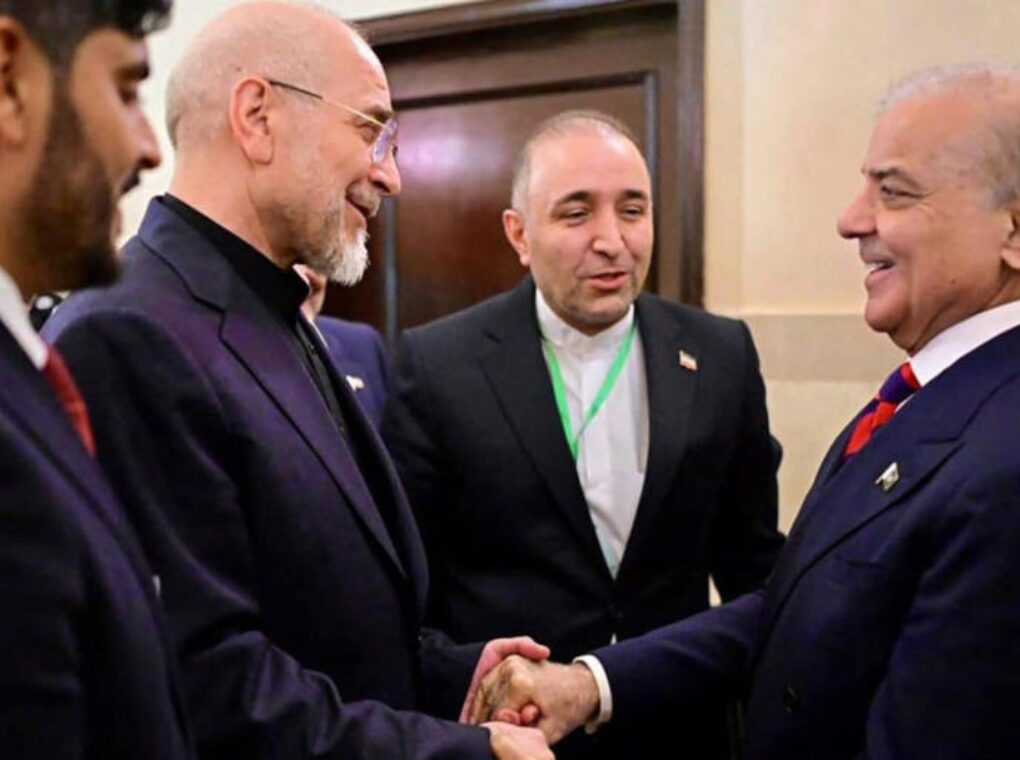
In a dramatic twist to the high-stakes negotiations between the United States and Iran, startling revelations suggest that Pakistan employed a calculated psychological strategy to prevent the collapse of critical backchannel talks in Islamabad. What appeared to the global audience as a diplomatic breakthrough now seems to have been shaped by a carefully orchestrated “mind game” involving the Saudi Arabia defence pact.
Talks on the Brink of Collapse
According to intelligence inputs cited by CNN-News18, the negotiations between Washington and Tehran had reached a breaking point by Friday afternoon. The Iranian delegation, angered by US demands for a strict “zero-enrichment” nuclear stance, was reportedly prepared to walk out of the talks being held at the Serena Hotel in Islamabad.
Such a breakdown could have triggered a fresh escalation in an already volatile Middle East, derailing fragile ceasefire understandings and worsening regional instability.
Pakistan’s Strategic Warning
At this critical juncture, Islamabad reportedly deployed a decisive tactic. Pakistani officials issued a public reminder of their mutual defence obligations with Saudi Arabia—a move seen as a deliberate signal rather than routine diplomacy.
The message was clear: under the Pakistan-Saudi defence framework, Islamabad is bound to support Riyadh in the event of a broader regional conflict. The Iranian leadership was indirectly warned that any escalation targeting Gulf states could trigger a multi-front confrontation.
This strategic communication introduced a new layer of complexity for Tehran. The implicit suggestion that it might face not just the US but also a Saudi-backed coalition—potentially supported by Pakistan—appears to have forced a recalibration in Iran’s approach.
Military Optics and Psychological Pressure
Adding weight to the warning, reports indicate that Pakistan repositioned select air assets closer to its western frontier. While analysts argue that Pakistan lacks the operational bandwidth to open a new front against Iran, the visible movement of military resources created powerful optics.
Security experts have described this as a textbook case of psychological warfare—where perception and signaling can be as influential as actual military capability. The show of readiness was enough to amplify uncertainty within Iranian decision-making circles.
Within hours of the warning, the Iranian delegation reportedly returned to the negotiating table, allowing talks with the United States to resume.
Riyadh’s Role Behind the Scenes
Sources suggest that Saudi Arabia played a crucial role in encouraging Pakistan to deploy this pressure tactic. Riyadh, concerned about regional escalation and its own security interests, is believed to have pushed Islamabad to use the defence pact as leverage.
By doing so, Saudi Arabia effectively expanded the negotiation framework, transforming the talks from a bilateral US-Iran engagement into a broader geopolitical equation involving Gulf security dynamics.
Islamabad’s Delicate Balancing Act
The episode underscores the complex position Pakistan currently occupies on the global stage. Prime Minister Shehbaz Sharif has been projecting Islamabad as a neutral mediator capable of facilitating dialogue between adversaries.
However, the involvement of Pakistan’s military establishment in leveraging strategic alliances tells a more nuanced story. The country is simultaneously navigating:
Its ties with the United States
Its long-standing strategic partnership with Saudi Arabia
It’s sensitive and often strained relationship with Iran
This multi-vector diplomacy reflects both opportunity and risk.
Long-Term Implications
While the “Saudi card” may have succeeded in salvaging the immediate round of talks, it could carry lasting consequences. Iranian officials may view Pakistan’s actions as coercive rather than neutral, potentially deepening mistrust between Islamabad and Tehran.
Moreover, the incident highlights how modern diplomacy increasingly blends negotiation with strategic signaling and psychological pressure. In an era of complex alliances and rapid escalation risks, such tactics can yield short-term gains but may complicate long-term relationships.
A Fragile Path Forward
As US-Iran negotiations continue under global scrutiny, the events in Islamabad reveal just how fragile and multidimensional modern diplomacy has become. Behind closed doors, outcomes are often shaped not just by formal dialogue but by calculated signals, alliance politics, and strategic mind games.
For Pakistan, the challenge now lies in sustaining its image as a credible mediator while managing competing geopolitical interests—without becoming a direct stakeholder in the very conflicts it seeks to defuse.