Hungary has entered a new political era as long-serving Prime Minister Viktor Orbán conceded defeat following a decisive victory by opposition leader Peter Magyar in the 2026 parliamentary elections. The result ends Orbán’s 16-year dominance and signals a potential realignment of Hungary’s domestic and foreign policies toward the European Union.
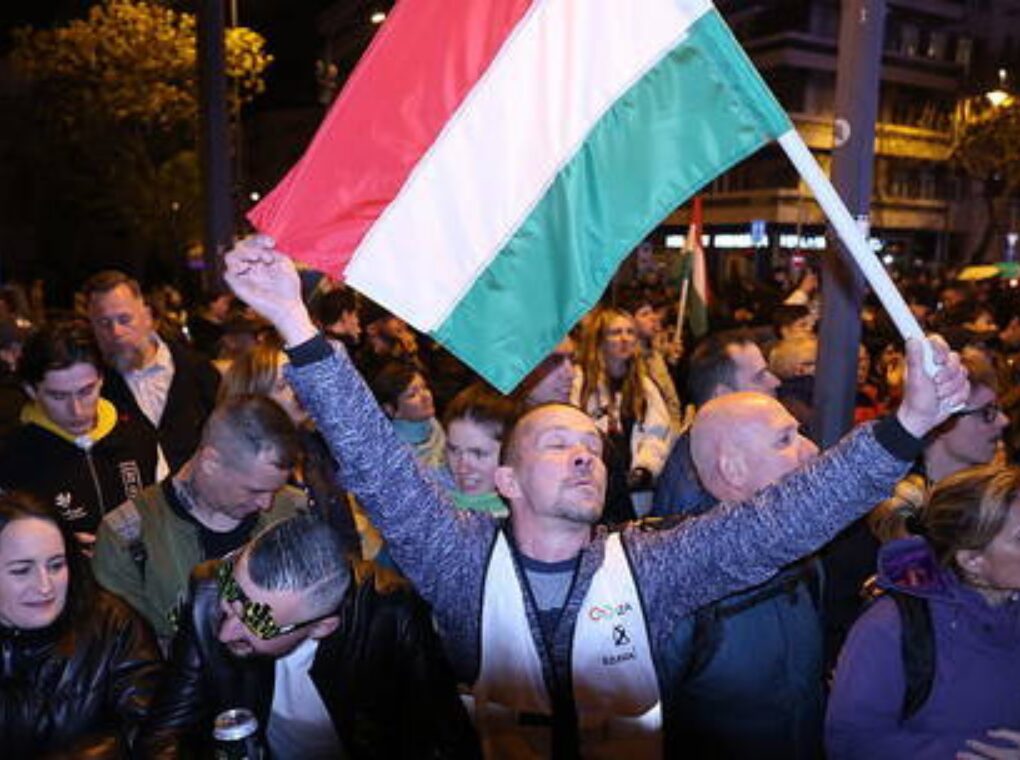
According to official results, Magyar’s Tisza party secured a commanding majority in the National Assembly, winning 138 out of 199 seats. The election saw a record turnout of nearly 78%, reflecting the high stakes of a vote that many observers describe as one of the most consequential in Hungary’s modern history.
End of an Era for Viktor Orbán
For over a decade and a half, Viktor Orbán positioned Hungary as a defiant voice within the European Union. His government resisted EU migration policies, opposed sanctions on Russia, and frequently clashed with Brussels over issues such as judicial independence and national sovereignty.
Orbán also maintained close economic ties with Moscow, arguing that affordable Russian energy was critical for Hungary’s economy. His administration repeatedly vetoed or delayed EU initiatives, including financial aid packages for Ukraine, placing Hungary at odds with much of the bloc.
Despite the electoral defeat, Orbán acknowledged the outcome and congratulated Peter Magyar, stating that he would continue to serve Hungary from the opposition benches. Political analysts note that Orbán’s influence—particularly among conservative and rural voters—remains significant.
Peter Magyar’s Rise and Reform Agenda
Peter Magyar emerged as a formidable challenger during the campaign, focusing on anti-corruption measures, improved public services, and restoring Hungary’s relationship with the EU. His rapid political ascent has drawn both support and scrutiny, with critics questioning the speed and scale of his rise.
Magyar has pledged to unlock billions of euros in EU funds currently withheld from Hungary due to rule-of-law concerns. He is also expected to align Budapest more closely with EU policies, particularly on Ukraine and sanctions against Russia.
However, Magyar has indicated that he does not support direct military aid to Ukraine and remains cautious about fast-tracking the country’s EU membership—positions that suggest a more nuanced approach than some of his supporters may expect.
Implications for EU and Ukraine Policy
The change in leadership could have immediate geopolitical consequences. Under Orbán, Hungary was a key obstacle to EU consensus on financial and military support for Ukraine. With Magyar in power, that resistance may diminish.
Ukrainian President Volodymyr Zelenskyy stands to benefit if Hungary lifts its veto on a proposed €90 billion EU loan package aimed at supporting Kyiv. Additionally, Hungary may now support broader EU sanctions against Russia, marking a significant policy shift.
European Commission President Ursula von der Leyen is also expected to welcome Hungary’s renewed alignment with EU priorities, potentially accelerating the release of frozen funds.
Debate Over External Influence
The election outcome has sparked debate beyond Hungary’s borders. Billionaire investor George Soros—long criticized by Orbán—has once again become a focal point in political discourse.
Tech entrepreneur Elon Musk commented on social media that a “Soros organization” had effectively taken control of Hungary, a statement that has fueled controversy and divided opinion internationally.
While there is no concrete evidence that Soros directly influenced the election outcome, Orbán’s supporters argue that the ideological alignment between Magyar’s policies and pro-EU liberal frameworks reflects broader global trends.
Energy and Economic Challenges Ahead
One of the most pressing challenges for the new government will be Hungary’s energy policy. The country relies heavily on Russian oil and gas, with long-term contracts extending into the next decade.
Although Magyar has expressed a desire to reduce this dependency, analysts warn that any rapid shift could have economic consequences. Balancing EU expectations with domestic economic stability will be a key test for the new administration.
A Nation at a Crossroads
Hungary now faces a decisive moment as it transitions from Orbán’s nationalist and independent approach to a potentially more EU-aligned framework under Peter Magyar.
For supporters of Orbán, the election represents a loss of sovereignty and a move toward external influence. For others, it marks an opportunity to reintegrate Hungary into the European mainstream.
As Peter Magyar prepares to take office, the broader implications of this political shift will unfold in the months ahead. What remains certain is that Hungary’s role within Europe—and its relationship with global powers—has entered a new and uncertain phase.