
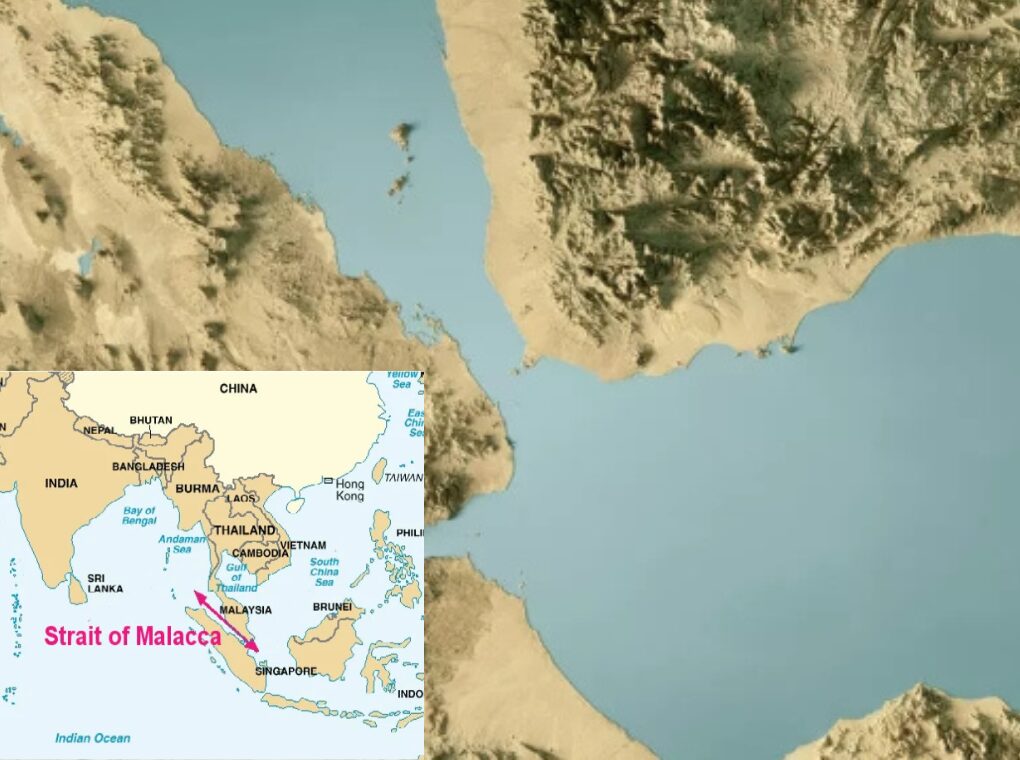
In a decisive move to bolster regional resilience against geopolitical disruptions, Thailand’s government has announced plans to fast-track its long-discussed Landbridge project. The initiative aims to create an overland link between the Indian and Pacific Oceans, offering a vital alternative to congested and vulnerable maritime chokepoints like the Strait of Malacca — and now the crisis-hit Strait of Hormuz.
Deputy Prime Minister Phiphat Ratchakitprakarn, who oversees the transport ministry, announced on April 20, emphasizing that recent tensions in the Middle East underscore the strategic importance of diversified transport routes. “The Middle East conflict has demonstrated the advantage of controlling a transport route,” Phiphat told reporters, directly linking the Hormuz disruptions to the urgency of the Landbridge initiative.
About the Landbridge Project
The Thailand Landbridge, also known as the Southern Economic Corridor (SEC) component, involves constructing two state-of-the-art deep-sea ports connected by modern infrastructure across Thailand’s narrow southern peninsula. One port will be built in Ranong province on the Andaman Sea (Indian Ocean side), and the other in Chumphon province on the Gulf of Thailand (Pacific side).
These ports will be linked by an approximately 90-kilometer network of highways and double-track railways, enabling efficient cargo transfer without requiring vessels to navigate the full length of the Strait of Malacca. The project also envisions supporting infrastructure, including potential pipelines and special economic zones, to drive industrial growth.
Proponents highlight significant efficiency gains: the route could shorten average shipping transit times by up to four days and reduce logistics costs by around 15%. At full capacity, the system targets handling up to 20 million twenty-foot equivalent units (TEUs) annually, positioning Thailand as a major transshipment hub in Southeast Asia.
The total estimated investment has been scaled to approximately 990 billion baht (around $31 billion), down slightly from earlier projections of 1 trillion baht to better align with current market conditions. The project is structured in phases, with Phase 1/1 focusing on initial port and connectivity development, aiming for operations by 2030–2031. Subsequent phases would expand capacity through 2053.
Hormuz Crisis as a Wake-Up Call
The timing of Thailand’s acceleration is no coincidence. The ongoing Strait of Hormuz crisis — triggered by escalating conflict involving Iran — has severely disrupted global energy flows. The strait, through which roughly 20-30% of the world’s oil and significant LNG volumes pass, has faced closures or severe restrictions, leading to shortages and price spikes across Asia.
Thailand, heavily reliant on Middle Eastern crude oil and fertilizer imports routed via Hormuz and then the Malacca Strait, has been among the hardest-hit nations in the region. The government has scrambled to secure emergency supplies, with the Foreign Minister engaging in diplomatic efforts in Oman and other channels. Fuel reserves have been strained, prompting price caps, conservation measures, and concerns over broader economic impacts, including potential GDP slowdowns.
This vulnerability has spotlighted the risks of over-dependence on narrow sea lanes controlled by geopolitical flashpoints. By creating a multimodal land corridor, Thailand seeks to enhance supply chain resilience, reduce exposure to such disruptions, and offer shippers a competitive shortcut for goods moving between the Middle East, South Asia, and East Asia.
The Malacca Strait currently handles about 40% of global trade, including vast energy shipments to China, Japan, South Korea, and Southeast Asia. Congestion, piracy risks in the past, and now the cascading effects from Hormuz have made alternatives more attractive than ever.
Economic and Strategic Benefits
Beyond crisis response, the Landbridge promises substantial long-term gains. Government estimates suggest it could generate up to 200,000–280,000 jobs during construction and operation phases. It is expected to boost GDP growth through expanded exports, attract foreign direct investment, and stimulate development in southern provinces, which have historically lagged behind Bangkok and the eastern seaboard.
The project aligns with Thailand’s broader ambition to evolve from a manufacturing base into a regional logistics and economic powerhouse. Special economic zones along the corridor could draw industries in automotive, electronics, petrochemicals, and agribusiness.
Analysts note potential synergies with initiatives like China’s Belt and Road, BIMSTEC connectivity plans, and links to ports in Bangladesh (Chattogram), India (Chennai), and Sri Lanka (Colombo). This could open new trade corridors for landlocked neighbors and enhance Thailand’s role in global value chains.
Challenges and Path Forward
Despite the momentum, the Landbridge faces hurdles. Environmental impact assessments (EIA/EHIA) remain critical, with local communities and conservation groups raising concerns over biodiversity in Ranong and Chumphon, mangrove ecosystems, and potential disruption to fisheries and tourism.
Financing the mega-project will require robust public-private partnerships (PPPs). The government has expressed confidence in attracting both domestic and international investors, with interest already noted from various quarters. Earlier pitches targeted partners from the US, Japan, China, and the Gulf states.
Competition is another factor: established hubs like Singapore’s ports and emerging alternatives could challenge viability if cargo volumes don’t materialize quickly. The multimodal nature — involving unloading, overland transfer, and reloading — demands seamless operations, advanced logistics technology, and efficient customs processes to minimize delays.
The current administration under Prime Minister Anutin Charnvirakul (Bhumjaithai-led) has signaled a strong commitment, viewing the project as a flagship for southern development. Preparatory studies, tender processes, and potential special legislation to accelerate approvals are underway, building on previous feasibility work that began decades ago (with roots in the old Kra Canal concept, though the Landbridge is a rail-road-port hybrid rather than a full canal).
Regional and Global Implications
Thailand’s push reflects a wider trend in Asia: rethinking supply chain vulnerabilities exposed by events like the Red Sea disruptions, US-China tensions, and now the Hormuz crisis. Countries are investing in infrastructure redundancy to safeguard energy security and trade flows.
If successful, the Landbridge could reshape maritime economics in the region, offering a cost-effective option for certain cargo types (containers, bulk goods, and potentially energy products). It may also ease pressure on the Malacca Strait, benefiting overall regional trade efficiency.
As global oil prices remain volatile and shipping insurance premiums rise amid uncertainties, the project’s strategic value only grows. Thailand is positioning itself not just as a passive participant in global trade but as an active architect of more resilient routes.
The coming months will be pivotal, with detailed bidding timelines, investor roadshows, and updated environmental studies expected. For Thailand, the Landbridge represents more than infrastructure — it is a bet on long-term strategic autonomy and economic transformation in an increasingly uncertain world.