China has openly confirmed for the first time that it provided direct technical support to Pakistan’s Air Force during last year’s military confrontation with India, exposing the deepening military nexus between Beijing and Islamabad against New Delhi.
The revelation has sparked serious strategic concerns in India, especially after Chinese state media claimed that a Chinese-made fighter jet operated by Pakistan successfully shot down at least one Indian Rafale fighter during the four-day conflict in Kashmir during Operation Sindoor in May 2025.
According to reports aired by Chinese state broadcaster CCTV, engineers from China’s aviation giant AVIC were stationed in Pakistan during the conflict to provide on-ground operational and technical support for Pakistan’s Chinese-origin fighter fleet.
The admission effectively confirms what Indian strategic experts had long suspected — that China was not merely an arms supplier to Pakistan, but an active military enabler during the conflict.
China’s Direct Role in Pakistan’s War Effort
During the televised interview, Chinese engineer Zhang Heng from the Chengdu Aircraft Design and Research Institute revealed that he and his team were present at a Pakistani support base during the war.
He described hearing fighter jets constantly taking off alongside air-raid sirens while operating under extreme weather conditions approaching 50 degrees Celsius.
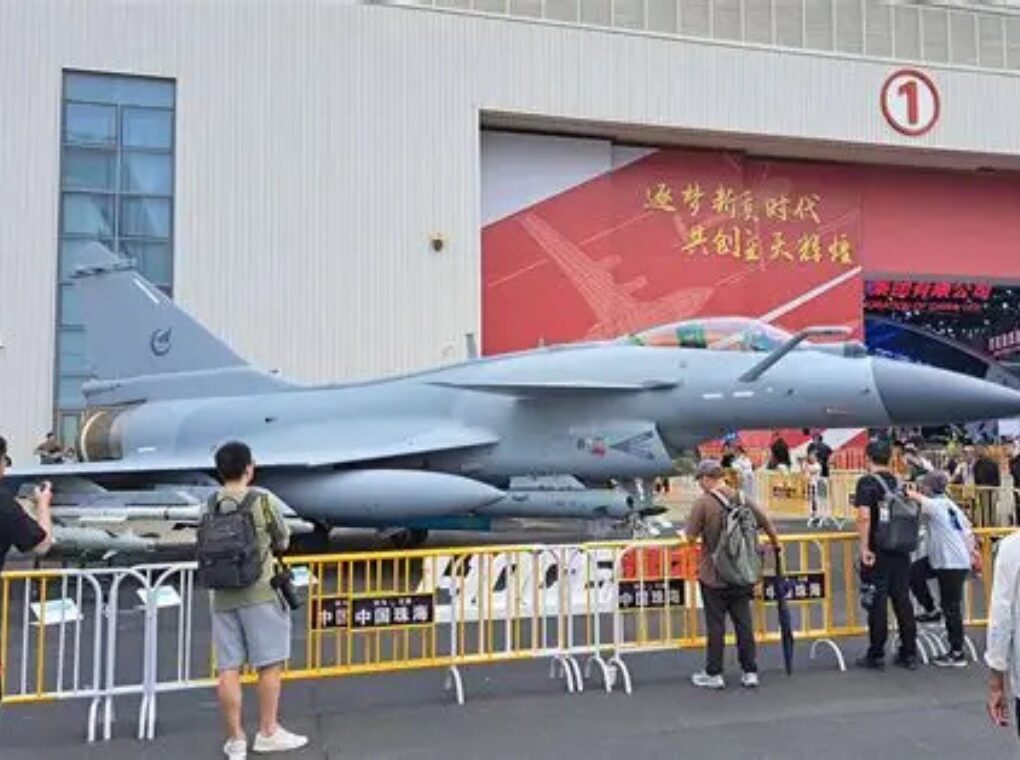
Zhang openly admitted that his team worked tirelessly to ensure that Pakistan’s Chinese-made J-10CE fighter jets performed at their “full combat potential” against India.
His comments are being viewed in India as indirect proof that China was deeply embedded in Pakistan’s military operations during the conflict.
Another Chinese engineer, Xu Da, compared the J-10CE fighter to a “child” nurtured by China before being handed over to Pakistan, further underscoring Beijing’s emotional and strategic investment in strengthening Pakistan’s military capabilities against India.
Rafale Claim Raises Strategic Questions
Chinese media also reiterated Pakistan’s claim that a J-10CE fighter jet armed with Chinese systems downed at least one Indian Rafale fighter aircraft during the conflict.
While India has not officially confirmed such losses, the propaganda push by Chinese state media clearly signals Beijing’s attempt to market its military technology globally using Pakistan as a testing ground against India.
The Rafale, manufactured by France’s Dassault Aviation, is considered among the world’s most advanced multirole fighters. Any successful engagement involving a Chinese-origin aircraft would carry enormous geopolitical and defense industry implications.
Military analysts believe China is using the India-Pakistan rivalry to showcase its growing defense technology capabilities while simultaneously strengthening Pakistan as a counterweight to India in South Asia.
Pakistan Becoming China’s Military Proxy?
Pakistan today remains overwhelmingly dependent on Chinese military hardware.
According to the Stockholm International Peace Research Institute (SIPRI)
Nearly 80 percent of Pakistan’s arms imports between 2021 and 2025 came from China.
Pakistan operates:
- Chinese-made J-10CE fighter jets
- Jointly developed JF-17 Thunder fighters
- Chinese drones and missile systems
- Chinese naval assets and air defense technology
The J-10CE itself is an export version of China’s advanced 4.5-generation J-10C fighter, equipped with AESA radar systems and capable of firing long-range PL-15 air-to-air missiles.
India’s security establishment increasingly sees Pakistan’s military modernization not as an independent development, but as an extension of China’s strategic ambitions in the region.
Experts warn that Beijing is effectively transforming Pakistan into a frontline military proxy designed to keep India militarily occupied on its western border while China pressures India from the north along the Line of Actual Control (LAC).
Anti-India Axis Growing Stronger
The latest disclosure comes amid already strained India-China relations following the deadly Galwan Valley clash in 2020 and repeated military standoffs along the Himalayan frontier.
For India, China’s open involvement in Pakistan’s wartime operations confirms fears of a coordinated “two-front challenge” involving both nuclear-armed neighbors.
Indian defense analysts argue that China’s support goes far beyond economics or diplomacy. It now appears to include operational military coordination, technology transfer, battlefield assistance, and strategic integration.
The revelation is likely to further harden Indian public opinion against both China and Pakistan.
Many in India see China’s actions as hypocritical — publicly calling for regional peace while simultaneously empowering Pakistan militarily behind the scenes.
India Accelerating Military Preparedness
In response to growing China-Pakistan military cooperation, India has significantly accelerated defense modernization efforts.
India is expanding:
- Indigenous fighter jet programs like Tejas Mk-2
- Advanced missile defense systems
- Domestic drone warfare capability
- Naval expansion in the Indian Ocean
- Strategic partnerships with the United States, France, Japan, and Australia through the Quad framework
New Delhi has also increased focus on self-reliance under the “Atmanirbhar Bharat” defense initiative to reduce dependence on foreign weapons systems.
Indian strategists now believe future conflicts may involve not just Pakistan alone, but integrated Chinese support operating behind the scenes.
A Wake-Up Call For India
China’s admission marks a major geopolitical moment in South Asia.
For years, Beijing attempted to maintain plausible deniability regarding its operational role in supporting Pakistan during regional crises. That ambiguity has now disappeared.
The message emerging from Chinese state media is clear: Beijing sees Pakistan as a strategic military partner against India.
For India, this serves as yet another warning that the regional security environment is rapidly evolving into a more dangerous and coordinated challenge involving both China and Pakistan.
As tensions continue to rise across Asia, India’s military preparedness, strategic alliances, and indigenous defense capabilities may become more critical than ever before.