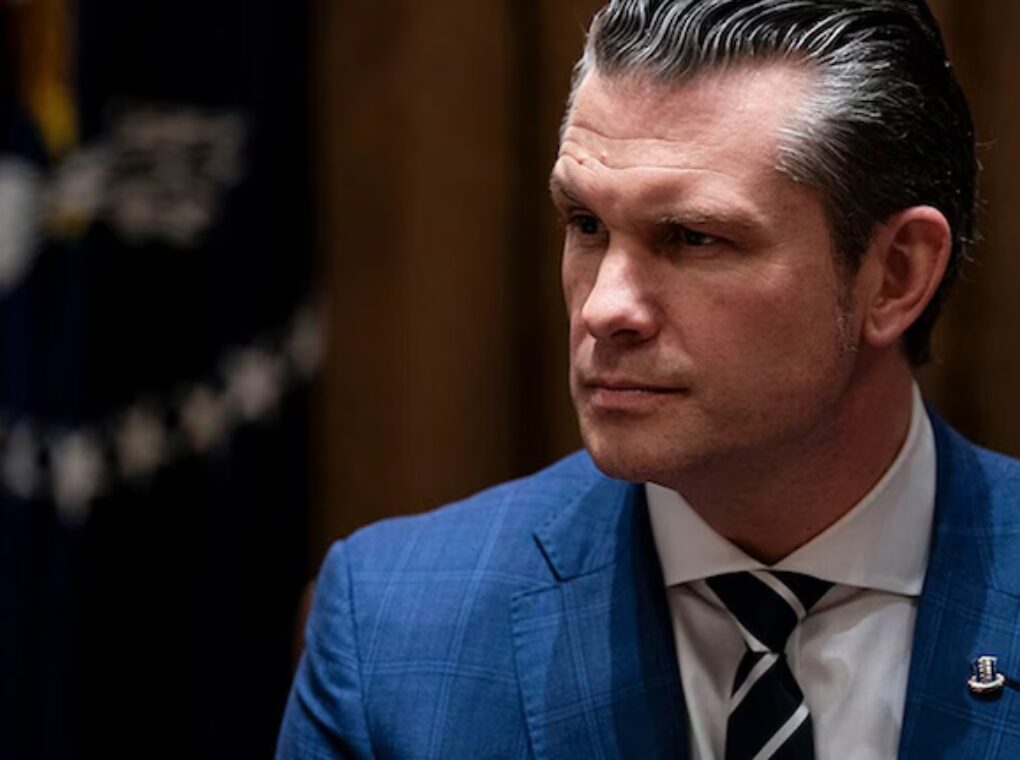
US Defense Secretary Pete Hegseth on Saturday issued a sharp warning over China’s rapidly expanding military capabilities, saying there is a “rightful alarm” spreading across the Indo-Pacific region regarding Beijing’s historic military build-up.
Speaking at the prestigious Shangri-La Dialogue in Singapore, Asia’s premier defense summit, Hegseth emphasized that the United States seeks regional stability and balance, while cautioning against what Washington views as China’s growing military assertiveness.
His remarks come amid increasing geopolitical tensions in the Indo-Pacific and fresh reports suggesting China is significantly strengthening its nuclear infrastructure.
Pete Hegseth Raises Concerns Over China’s Military Expansion
Addressing defense ministers, military officials, and strategic experts from nearly 45 countries, Hegseth said nations across Asia have legitimate reasons to be concerned about China’s expanding military footprint.
> “When we look across the region today, there is rightful alarm regarding China’s historic military build-up and the expansion of its military activities in the region and beyond,” Hegseth said during his keynote address.
However, the Pentagon chief stressed that Washington is not looking for unnecessary conflict with Beijing.
> “The United States does not seek needless confrontation in the region,” he said, adding that America’s objective is to preserve peace and regional stability.
Hegseth outlined the Trump administration’s vision for Asia, saying the US wants a **“genuinely stable equilibrium” where no single nation dominates the region militarily or economically.
According to him, the US is seeking a “durable balance of power” in which **“no state, including China, can impose its hegemony” or threaten the prosperity and security of America and its allies.
Shangri-La Dialogue Becomes Stage for Strategic Messaging
The annual Shangri-La Dialogue in Singapore has increasingly become a key venue where major global powers outline their strategic priorities for the Indo-Pacific.
This year’s summit comes at a time of heightened tensions involving Taiwan, maritime disputes in the South China Sea, and growing competition between Washington and Beijing over military and technological supremacy.
China’s military modernization under President Xi Jinping has become one of the defining geopolitical issues of the decade, drawing close scrutiny from Western governments and defense analysts.
Reuters Report Reveals Major Chinese Nuclear Infrastructure Expansion
Hegseth’s warning follows a recent Reuters investigation revealing that China is building a massive network of military infrastructure near its nuclear missile silo regions.
According to satellite imagery reviewed by security experts, Beijing has reportedly developed **more than 80 launch pads**, alongside hardened bunkers, communication nodes, and facilities potentially linked to electronic warfare and satellite operations.
Analysts believe these sites may support China’s expanding fleet of **mobile missile launchers**, long-range strategic weapons, and advanced air-defense systems.
The report indicates the scale of construction points to a significant modernization effort aimed at strengthening the survivability of China’s land-based nuclear arsenal.
Security experts say the infrastructure appears designed to enhance Beijing’s **second-strike capability** — the ability to retaliate with nuclear force even after sustaining an enemy nuclear attack.
Such a capability is considered crucial for nuclear deterrence and strategic stability.
Rising US-China Tensions Over Taiwan and Military Competition
The latest developments are expected to intensify already strained relations between the United States and China, particularly over the status of Taiwan.
Washington has repeatedly expressed concerns about China’s military pressure on Taiwan, while Beijing insists the self-governed island remains part of its territory and has not ruled out the use of force to achieve reunification.
US officials and several allied nations in the Indo-Pacific have also raised alarms over China’s expanding naval presence, military exercises, and strategic ambitions in disputed waters.
At the same time, American officials argue that Beijing has failed to provide adequate transparency regarding its nuclear modernization program.
Foreign diplomats and strategic analysts have frequently criticized China for not engaging meaningfully with international efforts aimed at clarifying its long-term nuclear intentions.
What Pete Hegseth’s Warning Means for Asia
Hegseth’s comments signal that the Trump administration is likely to maintain a firm strategic posture toward China while attempting to avoid direct military confrontation.
The Pentagon chief’s message underscores growing US concerns that China’s military advancements could alter the balance of power in Asia.
For countries across the Indo-Pacific, including allies such as Japan, South Korea, Australia, and the Philippines, the challenge remains balancing economic ties with China while navigating rising security concerns.
As geopolitical competition deepens, Asia increasingly finds itself at the center of a high-stakes power struggle between the world’s two largest economies — one that could shape global security for decades to come.