
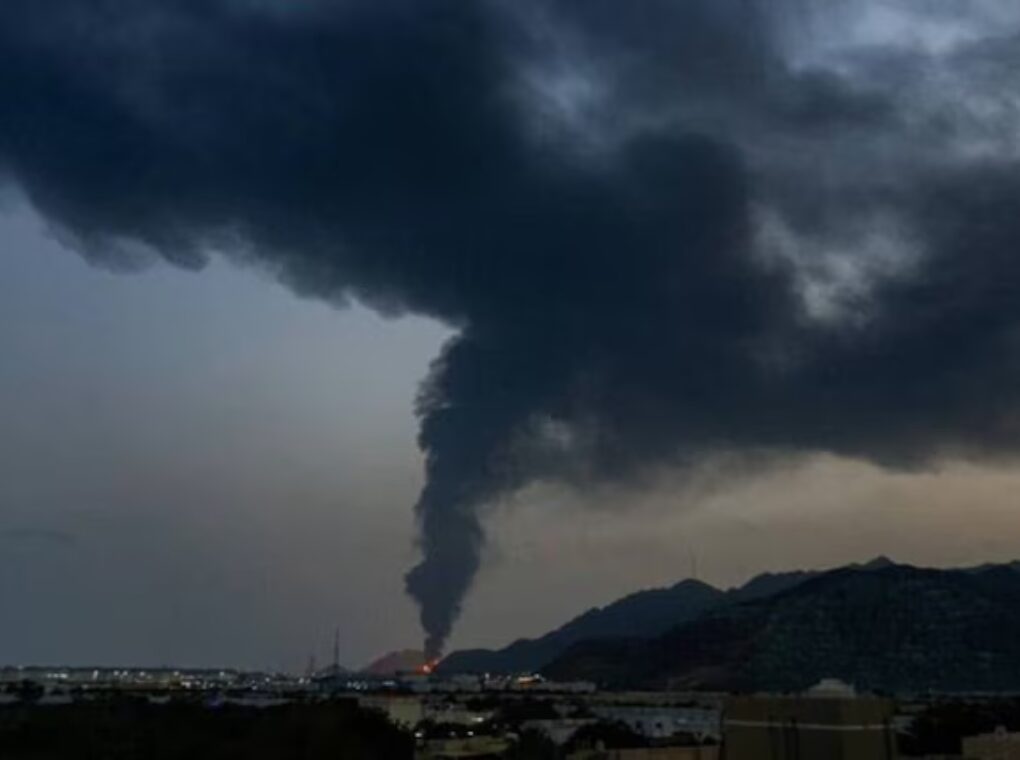
Iran’s missile and drone assault on a key US naval base in Bahrain has emerged as one of the most significant flashpoints in the ongoing conflict, even as Washington and Tehran continue diplomatic efforts to prevent a wider war.
The attack on the strategically vital Naval Support Activity Bahrain, home to the United States Fifth Fleet, has raised serious questions about the vulnerability of American military infrastructure in the Middle East.
Iran Strikes US Fifth Fleet Base in Bahrain
According to reports, Iran launched multiple waves of missiles and drones at the Bahrain-based facility between late February and June. While US air defence systems intercepted the majority of incoming threats, several missiles reportedly penetrated the shield and struck critical infrastructure.
A report by the The Wall Street Journal claimed the strikes damaged the base’s main command headquarters, over a dozen auxiliary buildings, and two key satellite communication systems. However, the Pentagon has not officially disclosed the full extent of the destruction.
Despite the attack, US officials confirmed there were no casualties at the Bahrain base, as military personnel had been relocated in advance amid escalating threats.
US Admits Focus Was on Saving Lives, Not Infrastructure
A spokesperson for United States Central Command, Captain Tim Hawkins, said the military’s priority during the attacks was to protect lives rather than physical assets.
Hawkins revealed that Iran launched more than 8,000 missiles and drones during the broader conflict, but only two attacks resulted in US fatalities.
He also claimed the US inflicted far heavier losses on Iran, striking over 13,500 military targets inside the country.
Cheap Iranian Drones Expose Costly Weakness in US Defense
Military analysts say the Bahrain attack has shocked Washington because it exposed how relatively cheap Iranian drones and missiles could successfully damage one of America’s most fortified overseas bases.
The incident highlights a growing concern for US defence planners: advanced, expensive missile defence systems can still be overwhelmed by large volumes of low-cost drones and ballistic missiles.
The attack is now forcing the Pentagon to reconsider its strategy of maintaining large, permanent military hubs near Iran. Instead, US officials are reportedly exploring a more dispersed force posture across multiple regional bases.
US Launches Retaliatory Strikes on Iran
In a major escalation, the US has resumed airstrikes inside Iran for the first time since a preliminary peace agreement was signed on June 17.
CENTCOM said American warplanes targeted Iranian missile sites, drone storage facilities and radar systems after a drone attack on the Singaporean-flagged cargo vessel M/V Ever Lovely in the Strait of Hormuz.
US President Donald Trump accused Tehran of violating the ceasefire, calling the attack a “foolish violation.”
Iranian media reported explosions on Sirik Island, where US projectiles allegedly struck a telecommunications tower.
Strait of Hormuz Becomes New Flashpoint
The renewed hostilities come amid sharp disagreements over control and administration of the Strait of Hormuz — one of the world’s most crucial oil shipping lanes.
Iran insists that only Tehran and Oman can determine maritime governance in the strait, while Washington maintains that it remains an international waterway.
Iranian Deputy Foreign Minister Kazem Gharibabadi warned that safe passage through Hormuz cannot be guaranteed under “ambiguous arrangements” that sideline Iran’s role.
What’s Next?
The latest military exchange threatens to derail fragile peace talks and could further destabilize the Gulf region. With both sides now accusing each other of violating the ceasefire, fears are rising that the conflict may enter a new and more dangerous phase.
The damage to Bahrain’s naval base and the battle over the Strait of Hormuz underline one reality: despite diplomacy, the US-Iran confrontation remains far from over.