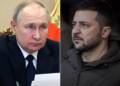
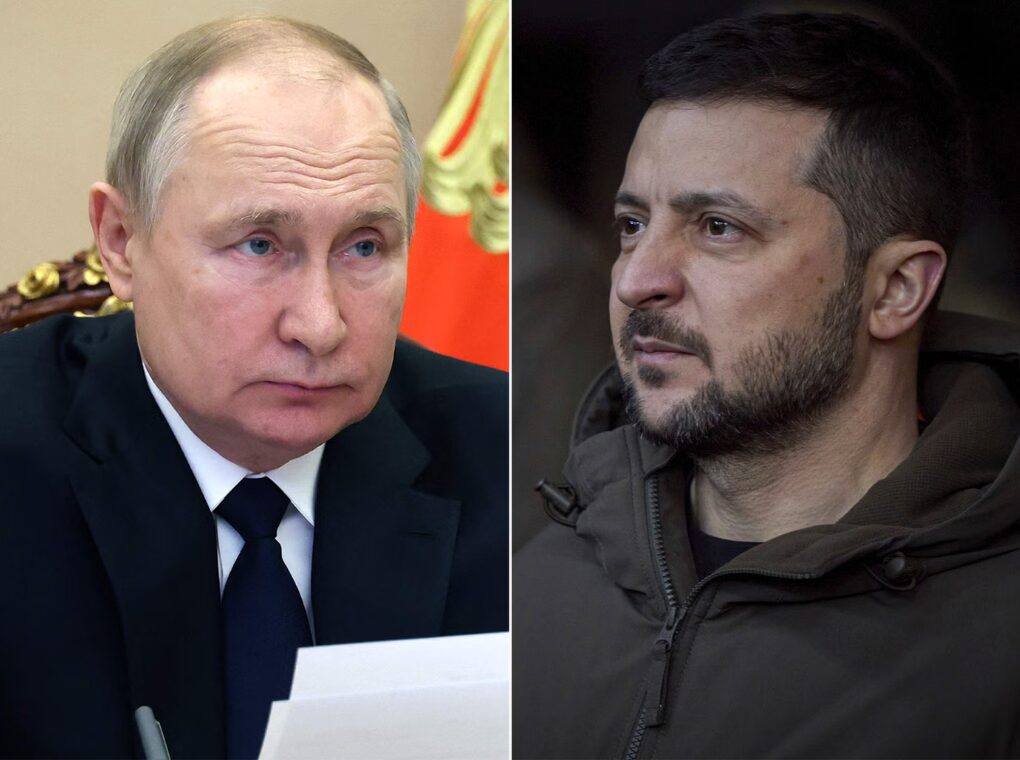
As the war between Russia and Ukraine grinds into its fifth year, fresh signals from Moscow and Kyiv reveal a widening gap over how — and when — meaningful peace talks could take place. While diplomatic channels remain open, the prospects of a direct summit between Vladimir Putin and Volodymyr Zelenskyy continue to face significant hurdles.
Kremlin Sets Preconditions for Leader-Level Talks
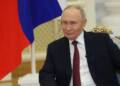
The Kremlin has made it clear that a face-to-face meeting between the two presidents will only occur once substantial progress has already been achieved through lower-level negotiations. Kremlin spokesperson Dmitry Peskov emphasized that Putin would not engage in preliminary discussions or exploratory diplomacy.
According to Peskov, the Russian president’s role in any future summit would be limited to formalizing agreements already reached by negotiators. “The main thing is that there should be a reason to meet, and the main thing is that the meeting should be productive,” he said, underscoring Moscow’s insistence on concrete outcomes before any high-profile engagement.
This stance reflects a broader Russian strategy aimed at maintaining leverage on the battlefield while controlling the diplomatic narrative. By setting strict preconditions, Moscow seeks to avoid negotiations that could be perceived as concessions or signs of weakness.
Ukraine Pushes for Immediate Dialogue
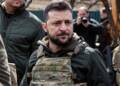
In contrast, Ukraine continues to advocate for direct, high-level talks as a way to inject urgency into stalled diplomatic efforts. President Zelenskyy has repeatedly expressed his willingness to engage in negotiations “at any moment and in any format,” signaling Kyiv’s openness to dialogue despite ongoing hostilities.
Ukraine’s leadership sees a direct meeting between the two presidents as a potential breakthrough moment. Kyiv’s top diplomat has described such a summit as critical to reviving international mediation efforts, particularly those led by the United States.
At the same time, Ukraine has drawn clear red lines. Any agreement, officials insist, must fully respect Ukraine’s sovereignty and territorial integrity — a position that directly conflicts with Russia’s claims over occupied regions.
Territorial Disputes Remain Central
One of the biggest obstacles to progress remains the status of four Ukrainian regions that Russia claims to have annexed but does not fully control. Moscow insists that any negotiations must acknowledge what it describes as “historical realities,” while Kyiv rejects any compromise on its internationally recognized borders.
This fundamental disagreement has stalled previous rounds of talks and continues to complicate efforts to find common ground. Without a shift in either side’s position, analysts believe that meaningful progress will remain elusive.
Role of International Mediators
Efforts to broker peace have largely been driven by the United States, though recent geopolitical developments — including Washington’s growing focus on tensions involving Iran — have slowed momentum. Despite this, U.S. envoys are reportedly planning to travel to Russia for discussions with Putin, indicating that backchannel diplomacy is still ongoing.
Meanwhile, Ukraine has actively sought international support to facilitate high-level talks. Kyiv has approached countries like Turkey as potential hosts for a summit and has expressed willingness to meet in any neutral location, explicitly excluding Russia and Belarus.
Ukrainian Foreign Minister Andrii Sybiha reiterated the need for immediate action, stating that a leaders’ summit could “bring new momentum to diplomacy.”
Limited Progress Despite Ongoing Contacts
Behind the scenes, communication between the involved parties continues. Kyrylo Budanov, a key figure in Ukraine’s negotiation efforts, confirmed that contacts involving Ukraine, Russia, and the United States are ongoing. However, he acknowledged that these discussions have yet to yield any concrete decisions.
The lack of progress highlights the deep mistrust between the two sides, as well as the complexity of the issues at stake. Military developments on the ground further influence negotiating positions, making compromise even more difficult.
Ceasefire Proposal Adds Another Layer
An additional point of contention is a proposed unconditional ceasefire backed by former U.S. President Donald Trump. While Zelenskyy has agreed to the proposal, Putin has rejected it, further underscoring the divide between the two sides.
The rejection suggests that Russia may be unwilling to pause hostilities without guarantees that align with its strategic objectives — particularly regarding territorial control and security arrangements.
Outlook: Diplomacy Stuck in a Deadlock
With both sides holding firm to their positions, the path toward peace remains uncertain. Russia’s insistence on pre-negotiated outcomes and Ukraine’s push for immediate high-level dialogue represent fundamentally different approaches to conflict resolution.
As international attention shifts and the war continues to exact a heavy toll, the need for a breakthrough becomes increasingly urgent. However, without significant concessions or external pressure, a meeting between Putin and Zelenskyy — widely seen as a potential turning point — appears unlikely in the near future.
For now, diplomacy remains active but stalled, with both sides waiting for conditions that could finally bring them to the negotiating table.