
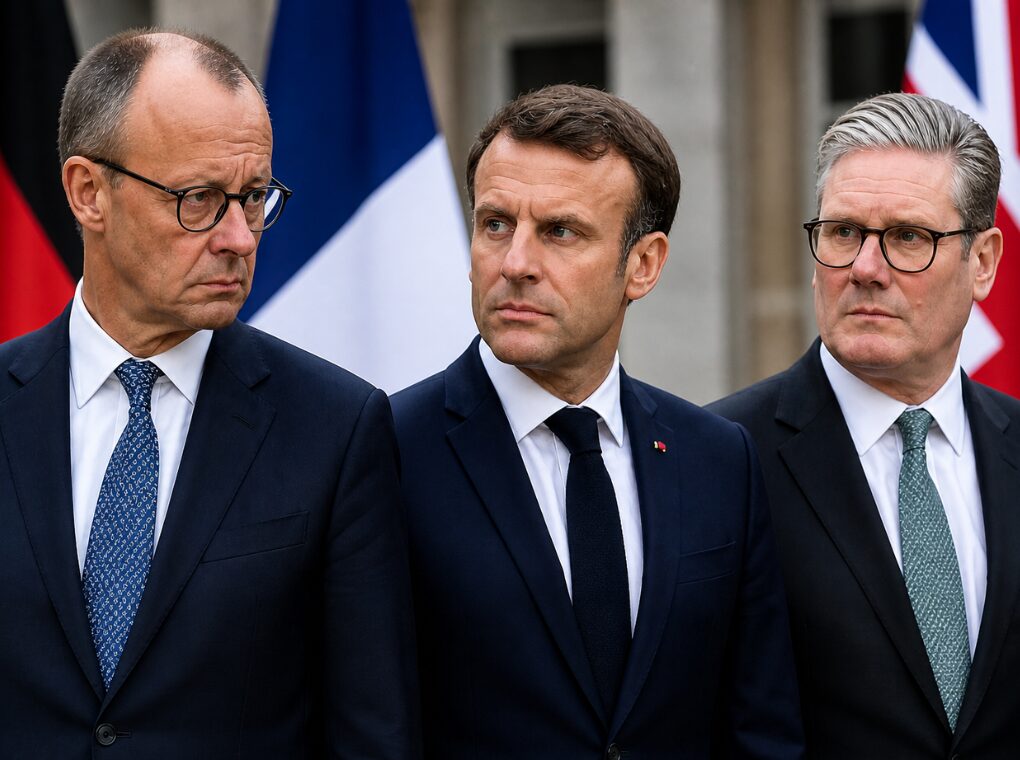
Germany’s rapid military resurgence is reshaping Europe’s strategic landscape, triggering concern in France and raising fresh questions about the continent’s long-standing balance of power. As Berlin ramps up defense spending and military capabilities at an unprecedented pace, Paris fears not just a shift in leadership—but a potential erosion of European strategic autonomy.
A Historic Shift in Europe’s Power Balance
For decades after World War II, Europe’s security architecture rested on a carefully managed equilibrium. Germany, constrained by its past, focused on economic growth, while France and the United Kingdom emerged as the continent’s primary military powers—bolstered by nuclear capabilities and permanent seats on the United Nations Security Council.
This arrangement, supported by the United States through NATO, ensured stability and helped transform former rivals into partners within the European Union framework. France, in particular, positioned itself as mainland Europe’s leading military force, leveraging its expeditionary experience and defense-industrial strength.
However, that balance is now undergoing a dramatic transformation.
Germany’s Defense Surge
In response to evolving geopolitical threats—especially Russia’s invasion of Ukraine—Germany has embarked on an ambitious rearmament program. A €100 billion special defense fund, combined with sustained increases in annual military spending, has propelled Berlin to the top of Europe’s defense hierarchy.
By 2024, Germany’s defense budget had already reached approximately €90 billion, surpassing both France and the UK. Projections suggest Berlin could spend up to $189 billion annually by 2029, targeting 3.5% of GDP—well above NATO benchmarks and significantly higher than its European peers.
This surge positions Germany as the backbone of conventional defense in Europe, a role openly endorsed by its leadership. But such rapid expansion is not without consequences.
Why is France Concerned?
France’s unease stems from multiple strategic and economic factors.
1. Loss of Military Leadership:
Paris has long viewed itself as Europe’s primary security provider. Germany’s rise challenges that status, potentially shifting leadership within both NATO and the EU toward Berlin.
2. Strategic Autonomy at Risk:
French President Emmanuel Macron has consistently advocated for “European strategic autonomy”—reducing dependence on external powers, particularly the United States. However, Germany’s procurement choices tell a different story.
Berlin has signed major deals for American military hardware, including F-35 fighter jets, CH-47 helicopters, P-8 maritime patrol aircraft, and Arrow-3 missile defense systems. For France, this reliance on U.S. systems undermines efforts to build an independent European defense ecosystem.
3. Impact on European Defense Industry:
Germany’s procurement strategy could sideline key joint European projects such as the Future Combat Air System (FCAS), Eurodrone, and the Main Ground Combat System (MGCS). These programs are vital to France’s defense industry, led by companies like Dassault Aviation, Naval Group, Thales, and Nexter.
A reduced German commitment to these initiatives could weaken Europe’s indigenous defense capabilities and diminish France’s industrial influence.
Deepening Franco-German Divisions
Tensions are already visible in ongoing joint defense projects.
FCAS (Future Combat Air System): Disputes over leadership, workshare, and technological direction have stalled progress. France insists on leading the fighter jet component, while Germany seeks a more balanced role and integration with its existing platforms.
MGCS (Main Ground Combat System): Differences over tank design reflect divergent strategic priorities—France prefers lighter, deployable systems, while Germany favors heavier, more armored platforms suited for high-intensity conflict.
Eurodrone Project: Even here, disagreements persist over design philosophy, with Germany prioritizing safety and France emphasizing combat efficiency.
These disagreements highlight a broader issue: a lack of strategic alignment between Europe’s two most influential powers.
Historical Shadows and Regional Concerns
Germany’s rearmament also revives historical sensitivities. Memories of past conflicts—particularly in countries like Poland—continue to shape perceptions of German military expansion.
Experts warn that while Germany’s strengthened defense posture is necessary for Europe’s security, it must be managed carefully to avoid destabilizing the region. The challenge lies in balancing national ambitions with collective European interests.
The Road Ahead: Cooperation or Competition?
Strategic analysts broadly agree that Germany’s rise is both inevitable and essential, given its economic strength and central geographic position. However, its growing military dominance must be accompanied by transparency, cooperation, and reassurance to its neighbors.
For Europe, the key question is whether this transformation will lead to deeper integration or increased rivalry.
A coordinated approach—focusing on joint procurement, shared technological development, and aligned strategic goals—could turn Germany’s rise into a collective advantage. Conversely, uncoordinated expansion risks fragmenting Europe’s defense landscape.
Germany’s emergence as Europe’s leading defense power marks a historic turning point. While it strengthens the continent’s ability to respond to external threats, it also introduces new internal dynamics—particularly with France.
Paris’s concerns are not merely about competition, but about the future direction of European security. As Berlin steps into a more assertive role, the success of Europe’s defense strategy will depend on whether its leading powers can move forward together—or drift apart.