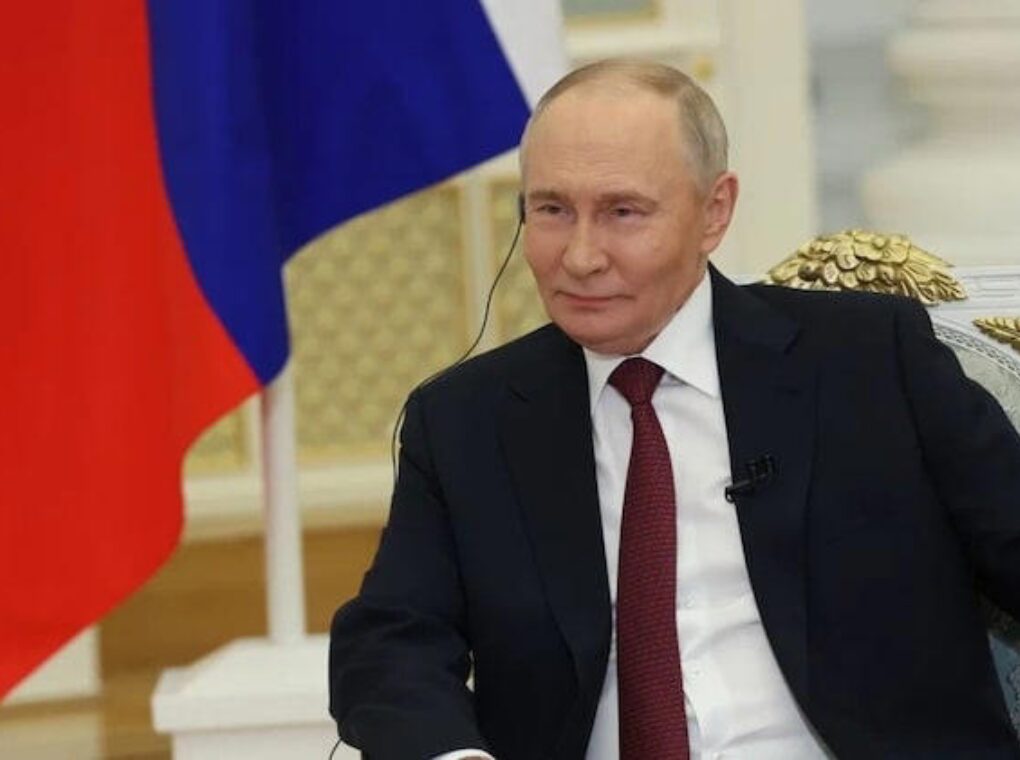
Russian President Vladimir Putin has reportedly intensified personal security measures and restricted his public movements amid growing fears within the Kremlin over possible assassination attempts linked to the ongoing Ukraine war, according to multiple international media reports citing leaked European intelligence assessments.
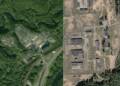
The reports suggest that Russian authorities have significantly upgraded protective protocols around the president following allegations of an attempted Ukrainian strike near one of Putin’s private residences in Russia’s Novgorod region. While the claims remain unverified, they have triggered renewed concerns over the vulnerability of Russia’s top leadership as the conflict with Ukraine enters another volatile phase.
Neither Ukrainian officials nor US intelligence agencies have confirmed claims that Putin himself was directly targeted. Kyiv has repeatedly denied involvement in alleged assassination plots against Russian leaders, while Western intelligence officials have cautioned against drawing conclusions from unverified battlefield reports.
Kremlin Expands Security Around Putin
According to the leaked intelligence assessments referenced in European media, Putin has sharply reduced visits to his residences in Moscow Oblast and Valdai in Novgorod Oblast. Security officials are reportedly reassessing travel risks and tightening access to locations frequently used by the Russian president.
Sources cited in the reports claim that the Federal Protective Service (FSO), Russia’s elite presidential security agency, has implemented expanded anti-drone defenses, increased surveillance systems, and stricter screening procedures for all personnel operating near Putin.
The Russian leader has also reportedly scaled back non-essential travel and public appearances. Access to the president has become increasingly limited, with tighter restrictions reportedly imposed even on senior officials and staff members.
Analysts say these measures reflect growing anxiety inside the Kremlin as Ukrainian long-range drone and missile capabilities continue to evolve.
Fear Grows After Attacks on Russian Officials
Security fears within Russia’s political and military establishment have reportedly intensified following a series of attacks on senior Russian figures that Moscow has blamed on Ukraine.
Among the incidents raising alarm was the death of Lieutenant General Fanil Sarvarov, who was reportedly killed in a car bomb explosion. Russian authorities have linked several such attacks to Ukrainian intelligence operations, although Kyiv has not officially acknowledged responsibility.
The Kremlin is also believed to be increasingly concerned about the psychological impact of repeated drone strikes deep inside Russian territory. Since the beginning of the conflict, Ukraine has expanded its ability to launch long-range attacks targeting military installations, energy infrastructure, and strategic facilities far from the front lines.
Experts believe these developments have contributed to an atmosphere of heightened insecurity among Russia’s ruling elite.
Internal Restrictions and Surveillance Intensify
European intelligence leaks cited in the reports claim that the FSO has imposed additional internal controls on employees working in close proximity to Putin.
These measures reportedly include enhanced background checks, monitoring of communications, tighter control over electronic devices, and broader surveillance of personnel. Security sweeps around key government buildings and strategic locations in Moscow and other regions have also been intensified.
Some reports suggest that even routine movements by Kremlin officials are now being subject to more rigorous planning and secrecy measures in an effort to reduce exposure to potential threats.
Observers note that Russia has historically maintained extensive security arrangements around its leaders, but the current level of restrictions appears significantly more severe than in previous years.
Kremlin Admits Elevated Threat Environment
Kremlin spokesperson Dmitry Peskov has acknowledged that enhanced security measures are currently in place, citing what he described as an ongoing “terrorist threat” environment connected to the Ukraine conflict.
Peskov did not directly confirm reports of a specific assassination threat against Putin but emphasized that Russian authorities are responding to the evolving nature of the war, including the increasing use of drones and long-range strike systems by Ukraine.
The Kremlin has repeatedly accused Ukraine and its Western supporters of escalating attacks inside Russian territory. Meanwhile, Ukraine argues that its operations are aimed at weakening Russia’s military capabilities and are part of its broader self-defense strategy following Moscow’s invasion.
Ukraine War Continues to Reshape Kremlin Operations
The reported tightening of security around Putin highlights the growing strain the prolonged war is placing on Russia’s political and military apparatus.
Since the conflict began in 2022, the Kremlin has faced multiple internal and external security challenges, including drone attacks on Moscow, sabotage incidents, cyber threats, and growing instability along parts of Russia’s border regions.
While many of the recent intelligence claims remain difficult to independently verify, analysts believe the situation reflects genuine concern within Russia’s leadership over the changing nature of modern warfare and the increasing reach of Ukrainian strike capabilities.
As the war continues with no immediate diplomatic breakthrough in sight, security around Russia’s leadership is likely to remain at unprecedented levels, underscoring the mounting pressure facing the Kremlin amid one of the most dangerous geopolitical crises in decades.