
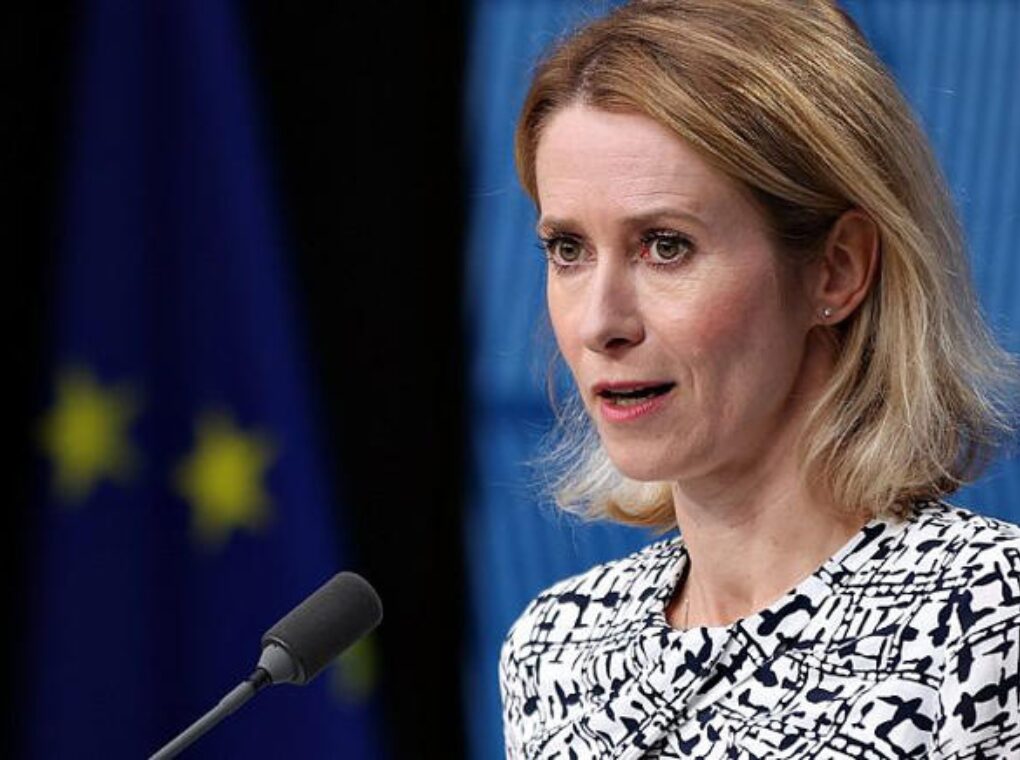
EU Foreign Policy Chief Kaja Kallas, has once again found herself at the center of controversy after comparing Europe’s economic challenge with China to a “cancer” requiring “chemotherapy” instead of temporary relief.
The remarks, delivered during the annual Lennart Meri Conference in Estonia, have triggered fresh criticism over the tone and direction of European diplomacy toward Beijing and raised questions about the European Union’s growing geopolitical influence.
Speaking in Tallinn, Kallas argued that Europe faces deep structural problems in its relationship with China, particularly over what she described as coercive economic practices, industrial overcapacity, and unfair competition in sectors including batteries, chemicals, shipbuilding, and raw materials. Using a medical analogy, she suggested Europe had a difficult choice to make.
“If you have a very difficult disease, if you have cancer, you have two choices. Either increase the morphine or you start chemotherapy,” Kallas said, referring to what she sees as Europe’s need for tougher economic and industrial measures against China instead of relying solely on subsidies to shield European firms.
The statement immediately ignited criticism from political commentators and observers who argued that such language risks alienating one of Europe’s largest trading partners at a time when the bloc is attempting to rebalance its international relationships amid worsening ties with the United States.
Europe’s Delicate China Balancing Act
Kallas’ comments come during a period of strategic uncertainty for the European Union. Since the return of Donald Trump to the White House, transatlantic trade tensions have reportedly intensified, forcing European leaders to reassess economic partnerships.
In recent months, several European capitals have attempted to stabilize relations with Beijing. France President Emmanuel Macron has advocated stronger engagement with China, emphasizing the need for strategic autonomy as Europe navigates growing economic pressures and geopolitical fragmentation.
Critics argue that Kallas’ rhetoric appears out of step with these diplomatic efforts. Some analysts warn that inflammatory comparisons could undermine ongoing attempts to improve trade ties with China, particularly as European economies seek alternatives to slowing growth and trade disruptions.
Pro China Political commentator Arnaud Bertrand, among others, questioned the logic behind framing China as an existential threat, arguing that Beijing’s competitiveness in manufacturing and technology stems largely from structural economic advantages rather than malicious intent.
A Pattern of Diplomatic Controversies
This is not the first time Kallas has drawn criticism for strong rhetoric. Since becoming the EU’s foreign policy chief, she has maintained a sharply critical position on both Russia and China, frequently advocating tougher measures and stronger geopolitical resistance.
Her critics say this approach has complicated Europe’s diplomatic outreach. Russia has repeatedly signaled resistance to engaging with Kallas directly in negotiations over the war in Ukraine. Kremlin officials have previously accused her of hostility toward Moscow, with Russian spokesperson Dmitry Peskov reportedly dismissing the possibility of negotiations involving her.
Kallas also drew backlash in 2025 after comments related to the historical role of Russia and China during the defeat of Nazi Germany in World War II sparked outrage among Russian officials and commentators. Moscow viewed the remarks as dismissive of Soviet wartime sacrifices, a highly sensitive issue deeply tied to Russian national identity.
Her earlier calls for restricting Russian tourism to Europe and comments about breaking up Russia into smaller entities have further fueled tensions.
Echoes of Josep Borrell’s ‘Garden and Jungle’ Controversy
Kallas’ latest controversy has also revived memories of remarks made by her predecessor, Josep Borrell, whose 2022 “garden and jungle” speech caused international backlash.
In a now-famous address, Borrell described Europe as a “garden” of prosperity and stability, while characterizing much of the rest of the world as a “jungle” that could potentially threaten Europe. The speech triggered accusations of Eurocentrism and colonial-era thinking, prompting diplomatic complaints from several countries, including the United Arab Emirates.
Borrell later clarified and softened his comments, saying the metaphor had been misunderstood and insisting it carried no racist or colonial intent.
However, critics argue that both incidents reveal a deeper problem within Brussels policymaking — an enduring perception of European exceptionalism that can sometimes hinder diplomacy with emerging global powers.
Is Europe Losing Global Influence?
The broader debate surrounding Kallas’ remarks touches on a larger geopolitical concern: whether Europe is gradually becoming less influential in global negotiations.
Recent diplomatic developments, particularly regarding efforts to end the Russia-Ukraine conflict, have intensified such concerns. Observers note that the European Union has at times struggled to maintain a central seat in major geopolitical talks, despite being deeply affected economically and strategically by the conflict.
At the same time, China’s rapid rise in advanced manufacturing, renewable energy, electric vehicles, and industrial supply chains has increasingly challenged Europe’s traditional economic dominance.
Analysts argue that Europe now faces a difficult balancing act: defending domestic industries from economic competition while avoiding diplomatic confrontations that could isolate the bloc from crucial trade relationships.
For supporters of Kallas, tough rhetoric reflects realism about Europe’s vulnerabilities and growing dependence on foreign supply chains. For critics, however, such language risks weakening Europe’s diplomatic credibility precisely when pragmatic engagement may matter most.
As geopolitical competition intensifies, the controversy surrounding Kallas underscores a larger question facing Brussels: can Europe remain a major global player while balancing economic interests, diplomatic strategy, and ideological positioning in an increasingly multipolar world?