
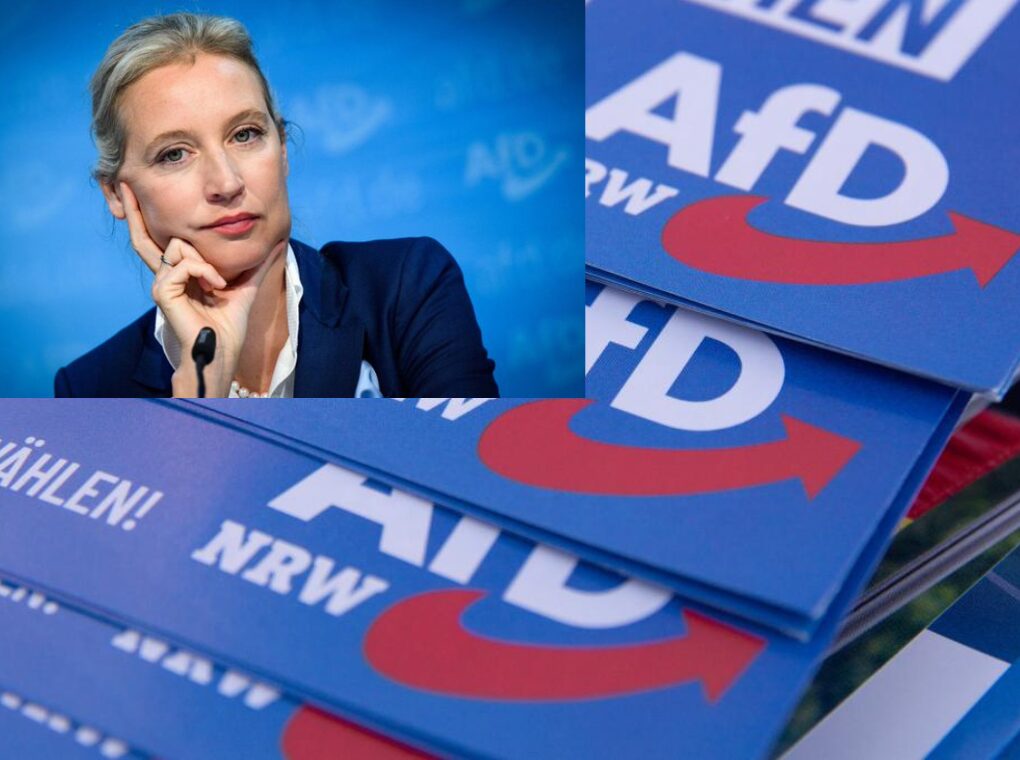
Germany’s right-wing political landscape is witnessing a major shift as the anti-establishment party, the Alternative for Germany (AfD), continues gaining momentum in national opinion polls. With rising public frustration over migration, economic concerns, and the influence of Brussels on domestic policymaking, the party is positioning itself as one of the strongest political forces in the country ahead of critical state elections in 2026.
At the center of the debate is AfD co-leader Alice Weidel, who has sharpened the party’s message on German sovereignty and the future of the European Union. Weidel and other AfD leaders argue that the EU must fundamentally transform into a “Europe of nations,” where member states regain significant autonomy. If such reforms fail, the party says Germany should consider a “Dexit” — a referendum on leaving the European bloc.
AfD’s Growing Political Momentum
Recent surveys suggest that AfD’s popularity continues to rise across Germany, with the party polling strongly nationwide and particularly dominating in several eastern German states. The growing support reflects increasing dissatisfaction among voters who feel disconnected from mainstream political parties and frustrated with policies emerging from both Berlin and Brussels.
AfD has successfully tapped into public concerns surrounding immigration, inflation, rising energy prices, and Germany’s economic slowdown. Many supporters argue that existing political parties, including the conservative CDU/CSU alliance and the governing establishment, have failed to address the challenges affecting ordinary households.
Political analysts believe AfD’s rise also reflects broader European trends, where nationalist and Eurosceptic parties are gaining traction amid economic uncertainty and public dissatisfaction with centralized governance.
AfD’s Vision: Reform the EU or Hold a Dexit Referendum
The AfD has long been critical of the European Union, originally emerging as a Eurosceptic movement opposed to eurozone bailout policies. Over time, however, its criticism expanded to include migration policy, EU regulations, green energy mandates, and the perceived erosion of national sovereignty.
According to the party’s political platform, AfD favors a looser European structure focused on cooperation among sovereign nations rather than centralized authority. The party frequently describes this vision as a “Europe of nations” or “Europe of fatherlands,” emphasizing economic partnerships and shared interests while reducing powers held by Brussels institutions.
Alice Weidel has repeatedly stressed that AfD would first seek reforms within the EU before considering a departure.
Speaking on the issue, Weidel has argued that Germany should reclaim decision-making authority from Brussels and restore greater control to national institutions. If such reforms prove impossible, AfD believes citizens should ultimately decide Germany’s future in the bloc through a referendum similar to the United Kingdom’s Brexit vote.
The idea of “Dexit” remains controversial in German politics, but AfD leaders insist it should remain an option if the EU continues expanding powers at the expense of member-state sovereignty.
Why German Voters Are Turning Toward AfD
Several major issues appear to be fueling AfD’s rapid rise in popularity.
Migration and Border Policies
Migration remains one of the most debated topics in German politics. Many AfD supporters argue that current asylum and immigration systems place pressure on housing, welfare programs, and public services.
The party advocates stricter border enforcement, tighter immigration controls, and faster deportation procedures for rejected asylum applicants. This messaging has resonated with sections of the electorate concerned about integration challenges and security issues.
Economic Frustrations
Germany’s economy has faced growing pressures in recent years, including inflation, slowing industrial output, and high energy costs following shifts in energy policy and geopolitical tensions.
AfD frequently blames EU climate policies and regulatory frameworks for increasing costs on businesses and households. Party leaders argue Germany should prioritize domestic industry and energy independence over broader EU-driven environmental goals.
Growing Euroscepticism
While a majority of Germans still support EU membership, skepticism toward specific EU policies has increased. Critics often point to concerns over democratic accountability, arguing that Brussels institutions hold too much power over national decisions.
AfD has capitalized on this sentiment by portraying itself as a defender of German sovereignty and national interests.
Protest Against Traditional Politics
After years of coalition governments involving mainstream parties, many voters increasingly see AfD as an alternative to the political establishment. Analysts suggest that dissatisfaction with conventional politics has turned AfD into a protest vehicle for frustrated voters.
Alice Weidel Becomes Face of AfD’s Expansion
Alice Weidel has emerged as one of AfD’s most recognizable figures, helping broaden the party’s appeal beyond its traditional voter base. A former investment banker, Weidel presents herself as a strong advocate for economic pragmatism, national sovereignty, and tighter migration policies.
Her leadership style and direct messaging have helped AfD strengthen support among conservatives and voters disillusioned with mainstream politics.
However, critics continue to accuse AfD of promoting divisive rhetoric and warn that some factions within the party maintain extremist tendencies. Germany’s political establishment largely maintains a “firewall” policy, refusing coalition cooperation with AfD despite its growing popularity.
What AfD’s Rise Means for Germany and Europe
AfD’s growing influence has intensified debates over the future of Germany’s role within the European Union. Supporters argue that the EU must return powers to national governments to preserve democratic accountability and sovereignty.
Critics, however, warn that a German departure from the EU could carry severe economic consequences. As Europe’s largest economy, Germany benefits heavily from access to the single market, and opponents argue a “Dexit” could disrupt trade, investment, and economic stability.
Still, AfD’s momentum signals a broader political shift. Whether Germany moves toward EU reform or deeper political polarization, the party’s rise is forcing mainstream leaders to confront issues many voters believe have long been ignored.
As 2026 state elections approach, all eyes will remain on AfD and Alice Weidel, whose message of sovereignty, reform, and national control is increasingly shaping Germany’s political conversation.