
In one of the most significant realignments of European security architecture since the Second World War, Norway has officially joined France’s expanding nuclear deterrence framework, highlighting growing uncertainty over long-term U.S. security commitments to Europe.
The agreement, confirmed by Norwegian Prime Minister Jonas Gahr Støre during his visit to Paris on May 27, marks a strategic milestone in Europe’s evolving defense posture. It also signals a broader shift toward European-led deterrence structures amid escalating tensions with Russia and increasing geopolitical fragmentation.
FRANCE Unveils “Forward Deterrence” Nuclear Doctrine to Shield Europe from RUSSIA
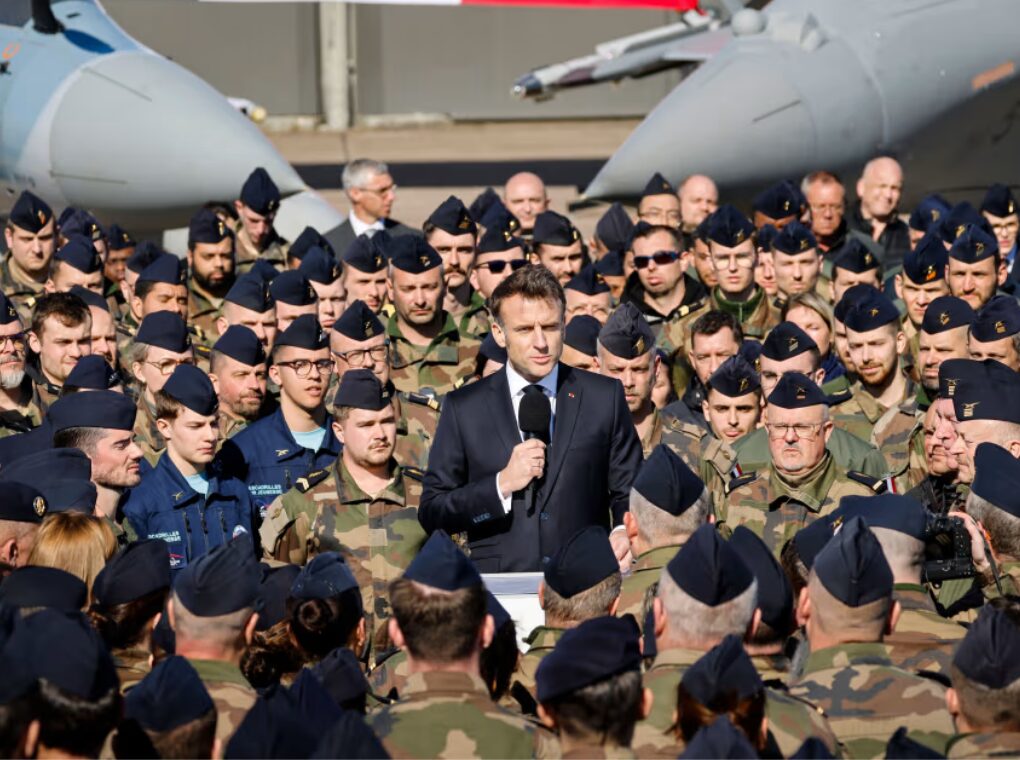
The foundation of this transformation lies in France’s newly introduced nuclear strategy, unveiled by President Emmanuel Macron earlier this year. Speaking at France’s nuclear submarine base in Île Longue in March 2026, Macron formally presented a doctrine titled “Forward Deterrence”, designed to extend France’s nuclear protection to allied European nations.
The doctrine is aimed at strengthening Europe’s independent deterrence capability in response to what Paris describes as an increasingly aggressive Russian military posture, including its expanded nuclear modernization program and ongoing war in Ukraine.
Under this framework, France has initiated strategic discussions with several European countries, including Germany, Belgium, Denmark, Sweden, Poland, the Netherlands, and the United Kingdom. Norway’s formal inclusion marks the first confirmed expansion of this initiative into the Nordic region.
“We are doing this in light of the security policy situation in Europe, including Russia’s massive rearmament, also in the nuclear domain,” said Prime Minister Støre, emphasizing the urgency behind the decision.
Europe Begins Moving Beyond Full U.S. Dependence
For decades following the Second World War, the United States has served as Europe’s primary security guarantor through NATO, maintaining extensive military deployments and a nuclear-sharing framework across the continent.
U.S. forces remain stationed at dozens of bases in Europe, with tens of thousands of troops and approximately 100 B61 nuclear bombs deployed across key NATO states under strict American control.
However, growing political debates in Washington over global military commitments and defense spending have fueled concerns in European capitals about long-term reliability. This has accelerated efforts within Europe to develop more autonomous defense mechanisms.
France’s nuclear initiative is widely seen as the most ambitious attempt yet to fill that potential strategic gap.
France Expands Its Strategic Nuclear Role
Although France maintains a significantly smaller nuclear arsenal—approximately 290 warheads compared to the United States’ more than 5,000—it is increasingly positioning itself as Europe’s independent nuclear power center.
Beyond Norway, several Eastern European nations are reportedly evaluating closer cooperation with France’s nuclear framework. Lithuania has even debated constitutional amendments that could allow foreign nuclear deployments on its territory, reflecting heightened regional threat perceptions.
Poland has also explored deeper integration with French strategic capabilities, including potential joint exercises involving nuclear-capable aircraft.
These developments indicate a gradual shift in Europe toward a multi-layered deterrence system rather than sole dependence on NATO’s U.S.-led nuclear umbrella.
Rise of Alternative Security Blocs in Europe
Alongside France’s initiative, Europe is witnessing the strengthening of parallel defense coalitions designed to respond more rapidly to regional crises.
The British-led Joint Expeditionary Force (JEF), comprising countries such as Norway, Sweden, Finland, Denmark, Estonia, Latvia, Lithuania, Iceland, and the Netherlands, is emerging as a flexible rapid-response alliance.
Unlike NATO, which requires unanimous agreement to invoke collective defense under Article 5, the JEF can act quickly without consensus, making it a potentially decisive force in northern European security scenarios.
Analysts increasingly describe such frameworks as “Plan B alliances,” designed to function independently or alongside NATO depending on the scale of a crisis.
A Fragmenting Global Security Order
Norway’s alignment with France reflects a broader global trend in which traditional post-Cold War security structures are being redefined.
Across Europe, the Middle East, and parts of Asia, nations are increasingly adopting flexible, multi-alignment strategies rather than relying exclusively on single superpower guarantees.
The post-1945 era of stable, rigid alliances appears to be giving way to a more fragmented and transactional security environment shaped by immediate threats rather than long-standing ideological blocs.
While supporters argue that this diversification enhances resilience, critics warn it could lead to overlapping commitments, confusion in crisis scenarios, and increased risks of miscalculation.
Norway’s entry into France’s nuclear umbrella marks more than a bilateral defense agreement—it reflects a deeper transformation in Europe’s strategic identity. As France expands its “Forward Deterrence” doctrine and European nations reassess their reliance on Washington, the continent appears to be entering a new era of defense autonomy.
Whether this emerging system strengthens European security or introduces new geopolitical instability will depend on how effectively these overlapping alliances can function in an increasingly unpredictable global order.