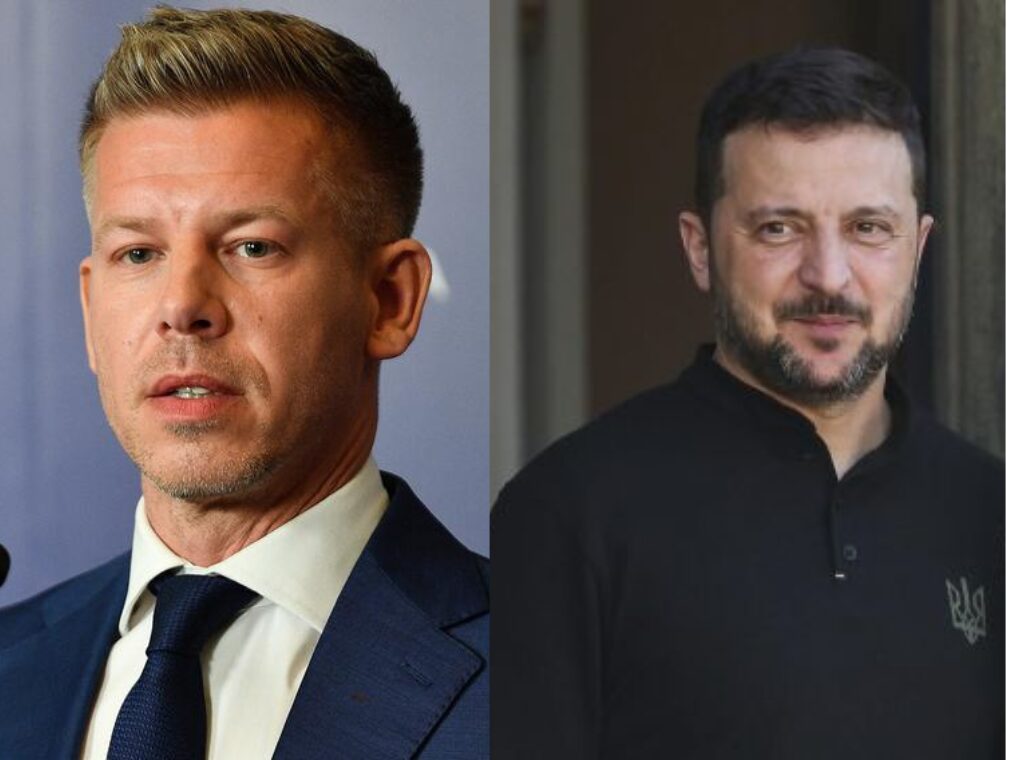
Hungary’s newly elected Prime Minister Peter Magyar has made it clear that Budapest will not send weapons or military equipment to Ukraine, signaling continuity in the country’s foreign policy despite expectations of a major shift after the departure of longtime leader Viktor Orban.
Speaking shortly after meeting NATO Secretary General **Mark Rutte** in Brussels on Thursday, Magyar reiterated Hungary’s long-standing position against direct military support for Kyiv amid the ongoing Russia-Ukraine conflict.
“I informed the Secretary General that Hungary is not supplying weapons or military equipment to Ukraine,” Magyar wrote in a statement shared on the social media platform X, underlining that his government intends to maintain a cautious approach toward military involvement.
The announcement comes just weeks after Magyar’s center-right Tisza Party secured a sweeping electoral victory over Viktor Orban’s Fidesz party, winning a two-thirds parliamentary majority in April. The result marked a historic political transition in Hungary after Orban’s long tenure, with many observers in Brussels anticipating a significant policy realignment—particularly on Ukraine and relations with the European Union.
However, Magyar’s early foreign policy decisions suggest that while Hungary may seek warmer ties with the EU institutionally, core national interests regarding Ukraine remain largely unchanged.
Hungary Maintains ‘Peace-First’ Position
Hungary has consistently resisted pressure from several Western allies to provide military aid to Ukraine since the conflict escalated in 2022. Under former Prime Minister Viktor Orban, Budapest repeatedly blocked or delayed some EU measures aimed at increasing military support for Kyiv, arguing that continued arms deliveries prolong the war and reduce opportunities for peace negotiations.
Magyar appears determined to continue that policy.
Hungarian Foreign Minister Anita Orban, a key figure in the new Tisza administration, had earlier emphasized that Hungary “stands for peace” and rejects sending either troops or weapons to Ukraine.
The government’s message appears aimed at reassuring domestic voters who favor keeping Hungary out of direct involvement in the conflict while also balancing obligations as a NATO member.
Despite meeting NATO leadership in Brussels, Magyar did not indicate any change in Hungary’s military posture, instead stressing national sovereignty in foreign policy decision-making.
Kremlin Welcomes Hungary’s Stance
Hungary’s decision was received positively in Moscow.
Kremlin spokesperson **Dmitry Peskov** welcomed Magyar’s remarks, stating that any country choosing not to “add fuel to the fire” should be viewed positively.
Russia has repeatedly framed the Ukraine conflict as a broader proxy confrontation between Moscow and the West. Russian officials have frequently criticized Western military assistance to Kyiv, arguing that sustained arms shipments make diplomatic solutions harder to achieve and escalate tensions.
The Kremlin’s reaction highlights Hungary’s unique role within both NATO and the European Union, where Budapest has often positioned itself as a dissenting voice against deeper military commitments to Ukraine.
EU Hopes for Policy Shift Faces Reality Check
Before the election, many EU officials had viewed Magyar as a potentially more Brussels-friendly alternative to Viktor Orban, whose government frequently clashed with the bloc over rule-of-law issues, migration policies, sanctions on Russia, and support for Ukraine.
Yet, despite campaigning on improving ties with the EU, Magyar has so far resisted several major Ukraine-related initiatives favored by Brussels.
His government has opposed fast-tracking Ukraine’s membership into the European Union, arguing that accession should follow established legal and economic criteria rather than political urgency.
Hungary has also declined participation in the EU’s latest Ukraine funding mechanism, maintaining Budapest’s position that national interests must remain central to financial decisions.
Political analysts suggest Magyar may be attempting to balance better diplomatic relations with Brussels while avoiding a backlash at home from voters who supported Hungary’s traditionally cautious stance toward the conflict.
Agricultural Tensions Resurface
In another sign of policy continuity, Hungary recently reinstated restrictions on Ukrainian agricultural imports after a temporary lapse in the ban.
The Hungarian government said the restrictions were unintentionally allowed to expire before being restored, citing concerns over the impact of cheaper Ukrainian grain and agricultural goods on domestic farmers.
The move could reignite tensions with Brussels, which has argued that unilateral trade restrictions violate EU law because trade policy falls under the authority of the European Commission.
Last year, EU officials considered legal action against member states—including Hungary and Poland—for imposing similar bans, although no formal proceedings ultimately followed.
A New Government, Familiar Policies?
While Peter Magyar’s rise to power initially sparked expectations of dramatic change in Hungary’s foreign policy, his first weeks in office indicate a more measured transition.
By refusing to supply weapons to Ukraine, maintaining skepticism over Kyiv’s EU accession, and preserving trade restrictions, Magyar appears to be following key elements of Viktor Orban’s strategic playbook.
For now, Hungary remains committed to a “peace-first” approach—one that seeks to avoid deeper involvement in the war while preserving room for dialogue, even as many NATO and EU allies continue expanding support for Ukraine.