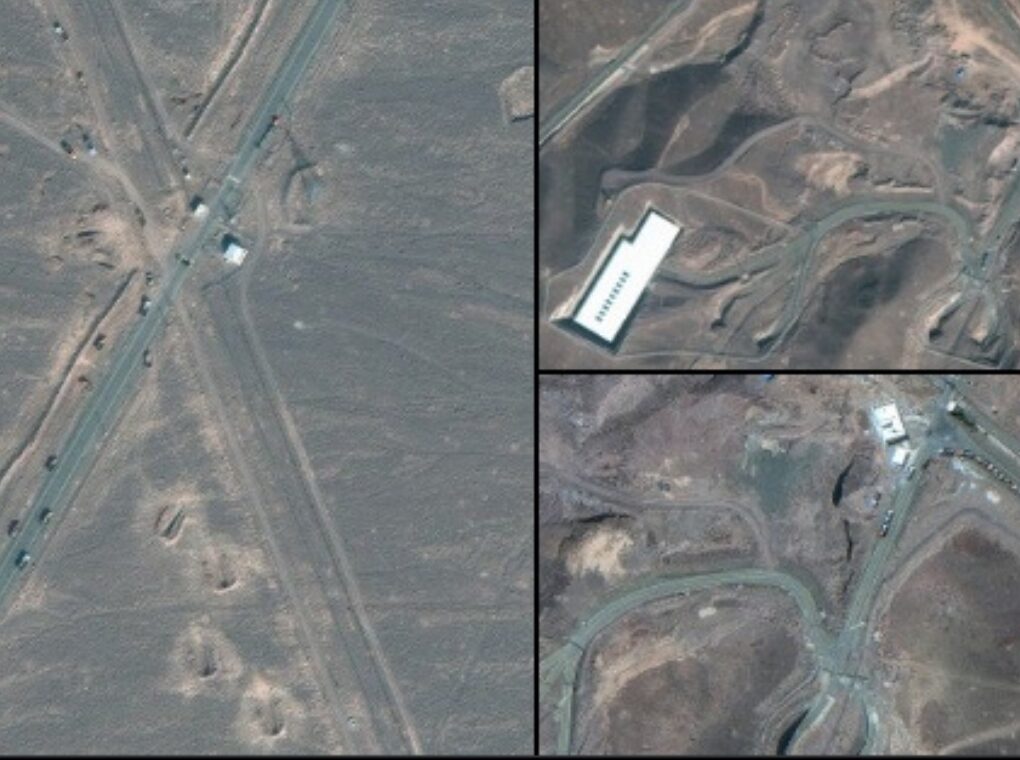
Nearly six months after the latest wave of US and Israeli military strikes targeted Iran’s nuclear infrastructure, the United Nations nuclear watchdog has warned that major uncertainties continue to surround Tehran’s nuclear programme.
A new confidential report by the International Atomic Energy Agency (IAEA), circulated to member states ahead of next week’s Board of Governors meeting, reveals that inspectors remain unable to verify the status and location of significant quantities of Iran’s enriched uranium stockpiles. The findings raise fresh concerns over transparency, nuclear safeguards, and potential proliferation risks.
The report, first detailed by Reuters, underscores that Iran has yet to provide clarity on what happened to key nuclear materials after military strikes damaged several facilities earlier this year.
IAEA Unable to Verify Iran’s Uranium Stockpiles
According to the report, the IAEA has not independently verified Iran’s stockpile of **low-enriched uranium (LEU)** and highly enriched uranium (HEU) for nearly a year. Tehran had previously declared these materials, but the agency says it still lacks updated information on their status following the strikes.
Of particular concern is Iran’s uranium enriched up to 60% purity, a level that falls short of weapons-grade uranium but is considered technically close to the approximately 90% enrichment threshold commonly associated with nuclear weapons production.
“The Agency’s lack of access to verify the previously declared HEU and LEU, for nearly a year — which is long overdue according to standard safeguards practice — is a matter of proliferation concern and of compliance with the NPT Safeguards Agreement,” the report stated.
The IAEA warned that the prolonged absence of verification has weakened confidence in the accuracy of Iran’s nuclear inventory and heightened international concerns about accountability.
US-Israel Strikes Failed to End Nuclear Questions
The findings carry geopolitical significance because the United States and Israel justified military strikes on Iranian nuclear facilities earlier this year by arguing they would significantly degrade or destroy Tehran’s nuclear programme.
However, the latest assessment suggests that despite the attacks, crucial questions surrounding Iran’s nuclear materials remain unresolved.
The report indicates that damaged facilities and restricted inspector access have prevented the agency from maintaining oversight of Iran’s declared nuclear assets, complicating efforts to assess the programme’s true condition.
What Is ‘Loss of Continuity of Knowledge’?
One of the report’s strongest warnings relates to what the IAEA describes as a “loss of continuity of knowledge.”
This term refers to situations in which international inspectors lose the ability to continuously monitor nuclear material, including its movement, storage location, or condition, due to prolonged interruptions in surveillance or inspections.
Because inspectors have been unable to access certain Iranian nuclear sites affected by military action, the agency says it can no longer confidently track all declared nuclear material.
“The Agency’s loss of continuity of knowledge over all previously declared nuclear material at affected facilities in Iran needs to be addressed with the utmost urgency,” the report said.
Experts say such interruptions create major verification challenges, as international safeguards rely heavily on continuous oversight to ensure nuclear materials are not diverted for unauthorized purposes.
IAEA Presses Iran to Restore Transparency
The watchdog renewed its demand that Iran fully comply with obligations under the Nuclear Non-Proliferation Treaty (NPT) and restore monitoring access without delay.
“The Director General has emphasized to Iran that it is indispensable and urgent to implement effectively the NPT Safeguards Agreement … and that its implementation cannot be suspended by Iran under any circumstances,” the report noted.
The IAEA stressed that rebuilding transparency is essential to restoring international confidence in Iran’s nuclear programme. Without renewed inspections and updated information from Tehran, questions surrounding the whereabouts and condition of enriched uranium are likely to intensify.
As global tensions over Iran’s nuclear ambitions continue, the upcoming IAEA Board of Governors meeting is expected to place renewed international scrutiny on Tehran’s compliance with nuclear safeguards and the future of diplomatic oversight.