
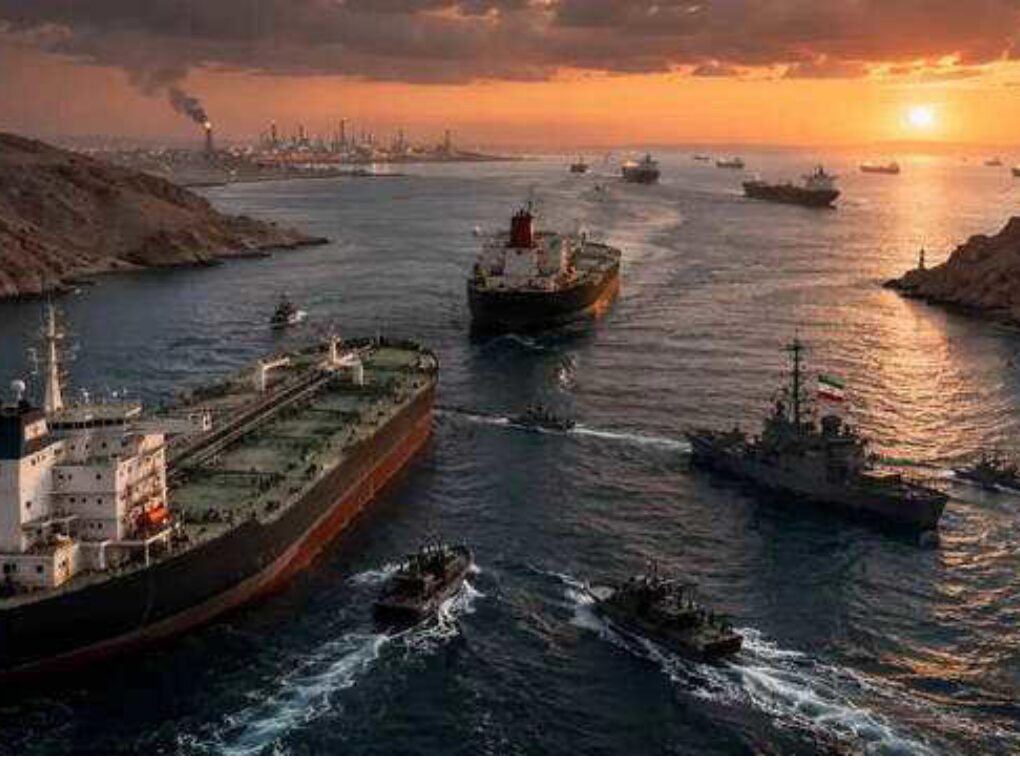
A recent assessment by United States intelligence agencies has reportedly concluded that Iran now possesses the capability to effectively close the strategically vital Strait of Hormuz whenever it chooses, raising fresh concerns over global energy security and international trade.
According to reports, the intelligence findings suggest that Tehran has significantly strengthened its leverage in the Gulf region following recent military confrontations, giving it the ability to threaten both critical energy infrastructure and commercial shipping routes that pass through the narrow waterway.
A source familiar with the assessment reportedly described the situation in stark terms, stating that Iran’s influence over the Strait of Hormuz has become “more powerful than any nuclear weapon,” highlighting the immense geopolitical significance of the maritime chokepoint.
Strait of Hormuz Remains Critical to Global Energy Markets
The Strait of Hormuz is one of the world’s most important shipping corridors, connecting the Persian Gulf to international waters. Roughly one-fifth of global oil consumption and a significant share of liquefied natural gas (LNG) exports pass through the strait each day.
Any disruption to shipping in the region could trigger sharp increases in global oil prices, impact energy supplies, and create uncertainty across international markets.
The intelligence assessment reportedly indicates that despite ongoing diplomatic efforts, Iran retains the capability to severely disrupt maritime traffic if tensions escalate.
US-Iran Agreement Focuses on Nuclear Restrictions and Maritime Security
The report comes as Washington and Tehran move closer to finalizing a framework agreement aimed at reducing regional tensions and preventing Iran from developing nuclear weapons.
Speaking about the proposed deal, US Vice President JD Vance said the agreement centers on three key principles:
>Iran will not be permitted to acquire nuclear weapons.
>The Strait of Hormuz must remain open for international shipping.
>Iran will receive economic and diplomatic benefits only if it complies with the agreement.
Vance emphasized that any failure by Iran to meet its obligations would result in the suspension of those benefits.
“The deal is designed to ensure both regional stability and freedom of navigation through one of the world’s most important waterways,” he said.
Trump Says Agreement Guarantees Iran Will Not Obtain Nuclear Weapons
US President Donald Trump has indicated that the agreement could soon be publicly unveiled, although the full text has not yet been released.
Speaking during a meeting with UAE President Mohamed bin Zayed Al Nahyan on the sidelines of the G7 Summit in France, Trump praised the framework and described it as a significant diplomatic achievement.
“I would prefer to have a formal setting first, but I have no objections. It’s an excellent document,” Trump reportedly said.
The president further stated that the agreement’s central objective is to ensure that Iran never acquires a nuclear weapon.
According to reports, Trump electronically signed the agreement on Sunday, but officials have yet to publish the complete details of the arrangement.
Shipping Industry Remains Cautious
Despite optimism surrounding the emerging deal, analysts warn that uncertainty over implementation and ongoing security concerns could continue to affect shipping activity in the Gulf region for months.
Maritime companies and energy traders are closely monitoring developments, as any future dispute over compliance could reignite tensions and threaten one of the world’s most critical trade routes.
Experts note that while the agreement may reduce the immediate risk of confrontation, Iran’s demonstrated ability to influence traffic through the Strait of Hormuz ensures that the waterway will remain a central factor in regional and global security calculations.
Global Implications
The latest intelligence assessment underscores the continuing strategic importance of the Strait of Hormuz and highlights the delicate balance between diplomacy and deterrence in the Middle East.
As negotiations move toward a final agreement, policymakers, energy markets, and international shipping operators will be watching closely to determine whether the deal can provide lasting stability—or whether Iran’s leverage over the world’s most important energy corridor will continue to shape global geopolitics.