
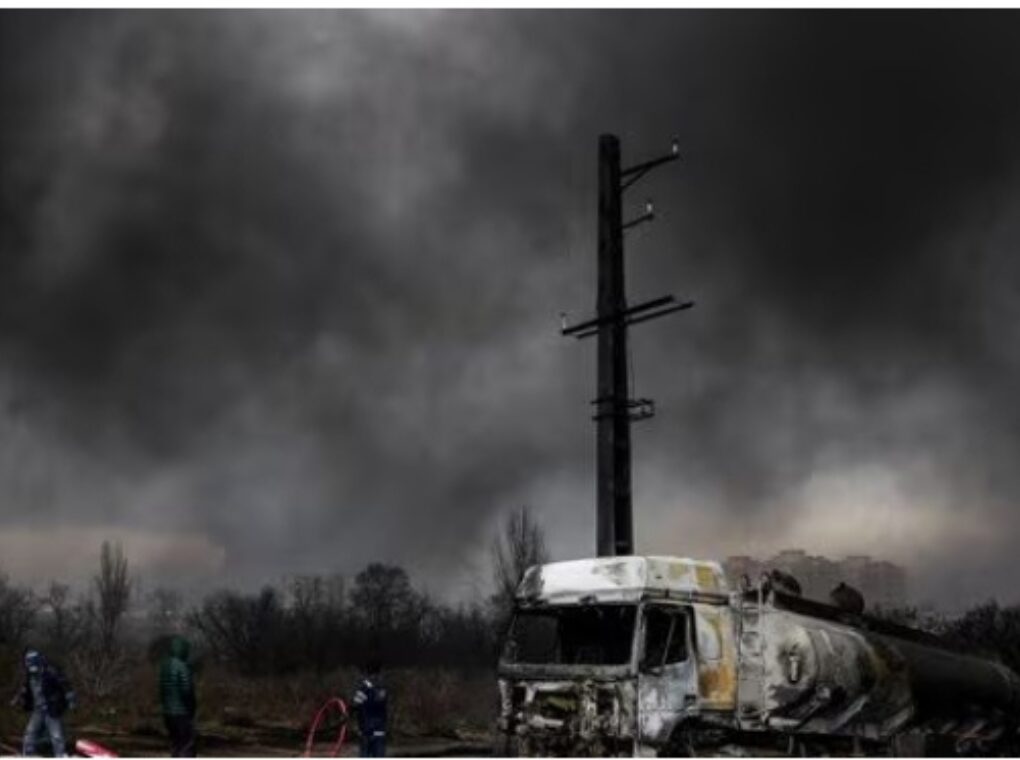
After 39 days of intense military confrontation between the United States and Iran, Washington and Tehran are now preparing to formally sign a ceasefire agreement in Switzerland, marking an abrupt pause in one of the most dangerous Middle East escalations in years.
Senior American and Iranian officials are expected to meet at the Burgenstock resort near Lucerne this Friday, with Iran’s chief negotiator Mohammad Bagher Ghalibaf representing Tehran and US Vice President JD Vance leading Washington’s delegation. President Donald Trump may also attend.
While the White House framed the ceasefire as a “strategic pause,” military analysts say the reality is far more complicated: America’s stockpiles of critical missiles have been significantly depleted, exposing a major vulnerability in Washington’s ability to sustain prolonged high-intensity warfare.
Trump’s Warning to Iran
Speaking during the G7 Summit alongside Egyptian President Abdel Fattah el-Sisi, Trump issued a direct warning to Tehran:
“If they don’t behave, we’ll go right back to dropping bombs right smack in the middle of their head.”
The statement reflects the fragile nature of the ceasefire and signals that tensions remain far from resolved.
America Won the Air War — But At a Cost
The US military demonstrated overwhelming dominance in precision strikes during Operation Epic Fury, launched on February 28, 2026. Advanced weapons like Tomahawk missiles, Patriot interceptors, THAAD systems, and SM-series naval missiles delivered devastating results against Iranian targets.
But the war revealed a deeper issue: America’s reliance on expensive, low-volume precision weapons has limits.
Military experts argue that while quality wins battles, quantity wins wars.
CSIS Report Reveals Massive Missile Depletion
A new report by the Center for Strategic and International Studies (CSIS) paints a concerning picture of America’s missile inventory after the Iran campaign:
>Tomahawk Land Attack Missiles (TLAMs): Over 1,000 used out of 3,100 — nearly one-third depleted.
>THAAD interceptors: Between 190–290 fired from an estimated stockpile of 400.
>Patriot missiles: More than 1,000 launched, heavily impacting reserves.
>SM-3 missiles: Over 250 used from a stockpile of around 400.
>SM-6 missiles: Up to 370 expended.
>JASSM cruise missiles: More than 1,100 used.
>Precision Strike Missiles (PrSM): 40–70 used from fewer than 100 available.
Defense analysts estimate that rebuilding some of these stockpiles could take anywhere from two to five years, while full Tomahawk recovery may stretch into 2030.
Senator Mark Kelly Sounds Alarm
Democratic Senator Mark Kelly, a retired Navy captain and former astronaut, warned that replenishing these strategic munitions will take “years
Kelly’s comments reportedly angered Defense Secretary Pete Hegseth, who accused the senator of exposing sensitive defense vulnerabilities.
The public dispute has intensified concerns over America’s readiness for future conflicts.
Ukraine, Israel, Red Sea Operations Worsened the Problem
The CSIS report notes that the Iran war did not happen in isolation.
Before the conflict even began, Washington had already drained large portions of its missile stockpiles through:
> Military aid to Ukraine
>Support for Israel
>Red Sea strikes against Houthis
This cumulative drawdown has left the Pentagon in a difficult position.
China and Taiwan: The Bigger Strategic Concern
Military planners are increasingly worried that depleted missile reserves could weaken America’s deterrence in the Indo-Pacific, particularly against China.
A conflict over Taiwan would require vast quantities of precision weapons, and current shortages could force Washington into a more cautious strategy.
This has triggered concerns among allies like Poland, Taiwan, and Gulf states that depend heavily on US arms supplies.
Trump’s $1.5 Trillion Defense Plan
In response, Trump has proposed a massive $1.5 trillion FY2027 defense budget, aimed at expanding missile production capacity over the next five to seven years.
The plan includes large-scale orders for:
>Patriot missiles
>THAAD interceptors
>Tomahawks
>JASSMs
>Next-generation strike systems
However, defense experts warn that industrial bottlenecks, supply chain disruptions, and shortages of critical minerals could delay production for years.
As CSIS cautioned: “Capacity does not equal actual production.”
Why Trump Pulled Out
Despite Trump’s aggressive rhetoric, analysts believe the ceasefire reflects strategic necessity rather than political choice.
The Iran war proved that America can dominate short wars — but sustaining them is another matter.
Without deep missile reserves and faster replenishment, Washington faces hard choices:
>Risk exhausting its arsenal in regional wars
>Or preserve munitions for a potential larger conflict with China or Russia
The 39-day Iran conflict may have ended, but its lessons will shape US military strategy for years to come.
One thing is now clear: **America’s greatest weakness in modern warfare may not be its enemies — but its supply lines.