Beijing accuses Washington of hypocrisy after a Patagonian power cooperative said American diplomats threatened to cancel its directors’ visas over a Huawei contract, squeezing President Javier Milei between his political patron in Washington and his biggest lender in Beijing.
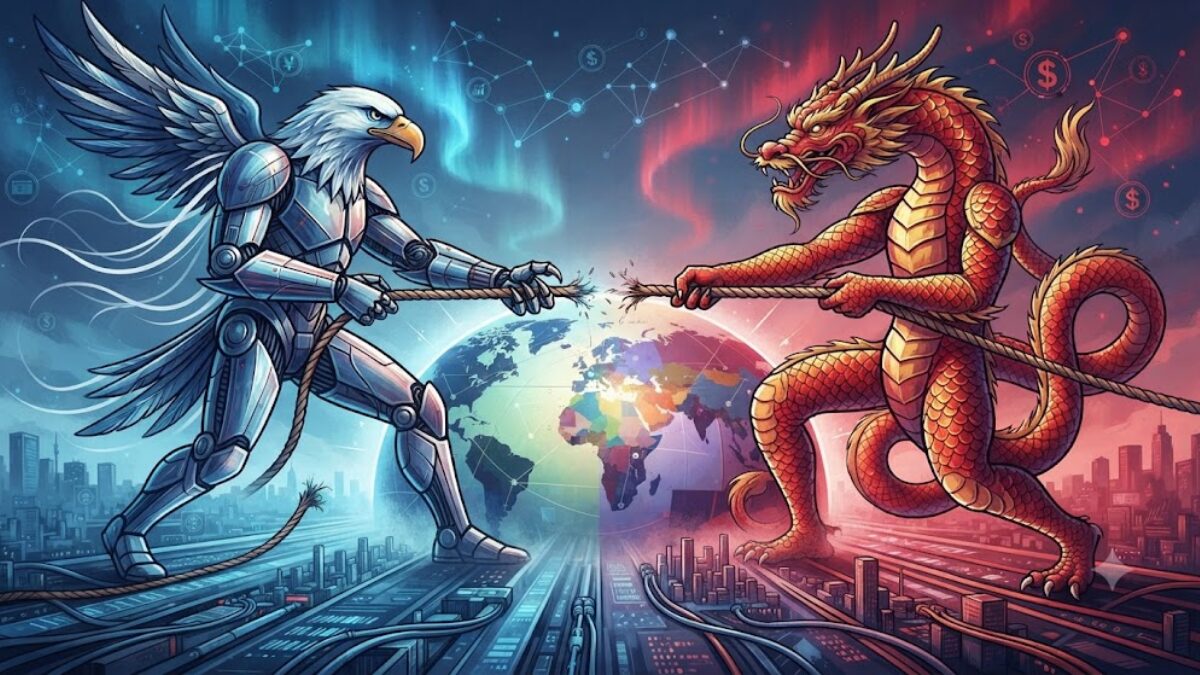
China and the United States collided openly in Argentina this week after a power cooperative in the southern province of Neuquén said American diplomats had threatened to revoke its directors’ visas for signing a technology deal with Huawei. China’s embassy in Buenos Aires accused Washington of hypocrisy on August 6, the Associated Press reported, turning a provincial fibre-optic contract into the newest front in the superpower contest for Latin America — and a stress test of Milei’s high-wire diplomacy.
What CALF says happened
CALF, described by the AP as the largest electricity distributor in southern Argentina, is a near-century-old cooperative that supplies power and internet around Neuquén. In July, it announced it was expanding its partnership with Huawei to build its first fibre-optic network and support other modernisation projects, the AP reported.
Soon afterwards, the cooperative said in a statement, one of its executives began receiving WhatsApp messages warning that US visa restrictions could apply to anyone involved in expanding Huawei’s operations in Argentina.
The Buenos Aires Herald, citing the Argentine daily Clarín, reported that the warning could reach 16 board members and two trustees — 18 people in all. Argentine outlets identified the recipient as the cooperative’s technology manager, Sergio Fernández Novoa, who said the messages came from an economic affairs official at the US embassy. CALF has written formally to the embassy, copying Argentina’s foreign ministry, to ask exactly what is being threatened and why. Neither has publicly clarified the scope of the warning.
Beijing hits back, Washington stands firm
China’s embassy didn’t hold back. “These actions fully reflect the arrogance and prejudice of the United States,” it said, adding that the threats disrespected Argentine sovereignty, trampled free-market principles and exposed Washington’s double standards on free enterprise, according to the AP. The embassy urged the US to abandon its hegemonic practices and political manoeuvring, and accused it of hyping the supposed danger China poses.
The US ambassador to Argentina, Peter Lamelas, did not answer the AP’s request for comment. He did, however, post on X: “Denying or revoking a visa is not a punishment,” arguing that every sovereign nation decides who enters its territory and that such decisions protect American security and interests.
Why Washington is drawing the line
The visa threat did not come out of nowhere. Washington has long shut Huawei out of its own networks on national-security grounds, and the Trump administration has sharpened its campaign against Chinese influence across Latin America, with officials invoking a modern-day version of the Monroe Doctrine — the 1823 policy warning outside powers away from the Western Hemisphere. The US has already revoked the visas of three senior Chilean officials and threatened to reassert control over the Panama Canal. Neuquén’s electricity cooperative, in other words, has wandered into a much bigger fight.
Milei’s impossible balancing act
For Milei, the timing could hardly be more awkward. The libertarian president is one of US President Donald Trump’s closest allies in the region, and the friendship has paid handsomely: in October 2025 the US Treasury, under Secretary Scott Bessent, handed Argentina a $20 billion currency swap line and bought pesos directly in the market to steady a wobbling economy.
Yet the day before Beijing’s broadside, on August 5, Argentina’s central bank renewed its own swap with the People’s Bank of China — a 130-billion-yuan facility, worth roughly $19 billion, extended for five years instead of the usual three, with a $5-billion activated tranche staying in force. The bank said the longer term offers “greater predictability.”
Milei once vowed as a candidate that he would not do business with communists. In office, arithmetic has softened ideology: China is Argentina’s second-biggest trading partner, and foreign minister Pablo Quirno is expected in Beijing in the coming months. Dollars from Washington in one pocket, yuan from Beijing in the other, the Neuquén affair is a reminder that, sooner or later, somebody may ask Milei to choose.
What happens next
In Neuquén, the row is heading for the political arena, with local media reporting plans to raise the affair in the provincial legislature and the national Congress. Watch whether the threatened visas are actually cancelled, whether CALF’s fibre-optic build with Huawei goes ahead, and what Quirno brings home from Beijing. A cooperative that mostly worries about keeping the lights on has become the place where two superpowers are testing exactly how far Milei’s loyalties stretch.