In 1995 a consortium of Chinese state-linked firms, working alongside an American investment house, bought Magnequench, the General Motors offshoot that made the small, ferociously powerful magnets found inside precision-guided weapons. Part of the deal was a promise: the Indiana plant would keep running for five years. It closed five years and one day later. The workers were let go, and the machinery was crated up and shipped to China. Three decades on, that quiet transaction reads less like a bad piece of business than the opening move in the most successful price war of the modern industrial era.
The playbook
Deng Xiaoping’s 1992 remark, “There is oil in the Middle East, there is rare earth in China”, is quoted so often it has become wallpaper. It is usually read as a boast about geology. It was really a statement about pricing.
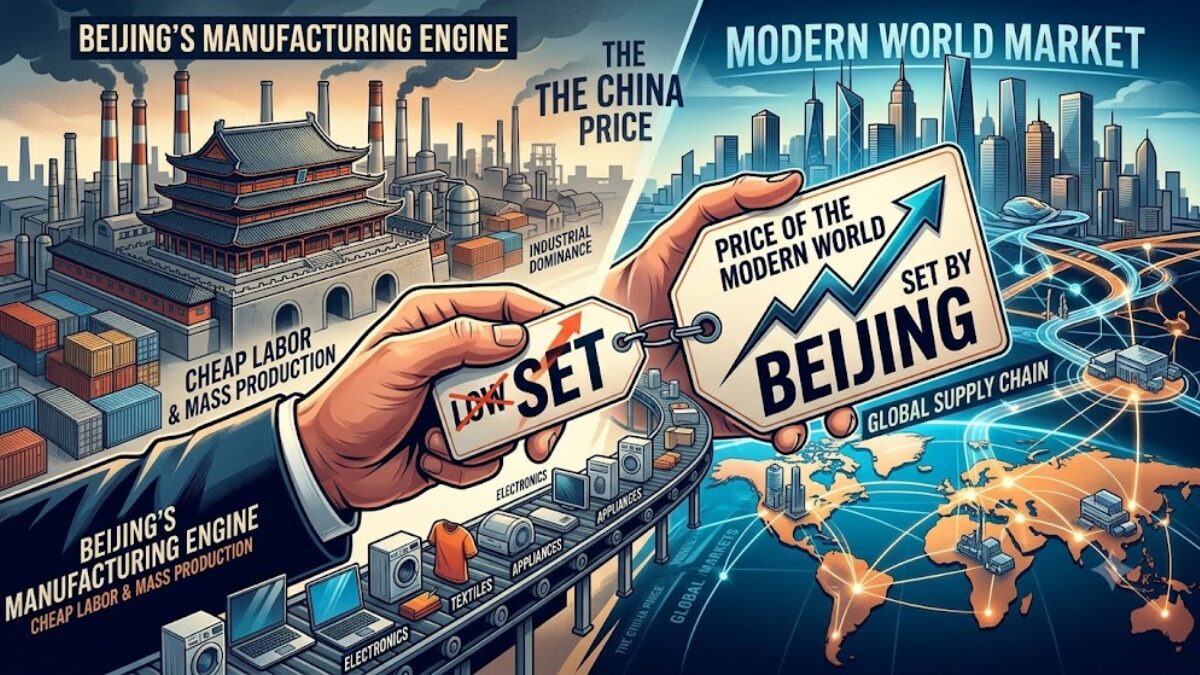
The method that followed has been repeated across metal after metal, and it has a rhythm to it. Flood the market. Undercut everybody. Wait for foreign competitors to run out of patience and capital. Consolidate the survivors into state champions. Then, and only then, turn the tap.
Rare earths show the full arc. Beijing declared them a protected strategic mineral in 1990, took much of the industry into state hands, and by 1994 was running a fixed price schedule and an output cartel. Western miners were not losing to better engineering; they were losing to numbers that were never really prices at all. By 2010 China held roughly nine-tenths of global processing capacity, and demonstrated what that was worth by halting shipments to Japan over a detained fishing captain. Tokyo’s carmakers had nowhere else to shop. Washington’s answer was a WTO complaint, which it won in 2014. Beijing swapped export quotas for mining quotas and carried on.
Lithium: the same film, faster
Lithium got the compressed version. After Beijing added it to its strategic minerals list in 2017, Chinese firms went shopping — a multi-billion-dollar stake in Chile’s SQM, then projects in Argentina, Mali, Zimbabwe, Canada and the Democratic Republic of Congo. China now holds ownership or control in four of the five mines expected to drive global supply this decade, and processes around two-thirds of the world’s lithium.
Then came the discipline. When prices spiked through 2021 and 2022, ministries in Beijing summoned producers and told them, in effect, not to price too far above cost. Prices fell. They kept falling. The casualties were mostly foreign: Sibanye-Stillwater walked away from Nevada’s Rhyolite Ridge, Piedmont shelved its Tennessee refinery, and Albemarle’s chief executive said plainly that the maths no longer worked for an American plant. None of this required a tariff, a ban or a shot fired. It required a price.
The number itself is the weapon
The uncomfortable part, for anyone who assumes commodity prices simply emerge from supply and demand, is that Chinese law makes an honest price difficult to publish. The 1998 Pricing Law makes it an offence to spread information about price rises, or to earn excessive profits. A 2024 regulation on commodity price indices makes “manipulating” an index unlawful while granting officials access to whichever sources the index relied upon. A Chinese refiner quoting a number Beijing dislikes has a great deal to think about.
This is not theoretical. During the coal crunch of late 2021, planners summoned traders, publicly denounced index providers and, by March 2022, had them formally correcting their published numbers. Practically every significant move in the spot price that winter traced back to an intervention rather than a market.
The reach extends well beyond China’s borders. Hong Kong Exchanges and Clearing bought the London Metal Exchange in 2012. In March 2022 the LME halted nickel trading and cancelled a day of deals, sparing the Chinese producer Tsingshan from ruinous losses; Britain’s Financial Conduct Authority fined the exchange in March 2025. Meanwhile the centre of gravity keeps sliding eastwards. Shanghai internationalised its nickel contract in April. On July 3 the Guangzhou Futures Exchange opened yuan-denominated lithium futures and options to foreign traders, who may post dollars as collateral but must trade and settle in renminbi. It is already the most liquid lithium derivative on earth. A Canadian miner selling into an American battery plant may soon find its contract anchored to a number generated in Guangzhou.
From cheap to scarce
For thirty years the strategy was cheapness. Since April 2025 it has been scarcity. Controls on seven heavy rare earths landed that spring; in October Beijing went further, asserting licensing authority over any product made anywhere on earth containing Chinese rare earths. That second regime was suspended for a year under the truce agreed after the Trump-Xi meeting. The suspension expires on November 10, 2026. The April controls were never lifted at all.
The result is a world running two prices for the same metal. Terbium oxide trades below $1,000 a kilogram inside China and around $4,500 outside it. Yttrium costs roughly $10 a kilogram domestically and more than a hundred times that abroad. Dysprosium in Europe has risen roughly eightfold since the controls began. The International Energy Agency reckons full enforcement would put $6.5 trillion of downstream production at risk.
Beijing has hardly been idle during the ceasefire. It blacklisted ten American firms in June and 14 European ones in July, and from July 1 introduced a mechanism inviting the public to report export-control violations. Two Japanese nationals were detained in Dalian in May over allegedly restricted shipments.
The counter-move, and its irony
The West’s answer has been to manufacture prices of its own. The Pentagon guarantees MP Materials $110 a kilogram for neodymium-praseodymium for a decade — a floor, that is, under a market Beijing had spent years pressing downwards. In February Washington launched Project Vault, a $12 billion public-private minerals reserve, and hosted ministers from 54 countries. At Évian in June the G7 agreed that no single non-member should supply more than 60 per cent of its rare earths by 2030, with the IEA monitoring markets and lithium and nickel as the first stockpiling pilots. Europe declined the American proposal for coordinated price floors.
India has moved too, with a ₹7,280-crore scheme for 6,000 tonnes a year of sintered rare earth magnet capacity and dedicated rare earth corridors in Odisha, Kerala, Andhra Pradesh and Tamil Nadu. It currently imports every magnet it uses.
Which leaves an awkward truth in plain sight. The charge against Beijing is that it treats minerals as instruments of state power rather than as commodities. The remedy now being assembled — floors, reserves, offtake guarantees, allied trading blocs — concedes the point entirely. Nobody in Washington, Brussels or Delhi is seriously proposing to leave these markets alone any more. The argument has quietly shifted from whether governments ought to set the price of the modern world, to which governments get to. On November 10, we find out how much time is left to answer it.