ABC, CBS, NBC, Fox News and CNN suspended the shared press pool that supplies footage of the president to the world. The move came after Trump banned CNN, MS NOW and Politico from the White House over what he called “fake news” coverage. All three outlets sued him in Washington on September 21, and a judge has set a hearing for Wednesday.
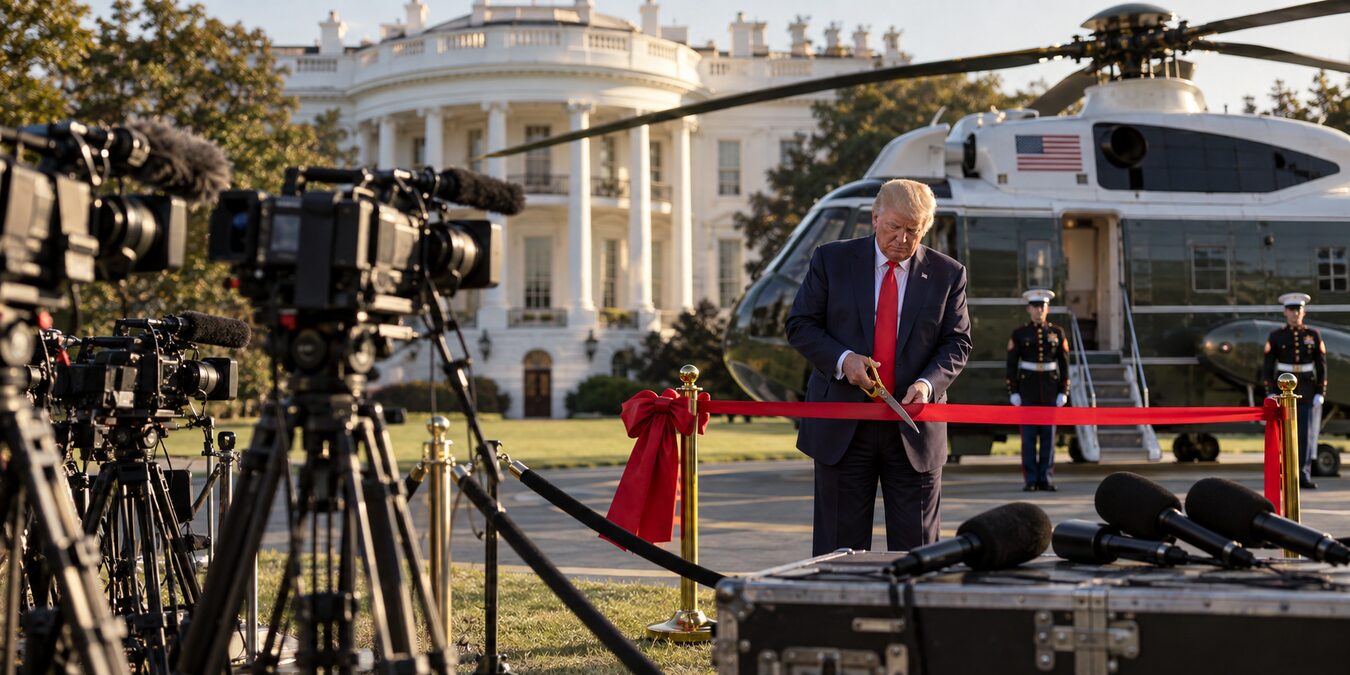
The protest bit within hours. That afternoon, Trump used golden scissors to cut the ribbon on a new White House helipad — but with Marine One’s rotors drowning him out, and no pool cameras or microphones present, viewers heard almost nothing.
No Cameras, No Microphones for Trump
Bryan Boughton, Fox News’s Washington bureau chief and acting chair of the television pool, told members the pool would stop covering presidential events. “There will be no replacement pool put in place,” he wrote. Networks normally rotate that duty and share the resulting footage globally.
The White House fell back on its own in-house feed. Bianca de la Garza, covering the event for Newsmax, explained the problem to viewers: “There’s no microphone because the pool cameras aren’t there.” A colleague on the same network suggested the ban was backfiring.
Weijia Jiang, a former president of the White House Correspondents’ Association, made the point sharply, noting on X that “the networks literally built the infrastructure to transmit from the White House.” The Washington Post joined in separately, withholding its photographs of Monday’s events until midnight.
Why Trump Banned MS NOW
Trump announced the ban on Truth Social on September 18. He accused the outlets of reporting “FICTION and LIES” and warned that others could follow, though he named no specific story and told reporters that frustration had built over the previous two years.
MS NOW carries a long history with him. The channel operated as MSNBC until November 2025, when Comcast spun it off into a new company, Versant. Trump mocked the rebrand publicly at the time, posting: “MSNBC IS A FAILURE BY ANY NAME.”
The network has also bruised him since. Its Washington bureau broke news of the indictments of former FBI Director James Comey and former National Security Adviser John Bolton.
The White House has defended the move as housekeeping rather than censorship, issuing a press release titled “White House access is a privilege — not a right,” arguing that the First Amendment protects publication, not a seat in the briefing room. NBC News reported that several senior aides learned of the ban only when Trump posted it publicly.
The Lawsuit
The suit names the three outlets, along with reporters Akayla Gardner of MS NOW, Betsy Klein of CNN and Cheyenne Haslett of Politico. A Secret Service officer collected their hard passes on Saturday. The filing calls the ban “a more direct assault on the First Amendment” than any recent action by the administration.
Lawyers argue the government engaged in viewpoint discrimination, which courts have long held unlawful. They also cite a 1977 appeals court ruling requiring due process before officials strip a journalist of a White House pass.
Has This Happened Before?
Yes, repeatedly. In February 2025, the administration barred the Associated Press over its refusal to use the term “Gulf of America.” Judge Trevor McFadden ruled that the government had violated the agency’s free speech rights; the appeal is ongoing.
The White House subsequently seized control of the pool rotation from the correspondents’ association. “We’re going to be now calling the shots,” Trump said at the time. The Pentagon later pulled credentials from journalists who refused to accept new reporting restrictions.
Trump’s First Term Set the Pattern
In February 2017, officials blocked the New York Times, the Los Angeles Times, CNN and Politico from a briefing. The AP and Time boycotted in protest.
The following year, Trump’s team stripped CNN’s Jim Acosta of his press credentials and also targeted Playboy’s Brian Karem. Federal judges ordered both passes restored. The pattern began even earlier: Trump revoked the Washington Post’s campaign credentials in June 2016, having already barred Politico, BuzzFeed and the Huffington Post.
What Happens Next
The case has gone to Judge Timothy Kelly, a Trump appointee who presided over the Acosta dispute and ruled against the White House at the time. Trump has already attacked him online, writing: “Why should I have to give ‘access’ to such people?”
Not every ally approves. Sean Spicer, Trump’s first press secretary, said he shared the president’s concerns but preferred other methods of addressing them.
Trump insists the networks will fold, telling reporters they had threatened boycotts before without following through. Monday’s silent ribbon-cutting suggested otherwise.