
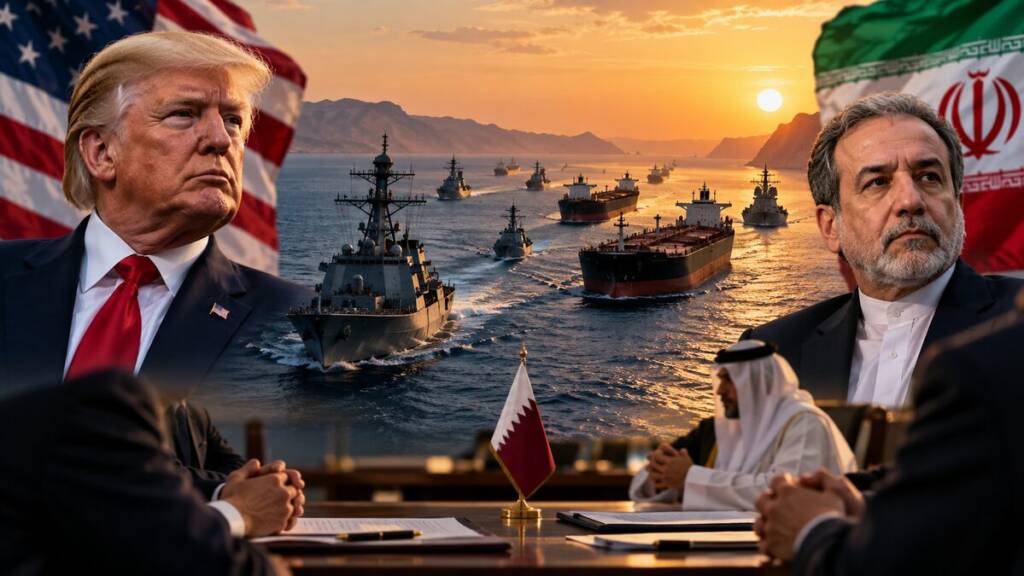
American and Iranian officials spoke separately with mediators on Monday in a renewed effort to end a war that has now run for seven months. President Donald Trump has rejected Iran’s latest peace plan, put forward on Saturday, and kept the US naval blockade in place, though he expects further talks this week.
Iran awaits a response
Iranian Foreign Minister Abbas Araghchi stayed on in New York after the UN General Assembly and met Qatari mediators there on Monday. He said he expects a response from Washington by Tuesday. According to Iran’s state news agency, he said Iran is waiting for the American reply to its proposals, and insisted that Iran had already “presented that solution.” He also said Iran will reopen the Strait of Hormuz only once Washington meets its conditions.
US envoys Steve Witkoff and Jared Kushner received Iran’s terms from Araghchi in New York last week, with Qatari officials relaying messages between the two delegations. Tehran’s seven-point plan calls for an end to all fighting in Iran and Lebanon, the release of billions of dollars in frozen assets, an end to oil sanctions and a lift on the blockade of Iranian ports. Only after that would Iran reopen the strait, a key route for global oil, and the two sides would then resume talks on Iran’s nuclear programme. Trump wants to seize or destroy Iran’s stockpile of highly enriched uranium.
Trump’s position on Iran
Trump said at the White House: “I like making a deal, too, but that deal would not be acceptable.” He argued that economic pressure is driving Tehran’s push for a quick deal, telling reporters: “They overplayed their hand,” and adding that Iran is now offering terms he might have accepted a year ago. He also denied reports that he had offered Tehran sanctions relief in exchange for nuclear concessions, writing on Truth Social: “This is untrue. I offered them NOTHING.”
The blockade and the numbers
US forces continue to protect dozens of tankers crossing the strait each day. A US defence official said 22 million barrels moved through the strait on Friday night alone, and Middle Eastern crude exports have climbed to near their highest level since the war began. American negotiators have told Tehran that Iran holds no real control over the strait.
According to reports, Washington has no plans to lift the blockade, and the administration is betting that continued economic pressure will push Tehran toward American terms. Trump has told aides he expects strikes to resume after the November midterms, though officials say he has not made a final decision on renewed combat. Asked about fresh strikes, Trump said the option never leaves his mind.
Qatari officials continue shuttle diplomacy between the two sides. Qatar’s prime minister met the Iranian president in New York last week, and senior Qatari officials briefed Witkoff afterward. The mediators have since offered both sides a compromise text, and an official familiar with the negotiations said talks will now focus on an amended Iranian plan.
Seven months of war
The conflict began in late February when the United States and Israel struck Iran. The fighting has killed thousands and rattled global markets. Washington and Tehran twice agreed to ceasefires through mediators, in April and June, and both fell apart quickly.
Brent crude rose more than three per cent on Monday, topping $101 a barrel. Higher fuel prices have added to voter frustration ahead of the November midterms, and Republicans in Congress are concerned about holding their majorities. Araghchi said the midterms play no part in Iran’s calculations.