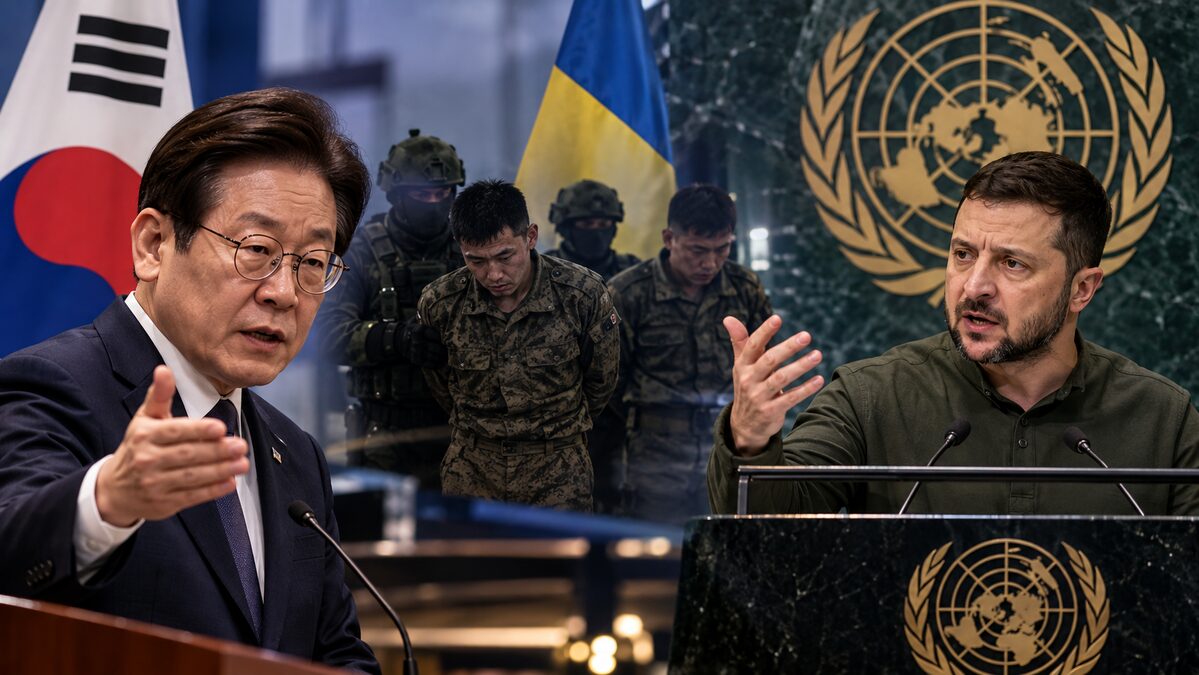
South Korea’s presidential office has demanded an official explanation and apology from Ukraine over a prisoner transfer that Ukrainian President Volodymyr Zelenskyy revealed at the United Nations. Seoul says both governments had agreed to keep the move confidential.
Seong Ghi-hong, senior presidential secretary for public relations, issued the statement on September 27. He accused Kyiv of breaking the agreement and then falsely denying that it had ever existed. That denial, Seong said, “seriously undermines trust between the two governments.”
What Seoul says Kyiv promised
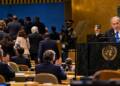
According to Seong, Kyiv raised the transfer with Seoul several times through different channels, and it was Ukraine that asked for secrecy. Seoul says Kyiv feared a domestic backlash for giving up a chance to swap the soldiers for Ukrainian captives. Seoul agreed, citing the safety of the two men and their relatives in North Korea. Zelenskyy then announced the transfer at the UN General Assembly on September 23 without sufficient consultation, Seoul says.
South Korean President Lee Jae Myung had earlier called the disclosure “deeply regrettable” in a post on X.
Why Zelenskyy went public
Zelenskyy’s office has offered a simple explanation. His aide Dmytro Lytvyn told journalists that Ukraine is “an open country” and that a secret handover would have looked strange. He added that Kyiv shared only the bare fact of the transfer, not the long back story.
In his speech, Zelenskyy used the prisoners to spotlight North Korea’s role in Russia’s war. He told world leaders that such soldiers are “not easy to capture alive,” and said one of them tried to kill himself rather than surrender. He also accused North Korean leader Kim Jong Un of using his soldiers “like currency” and taking something in return.
Why the soldiers went to Seoul
Ukrainian forces captured the two men in Russia’s Kursk region in January 2025. They were the first North Korean troops Ukraine took alive since Pyongyang entered the war in 2024. One of them said he was drafted into the army at 17.
Zelenskyy initially offered to return them to Kim in exchange for Ukrainians held by Russia. Human rights groups urged him to send them to South Korea instead, warning that they would face punishment at home. South Korean media reported that both soldiers wished to defect, and a South Korean lawmaker said the pair wanted an ordinary life in the South.
South Korea’s constitution treats all Koreans, including those in the North, as its citizens, and officials in Seoul have said that principle covers any North Korean troops captured by Ukraine. Lee and Zelenskyy agreed at a NATO summit in Ankara in July to settle the case under international law.
Seoul also had its own reasons for silence. Park Won-gon, a professor at Ewha Womans University, said Pyongyang uses its soldiers abroad to feed heroic regime propaganda, and that Seoul fears publicising the prisoners’ arrival could deepen the North’s hostility.
Kim’s soldiers in the war
The case also exposes the depth of the alliance between Pyongyang and Moscow. South Korean intelligence estimates that North Korea has sent about 14,000 to 15,000 troops to help Russia since 2024. Officials in Seoul, Kyiv and Western capitals say more than 6,000 of them have died. Intelligence reports and defector accounts suggest some soldiers blew themselves up rather than face capture.
Zelenskyy also warned Asian nations about North Korea’s more advanced ballistic missiles and drones. The warning carries weight in Washington, since the United States keeps thousands of troops in South Korea and Japan, within range of those weapons.
The Washington angle
The row broke out during Zelenskyy’s latest visit to the United States. On September 25, he said President Donald Trump had agreed to let Ukraine produce Patriot air defence missiles.
Trump has long pressed wealthy allies to carry more of the cost of their own security. Seoul still refuses to send lethal weapons to Ukraine, citing a domestic ban on arming countries at war, and the dispute could complicate Kyiv’s search for South Korean arms.
Lee’s government also backs efforts to revive dialogue with Pyongyang, and Trump has renewed his willingness to engage with North Korea. In Seoul, the opposition has attacked Lee’s government for allowing a foreign leader to reveal the prisoners’ arrival.