
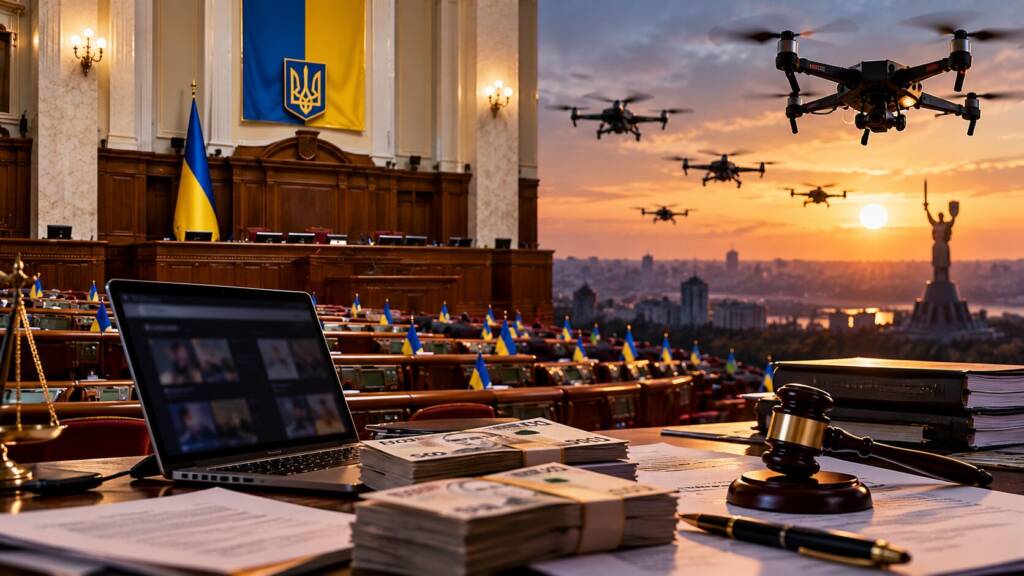
Ukraine’s parliament needs one more vote to scrap its criminal ban on adult pornography, in a bill whose supporters argue could raise enough tax revenue to buy tens of thousands of drones. The Verkhovna Rada backed the bill at first reading on July 14, by a vote of 231 to eight, with three abstentions. It now awaits a second reading before the president can sign it into law.
The numbers behind the bill
Yaroslav Zhelezniak of the opposition Holos party, who co-wrote Bill No. 15294 and serves as first deputy head of the parliamentary finance committee, estimates that legal adult content could generate up to $25 million in tax revenue each year, enough, he says, to buy about 30,000 drones. He told MPs in July that Ukraine was “mature enough as a nation to acknowledge that sex exists.” Danylo Hetmantsev, the finance committee chair from the ruling Servant of the People party and the bill’s other co-author, put the possible revenue at almost one billion hryvnias a year. Both figures are estimates, and modest next to Ukraine’s overall wartime funding needs.
Money is already moving through informal channels. OnlyFans’s parent company, Fenix International, found that about 7,900 Ukrainian creators earned more than $131 million in 2023. Ukraine’s Economic Security Bureau said some models had paid around 115 million hryvnias (about $2.5 million) in back taxes covering 2020 to 2023.
How the case reached parliament
The push gained momentum after one creator’s tax bill became a criminal matter. Svitlana Dvornikova, who has one million OnlyFans subscribers, filed about $900,000 in back taxes. Police then raided her home and her parents’ home, and she now faces a criminal case that remains on hold while the bill moves through parliament. A petition she filed calling for legalisation gathered more than 25,000 signatures, a threshold that required President Volodymyr Zelensky to respond, and he referred the matter to parliament.
Under current law, making or sharing pornography can carry prison terms of up to seven years. Zhelezniak has called this a “tragicomic” trap for creators, who risk tax evasion charges if they don’t declare income, and pornography charges if they do.
Police corruption has added urgency to the debate. In May, investigators arrested police chiefs in three regions over alleged bribes from adult content studios, with officers said to have demanded $20,000 a month from each studio. Authorities opened 2,368 pornography-related criminal proceedings in the first half of 2025 alone.
How the vote broke down
Servant of the People supplied 163 of the 231 votes for the bill. Holos and European Solidarity each contributed 16 votes, a shift for European Solidarity, which had not supported an earlier version of the bill in May. That version fell short on May 28, winning only 207 of the 226 votes it needed, a result Speaker Ruslan Stefanchuk attributed to a lingering Soviet-era mindset among lawmakers.
Batkivshchyna, led by former prime minister Yulia Tymoshenko, opposed the new bill, with five of its MPs, including Tymoshenko herself, voting against it. Tymoshenko said she would support life sentences for producing child abuse material, but argued the broader bill would turn Ukraine into a “pornographic hub.”
A divided public
No representative national poll on the bill has been reported. A Radio NV audience poll on May 21 drew 791 responses, of which 46 per cent said the time had come to decriminalise, 34 per cent objected on grounds of public morality, and the remaining 20 per cent said reform would cut into Interior Ministry income. Radio NV itself cautioned that the results do not represent the wider population.
Opposition from churches and women’s groups
The All-Ukrainian Council of Churches and Religious Organisations has called for the bill to be withdrawn, arguing it would harm public morals and health. Critics have also raised concerns about human trafficking and child abuse risks. Women’s rights groups have joined the opposition, with 110 civic organisations signing an appeal urging MPs to reject the bill, calling instead for tougher child-protection rules in separate legislation and arguing that the bill conflicts with European standards on sexual exploitation.
Support from creators and lawyers
Tax lawyer Lesia Mykhalenko, who has represented more than 100 OnlyFans models, calls the offence “a victimless crime.” Oksana, an agency manager who gave only her first name, said applications from prospective creators have doubled since July, arguing that legal status would let women work openly with banks and lawyers.
What the bill would change
The bill would remove criminal liability for adult content made and shared by consenting adults, while keeping penalties for sharing material involving minors or without consent, and raising sentences for some child abuse offences to as much as 15 years. It works by amending Articles 301 to 303 of the Criminal Code.
MPs still need to agree on amendments before the final vote. For Dvornikova, the outcome carries personal weight: she has said she will likely leave Ukraine for good if the reform fails.