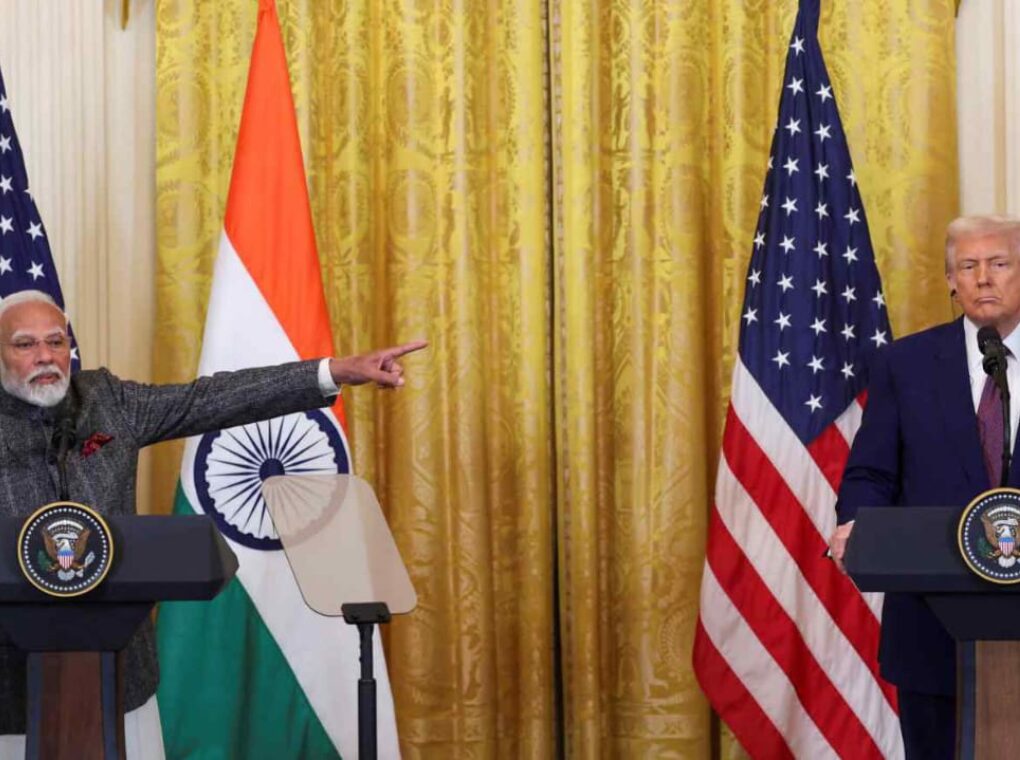
The United States has formally notified that additional tariffs of up to 50 percent on Indian exports will come into effect on August 27, 2025. The move, initiated by President Donald Trump, has escalated tensions between Washington and New Delhi, potentially threatening billions in trade flows.
According to the Department of Homeland Security’s draft notice released on Monday, the tariffs will apply to Indian-origin goods “entered for consumption or withdrawn from warehouse for consumption” from Wednesday onwards.
Why the US is Targeting India?
The Trump administration linked the new duties to “threats to the United States by the government of the Russian Federation,” with India singled out due to its rising imports of Russian crude oil.
In early August, Trump announced a 25% baseline tariff on Indian goods.
Later, an additional 25% levy was imposed, taking the total tariff to 50%.
White House trade adviser Peter Navarro claimed India was “not creating peace right now” and was “cosying up to Russia and China.”
The measures place India alongside Brazil in facing the world’s steepest trade barriers, with analysts estimating that a large majority of India’s $87 billion (2.2% of GDP) worth of exports to the US could be at risk.
India’s Defiant Response
Prime Minister Narendra Modi, speaking in Ahmedabad just hours before the US notice, struck a tone of resilience.
“No matter how much pressure comes, we will keep increasing our strength to withstand,” Modi declared, vowing to protect small entrepreneurs, farmers, and livestock rearers.
Commerce Minister Piyush Goyal told Parliament that India would act decisively to safeguard its national interests, while officials confirmed that financial assistance packages were being prepared for affected exporters.
Additionally, India has identified 50 alternative markets — including in Latin America, the Middle East, and China — to diversify its export base and offset losses from the US market.
Global Repercussions and Criticism
The tariffs have been met with sharp criticism from economists and diplomats.
Jeffrey Sachs, Columbia University economist, blasted the move as “the stupidest tactical blunder in US foreign policy in a long time,” arguing that it only unified the BRICS nations against Washington.
Former US Ambassador Nikki Haley warned that alienating India would be a “strategic disaster”, urging Trump to reverse course and restore direct talks with Modi.
The timing is geopolitically significant. Modi is scheduled to travel to China for the Shanghai Cooperation Organisation (SCO) Summit (August 31 – September 1), where he will join Xi Jinping and Vladimir Putin. Analysts believe the tariff crisis could push New Delhi closer to Beijing and Moscow, potentially undermining Washington’s Indo-Pacific strategy.
What Comes Next?
For India: The immediate challenge will be protecting its exporters, particularly in textiles, leather, processed foods, and marine products, which are heavily dependent on the US market.
For the US: Analysts warn that American consumers and businesses could also feel the pinch from higher import costs, while its diplomatic credibility with India — seen as a counterweight to China — risks long-term damage.
For Global Trade: The move is likely to fuel new alignments within the Global South, with China and Russia positioning themselves as partners to economies facing US trade pressure.
As the tariffs take effect tomorrow, the standoff marks one of the sharpest downturns in US-India relations in 25 years, raising questions about whether economic coercion can reshape New Delhi’s foreign policy — or whether it will backfire, pushing India deeper into alternative alliances.