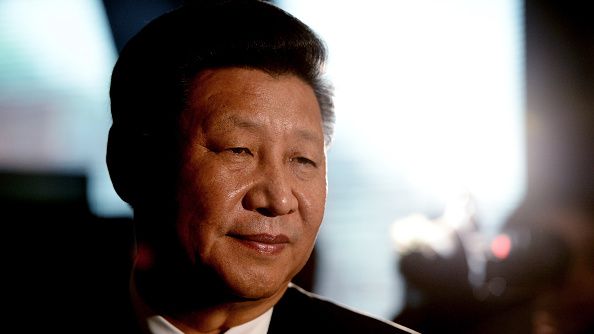
The dream project of Chinese president Xi Jinping known as ‘One belt one road’ (OBOR) or the 21st-century Maritime Silk Road, is an infrastructure building strategy adopted by the Chinese government. It involves investment in the infrastructure projects in countries of Europe, Asia and Africa. In the year 2013, the Chinese government under President Xi inaugurated this mammoth economic and infrastructure project. It was advertised as a project to benefit the world economically by linking consumers to markets and enhancing the logistics to ensure the goods and services are delivered quickly at cheaper rates. While addressing the belt and road forum, president Xi called it the “project of the century.” Though, India already has distanced itself from Xi’s flagship project.
In compliance with its state strategy, India skipped the opening ceremony of China’s OBOR summit. India also voiced its concerns as CPEC (China Pakistan Economic Corridor), a flagship project of OBOR passes through the Indian Territory in the Pakistan occupied Kashmir. As the project violates Indian Sovereignty, none from Indian diplomatic circle was seen at the opening ceremony, instated by President Xi Jinping. India was the only South Asian country that boycotted this ambitious project. Defence experts refer the Chinese initiative ‘One Belt, One Road,’ as a web that appears as a trade route network, aiming to provide connectivity in Asia, Africa, West Asia and Europe, but in real sense it poses a major security threat to India as it allows china to encircle it.
As advertised by the Chinese government, the initial emphasis was and remains even today – the infrastructure investment, high speed railway and multi lane highway, housing and real estate, power plants and grids. After its announcement, many countries exhibited great interest and joined the initiative, expecting the advancement in their economies at rapid pace. Chinese government did announce several infrastructure projects under the OBOR initiative and a prodigious pumping of money has taken place since then. The situation on ground is rapidly changing and what appeared to be economy-boosting project appears now an economy crumbling trap. Numerous smaller economies of Asia, Africa, and Europe had hailed the Chinese investments sworn under the OBOR, wanting a helping hand in the economic activity, now turns out to be a flood of Chinese goods in the market and serious repercussions of non-performing investment is making life difficult for them. The debt trap is now becoming threat to the sovereignty of these smaller economies.
In the recent months, numerous countries are turning the table and seem to have understood the Chinese game plan. The Hambantota incidence was an eye-opener for many countries with Sri Lankan inability to repay the debt and then getting forced to lease out the port to Chinese shipping company for 99 years. The Malaysian Prime Minister, Mahathir Mohamad in fact termed the project as a new form of colonialism and announced that Malaysia will not go ahead with multiple Chinese projects with an estimated price tag of $ 20 Billion. From Indonesia to Maldives, the Belt and Road Imitative project has been plagued with serious delays. Among numerous projects, railway being the primer is running behind schedule and consequentially the costs are skyrocketing. This has been the case in Laos, Pakistan, Kazakhstan and Bangladesh. This sharp cost escalation has not only made the already high on dollars projects unaffordable but also unmanageable.
India has always been a net security provider in the Indian Ocean region and being a part of the Indian Ocean, Maldives has always been an area of Indian strategic interest. When entire nation was echoing “India should intervene in Maldives and Cactus-2 should be executed”, the establishment maintained it’s cool and out of the area contingency (OOAC) plan (Similar to operation cactus), at short notice was never conducted. The Patience and serenity resulted in what was difficult to imagine few months ago. When 234,000 voters came out to vote, the Indian Ocean island country outed, hostile to India and close to China, autocratic president, Abdulla Yameen. Abdulla Yameen earlier had enforced emergency and conducted a crackdown against his political opponents and critics brutally. The victory was even more tranquilising as the opposition leader living in exile demanded military intervention. The calm maintained by New Delhi was the result of intelligence reports from the ground. Hours after the political reshuffling, Mr Solih had spoken to Indian PM Narendra Modi and asserted publicly that India was and will always remain Maldives’ ‘closest ally’.
China has always been a dominating power exhibiting indicators like colonial-era powers and on contrary, India is seen as a nimble and humble soft power. Thus, India appears as a perfect substitution for China with its ability to restrain itself from intervening and forcing the favourable policy changes. Just when India was about to breathe easy, the situation in Sri Lanka turned fluid and aligned with the typical Indian doctrine, New Delhi is again on wait and watch mode. Keeping the constant dialogue channels open, active and engaging with both the parties, India seems to be playing its cards right but it will be imprudent to think that the Chinese have frolicked all their options. The great Asian powers are often seen having friction, but they seem to have learnt the trick of the trade and the games seem still on.