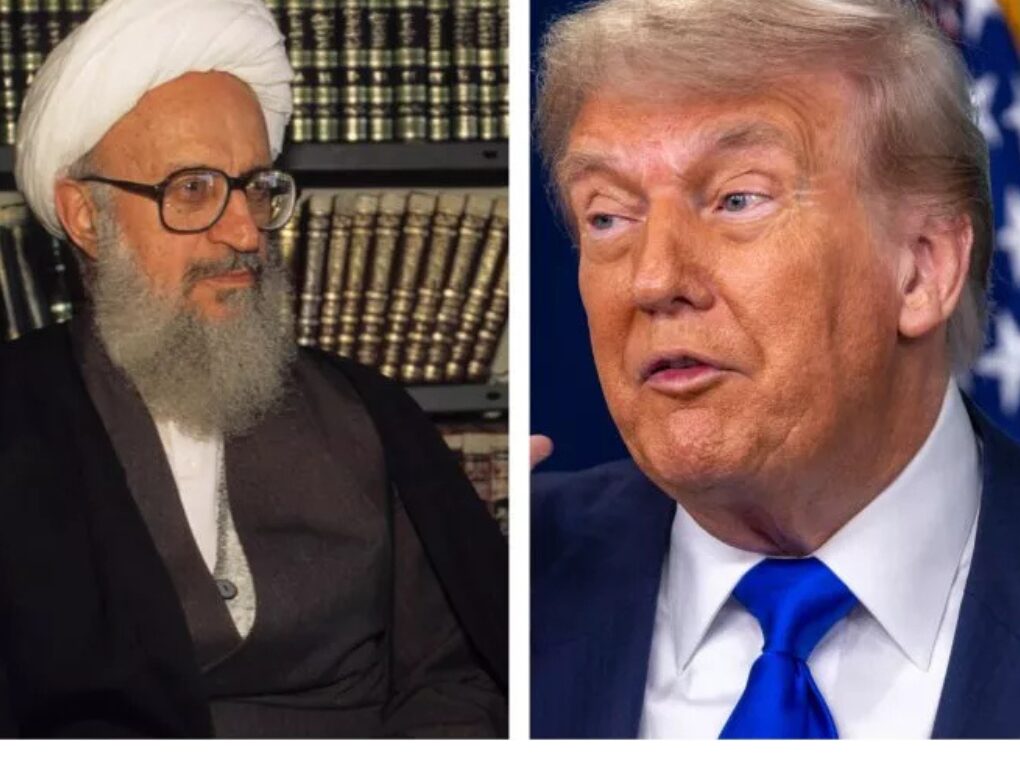
On June 29, 2025, Grand Ayatollah Naser Makarem Shirazi, one of Iran’s most senior Shiite clerics, issued a fatwa declaring U.S. President Donald Trump and Israeli Prime Minister Benjamin Netanyahu “enemies of God” for their threats against Iran’s Supreme Leader Ayatollah Ali Khamenei and the country’s religious leadership.
The religious decree, reported by Iran’s Mehr News Agency, labels the two leaders as “mohareb” (those who wage war against God) and urges Muslims worldwide to “make them regret their words and mistakes.” This provocative fatwa, issued days after a U.S.-brokered ceasefire ended a 12-day conflict between Iran and Israel, intensifies regional tensions and raises serious concerns about the potential for religiously motivated violence.
This analysis examines the context, implications, and role of the fatwa in the broader Iran-Israel-U.S. conflict.
Context of the Fatwa: A Response to Threats
The fatwa was issued in response to a formal query about threats made by Trump and Netanyahu against Khamenei during a 12-day war that began on June 13, 2025. Israel’s “Operation Rising Lion” targeted Iranian nuclear facilities, military commanders, and scientists, killing at least 30 commanders and 11 atomic scientists, according to Israeli claims.
The campaign also included a controversial strike on Tehran’s Evin Prison, which killed 71 people, including inmates, staff, and civilians. During the conflict, Israeli Defense Minister Israel Katz openly threatened to assassinate Khamenei, stating, “If Khamenei had been in our sights, we would have taken him out.”
Trump echoed this aggression, claiming on his Truth Social platform that he knew Khamenei’s location and had spared him from “an ugly and ignominious death,” calling the Iranian leader an “easy target.”
These statements, coupled with U.S. and Israeli airstrikes on Iran’s nuclear sites—Fordow, Isfahan, and Natanz—prompted Shirazi’s fatwa. The cleric declared that any individual or regime threatening Iran’s Supreme Leader or Marja (senior Shiite religious authorities) is a “mohareb,” a term in Islamic law denoting those who wage war against God.
Under Iranian law, mohareb can face severe punishments, including execution, crucifixion, amputation, or exile. Shirazi further stated that supporting Trump or Netanyahu is “haram” (forbidden) for Muslims, framing opposition to the two leaders as a religious duty.
The Significance of the Fatwa
A fatwa is a religious ruling issued by a Marja, a high-ranking Shiite cleric with the authority to interpret Islamic law. While not legally binding outside Sharia-based systems, fatwas carry significant spiritual and political weight among Shiite communities. Shirazi’s decree, issued from Qom, Iran’s religious capital, is particularly potent given his status as a Grand Ayatollah with millions of followers worldwide.
The fatwa’s language, urging Muslims to “make these enemies regret their actions,” is ambiguous but inflammatory, potentially inciting violence.
Critics, including British Iranian commentator Niyak Ghorbani and Iran analyst Khosro Isfahani, have compared it to the 1989 fatwa against author Salman Rushdie, which led to multiple assassination attempts, including a 2022 stabbing that left Rushdie blind in one eye.
The timing of the fatwa, days after the June 24 ceasefire, underscores its political motivations. Iran’s leadership, reeling from the destruction of nuclear facilities and the loss of key personnel, seeks to rally domestic and international support by framing the U.S. and Israel as existential threats to Islam.
The fatwa also serves as a counter-narrative to Trump’s claims of having “obliterated” Iran’s nuclear program, which the International Atomic Energy Agency’s Rafael Grossi has disputed, noting that Iran’s uranium enrichment capabilities remain intact.
Implications for Regional and Global Security
The fatwa significantly escalates tensions in an already volatile region. By labeling Trump and Netanyahu “enemies of God,” Shirazi’s decree could inspire lone actors or militant groups to target the leaders, particularly in countries with significant Shiite populations or Iranian influence, such as Iraq, Lebanon, or Yemen.
The 1989 Rushdie fatwa demonstrates the long-term risks of such decrees, as it remained a rallying point for violence decades later. Isfahani of the National Union for Democracy in Iran, called it a “murder fatwa” akin to Rushdie’s, warned on the social media platform X that the fatwa is a “real danger,”.