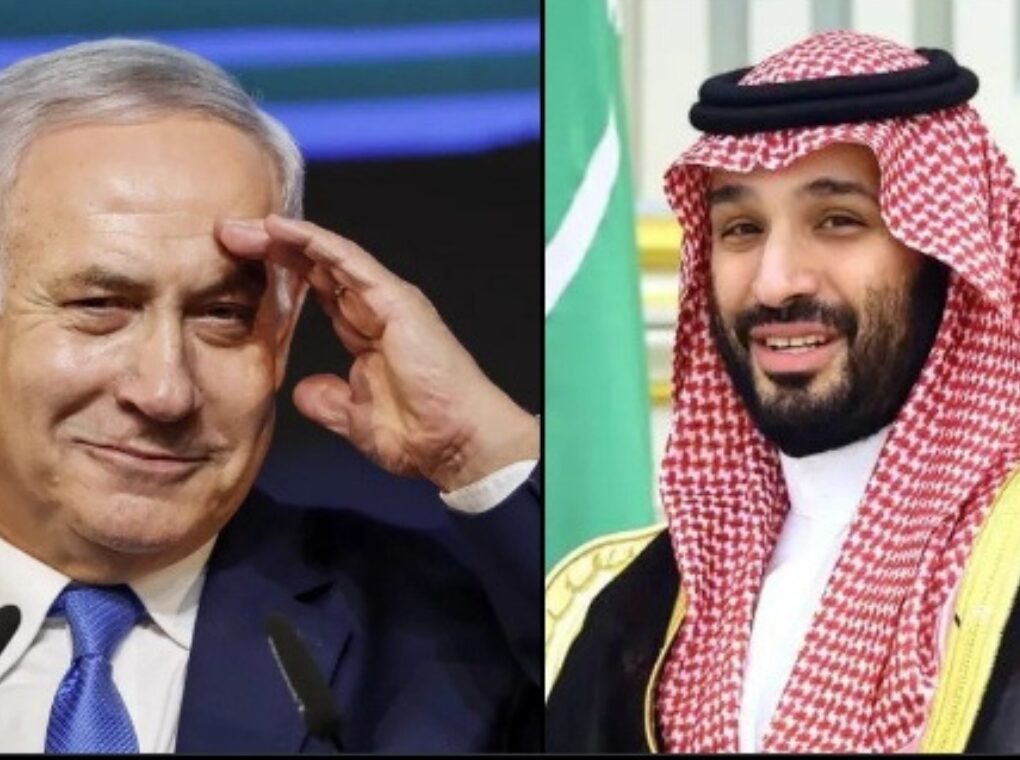
In a rapidly shifting Middle East landscape, Saudi Arabia and Jordan are navigating a perilous geopolitical tightrope — publicly condemning Israel’s military actions while quietly cooperating with it to counter a shared adversary: Iran.
This paradox was starkly revealed during the unprecedented Iranian missile and drone assault on Israel, which followed a suspected Israeli strike on the Iranian consulate in Damascus that killed two generals. In response, Iran unleashed a barrage of more than 300 projectiles toward Israeli territory — nearly all of which were intercepted in what many now call the region’s first real test of a nascent, U.S.-led regional defense alliance.
While Israel, the United States, the United Kingdom, France, and Jordan openly participated in the defense operation, new revelations suggest that Saudi Arabia played a critical, if unofficial, role in repelling the attack, signaling an unspoken yet deepening military coordination with Israel.
A Secret Shield
According to a KAN News report, Saudi Arabia provided radar tracking data and intelligence about Iranian flight paths to the United States and Israel. Perhaps most consequentially, Riyadh allegedly opened its northern airspace to Israeli fighter jets — a move that would have been unthinkable just a few years ago.
A source close to the Saudi royal family reportedly stated that the Kingdom has an automatic air defense system to intercept suspicious objects entering its airspace. Whether motivated by regional security or strategic calculation, Riyadh’s cooperation came at a critical moment and may have tipped the scales in Israel’s favor.
Jordan’s Calculated Response
Jordan, meanwhile, has taken a more visible role. The Jordanian military confirmed that it shot down several Iranian missiles and drones over its territory, framing the move as self-defense. These projectiles, the army said, posed a direct threat to Jordanian civilians. However, U.S. and Israeli sources indicate Jordan’s actions also aided Israeli defense efforts.
Reports also suggest Israeli fighter jets may have traversed Jordanian airspace in their attempts to intercept Iranian attacks, possibly even engaging alongside Jordanian forces for the first time. Though downplayed publicly, this cooperation signals a deeper strategic alignment, driven more by security pragmatism than by political ideology.
Public Condemnation, Private Collaboration
The cooperation comes amid widespread public opposition in both Jordan and Saudi Arabia to any support for Israel, particularly in light of the ongoing Gaza conflict. On June 22, 2025(Iran-Israel conflict), both countries were among 21 Muslim-majority nations that issued a joint statement condemning Israel’s retaliatory strikes on Iran. Yet this public posture appears to contrast sharply with their military behavior behind the scenes.
For Saudi Arabia, whose population has historically harbored strong anti-Israel sentiments, an open alliance is politically untenable. Yet, as one analyst told Deutsche Welle, “Saudi Arabia is opposing Israel only to show its people and the Muslim world.” In reality, the Kingdom’s primary concern remains Iran’s growing influence and its support for regional proxies such as Hezbollah and Hamas.
Jordan, too, finds itself caught in a bind. The Hashemite Kingdom depends heavily on U.S. financial aid and security backing. With its geopolitical fragility, porous borders, and a large Palestinian population critical of Israel, Amman has had to strike a delicate balance, maintaining military coordination with Israel while vocally criticizing its Gaza operations.
The Iran Factor
Iran’s growing regional assertiveness has become the primary driver of this evolving realignment. Despite last year’s China-brokered thaw between Tehran and Riyadh, Iran remains a key rival to the Gulf Kingdom. The two powers continue to wage a proxy war in Yemen, and Iran’s patronage of Hamas and Hezbollah threatens both Saudi and Israeli security interests.
“The Iranian attack on Israel has only deepened this shared concern,” said Thomas Juneau, a professor at the University of Ottawa. “Saudi and Israeli cooperation, while unofficial, is being driven by necessity.”
This cooperation may also reflect a broader strategic shift toward a more integrated regional defense framework — a concept quietly pursued under the Trump administration and often referred to as a “Middle East NATO.”
A Quiet Coalition Emerges
While experts remain skeptical that a formal alliance will materialize anytime soon, the events of April 2025 reveal what an informal regional coalition can accomplish. “This was a preview of what combined security cooperation can look like in the region,” wrote the Foundation for Defense of Democracies.
Brian Katulis of the Middle East Institute adds a note of caution: “In this region, countries hedge their bets. They may cooperate militarily in secret while maintaining a public posture. That’s the reality of Middle Eastern diplomacy today.”
The Road Ahead
The path forward remains uncertain. The war in Gaza has derailed previous U.S.-brokered normalization talks between Israel and Saudi Arabia. However, many analysts believe that the threat posed by Iran — and the effectiveness of recent military collaboration — may ultimately revive those discussions.
As one Israeli defense official put it: “The lines are being redrawn. What happened in April 202 may not have changed everything, but it showed what’s possible when the region unites against a common threat.”
In the meantime, Jordan and Saudi Arabia will likely continue their precarious balancing act — cooperating behind closed doors while navigating the volatile demands of their streets.