TFIGlobal
TFIGlobal
TFIPOST English
TFIPOST हिन्दी
No Result
View All Result
  • Indo-Pacific
  • Americas
  • Canada
  • Indian Subcontinent
  • West Asia
  • Europe
  • Africa
  • The Caribbean
TFIGlobal
  • Indo-Pacific
  • Americas
  • Canada
  • Indian Subcontinent
  • West Asia
  • Europe
  • Africa
  • The Caribbean
No Result
View All Result
TFIGlobal
TFIGlobal
No Result
View All Result
  • Indo-Pacific
  • Americas
  • Canada
  • Indian Subcontinent
  • West Asia
  • Europe
  • Africa
  • The Caribbean

The second wave of Japan’s economic offensive against China is here. And it is brutal

Abhyoday Sisodia by Abhyoday Sisodia
February 8, 2021
in Indo-Pacific
China, Japan, RCEP, TPP
Share on FacebookShare on X

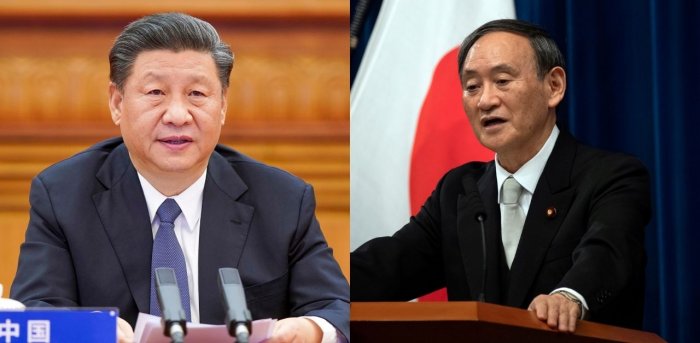
The Japanese economic offensive against the Chinese seems to be going on with turbo boost. Earlier in 2020, Tokyo had set up a fund to support countries monetarily to move out of China to countries like India and Vietnam as well as some Southeast Asian countries too. Now, with the countries moving out of China en-mass, Japan has forced a second wave of economic offensive over the Chinese Communist Party. Over half of Japanese businesses in Vietnam and India have plans to expand their in-country operations, a recent survey showed, a sign of a shift toward reducing reliance on China as a production base in what is known as a “China plus one” strategy.

The Chinese Communist Party under Xi Jinping was already taking the confrontation with Tokyo to the next level with giving its Coast Guard to open fire on vessels which transgress into territories which China claims as its own as well as keeping up activity in the region around Senkaku Islands which Japan claims and controls as its own. However, if the decision to diversify its manufacturing sources last year was a major decision by Japan, now it has taken the efforts to a whole another level. Japanese companies are now expanding their operations in India, Vietnam and other countries which will overshadow the operations in China by a long margin.

Also Read

Trump Renames Lake Ontario ‘Lake America’, and Google Has Already Redrawn the Map

Trump Posts AI Video of Kharg ‘Blown to Smithereens’ as US and Iran Trade Fire

Turkey, Saudi Arabia and Pakistan Open First Defence Pact Talks as Saudi Refineries Burn

In the online survey conducted by Japanese staffing firm Pasona Group Inc. last December, 57 per cent of Japanese companies in Vietnam and 55 per cent in India said they will expand operations in the host countries, compared with the average of 39 per cent among all 11 countries and regions polled. And in contrast, Hong Kong stood lowest at only 13 per cent in the wake of deterioration in the trade environment which could be attributed to China’s dismissal of pro-democracy lawmakers and crackdowns on democracy activists, according to the same survey.

The survey tells a very pertinent reality regarding the ability and intent of the Japanese government to decrease its dependence on the Chinese supply chains for the simple fact that the Xi Jinping-led Chinese Communist Party is acting in an aggressive manner and non-considerate of the problems and concerns of its neighbours.

On Sunday, Chinese Coast Guard vessels entered the Japanese territorial waters near the Senkaku Islands for the second day in a row. The Chinese vessels targeted a Japanese fishing boat and followed it after intruding into Japan’s waters. Yet, the Chinese vessels were shooed away by Japan. The incident, however, revealed that Beijing is desperate to step up aggression but Tokyo is in no mood to hold back either.

Read more: Japan-China Face-off: With orders to open fire, China targets Japanese boats but Japan shoos them away

In light of the current situation and the way in which China is acting, Japan has taken on the role of leading an anti-China front. The way it is leading the countries along with the Australians and Indians, China is not happy. And understanding the situation, Japan knows that pandering to China will not be a long-term situation. 

The countries covered in the survey were the United States, Canada, Hong Kong, Taiwan, South Korea, Thailand, Vietnam, Malaysia, Singapore, Indonesia and India. Japan has launched a turbocharged offensive against the Chinese economic monopoly, by means of expanding the businesses of companies present in India and Vietnam at the expense of their operations in China.


ShareTweetSend
Abhyoday Sisodia

Abhyoday Sisodia

M.A. in East Asian Studies, Department of East Asian Studies, the University of Delhi, India. Deep interest in geopolitics, foreign policy and world affairs.

Also Read

A dramatic cyberwarfare illustration showing a shadowy hacker from China launching digital attacks from red-lit servers toward major US government, scientific and industrial facilities, with blue shields marking defended targets and red broken locks indicating compromised systems.

From Victims to Targets: US Quietly Edits Its Chinese Hacking Claims

August 30, 2026
A hooded hacker sits before multiple computer screens as images of the U.S. Capitol, NASA, federal institutions, servers and network data surround them, symbolising a Chinese-linked cyber-espionage hacking campaign targeting American government agencies.

Eight Years in the Dark: Chinese Hacking Campaign Reached NASA, the Fed, and the US Senate

August 27, 2026
A hypersonic glide vehicle streaks through the upper atmosphere as it launches a missile toward a US AWACS radar aircraft, with tanker and support aircraft flying in the distance above dramatic cloud cover.

China’s Hypersonic Gliders Can Now Shoot at Aircraft — And America’s Radar Planes Are the Target

August 25, 2026
A dramatic collage showing Hui Ka Yan in the foreground, Evergrande’s rise symbolised by a luxury skyscraper, car and stacks of cash, and China’s property crisis represented by unfinished buildings, rubble, displaced families and a prison cell. Evergrande founder life sentence

From China’s Richest Man to a Prison Cell: The Evergrande Founder’s Life Sentence Explained

August 24, 2026
A container ship sails through icy Arctic waters toward a snow-covered coastal port, surrounded by floating sea ice and towering mountains under a dramatic sunset.

A Ship Sails North, and the China-Russia Arctic Shipping Route Comes Alive

August 22, 2026
Conceptual illustration of Chinese data infrastructure feeding into a central artificial intelligence system, with glowing data streams spreading toward chatbots and users worldwide, symbolising China’s growing influence over AI training data and information ecosystems.

Explainer: How China Plans to Shape What the World’s AI Knows

August 22, 2026
Youtube Twitter Facebook
TFIGlobalTFIGlobal
Right Arm. Round the World. FAST.
  • About Us
  • Contact Us
  • TFIPOST – English
  • TFIPOST हिन्दी
  • Careers
  • Brand Partnerships
  • Terms of use
  • Privacy Policy

©2026 - TFI MEDIA PRIVATE LIMITED

Welcome Back!

Login to your account below

Forgotten Password?

Retrieve your password

Please enter your username or email address to reset your password.

Log In

Add New Playlist

No Result
View All Result
  • Indo-Pacific
  • Americas
  • Canada
  • Indian Subcontinent
  • West Asia
  • Europe
  • Africa
  • The Caribbean
TFIPOST English
TFIPOST हिन्दी

©2026 - TFI MEDIA PRIVATE LIMITED

This website uses cookies. By continuing to use this website you are giving consent to cookies being used. View our Privacy and Cookie Policy.