TFIGlobal
TFIGlobal
TFIPOST English
TFIPOST हिन्दी
No Result
View All Result
  • Indo-Pacific
  • Americas
  • Canada
  • Indian Subcontinent
  • West Asia
  • Europe
  • Africa
  • The Caribbean
TFIGlobal
  • Indo-Pacific
  • Americas
  • Canada
  • Indian Subcontinent
  • West Asia
  • Europe
  • Africa
  • The Caribbean
No Result
View All Result
TFIGlobal
TFIGlobal
No Result
View All Result
  • Indo-Pacific
  • Americas
  • Canada
  • Indian Subcontinent
  • West Asia
  • Europe
  • Africa
  • The Caribbean

Chinese vaccine is so unpopular in the Philippines that the Duterte government is forced to hide vaccine information

Abhyoday Sisodia by Abhyoday Sisodia
May 21, 2021
in Indo-Pacific
philippines chinese vaccine
Share on FacebookShare on X

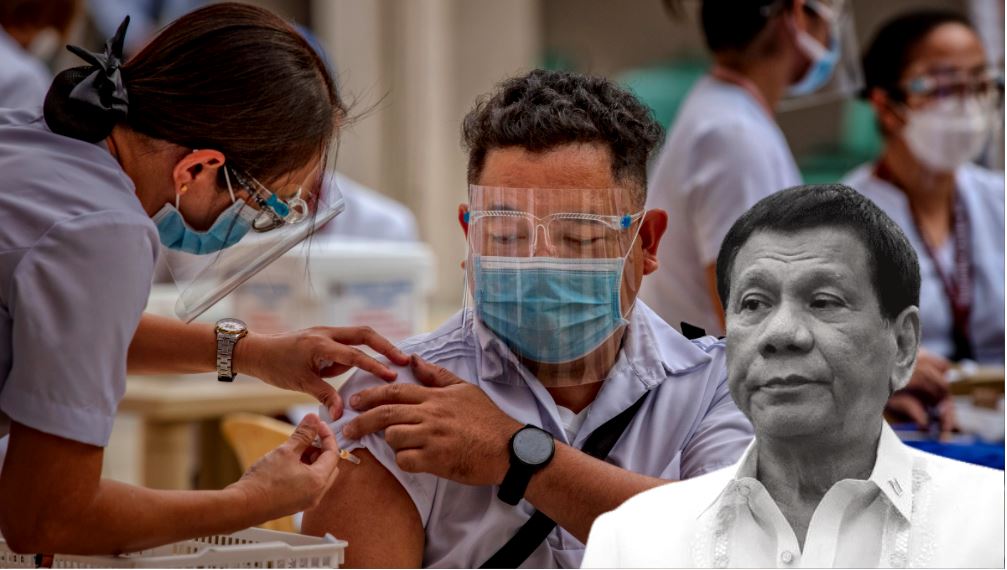
The Duterte government in the Philippines was for a very long time a big fan of the communist regime in China and under the fanboy syndrome he overlooked all the data, analysis and reviews available regarding the Chinese vaccines for Covid-19. The popularity of the Chinese vaccine has since plummeted so much that it is leading to vaccine hesitancy, and that too of a very unique type, given the hesitancy is just for the Chinese vaccines and not vaccines in general.

The people are so wary and scared that to solve the problem the Duterte govt is forced to hide vaccine information. As per news reports, the Philippines will stop announcing the maker of the Covid vaccines being administered at inoculation centres, after people crowded venues offering Pfizer jabs. The new policy is meant to “overcome vaccine brand preference” as the Philippines, already challenged by prevailing vaccine hesitancy, races to inoculate over half its population this year and revive a reeling economy.

Also Read

Turmoil in Philippines continues as the Duterte and Marcos families battle it out in the elections

China vs Phillipines: Beijing plants flag on disputed islands as South China Sea clash heats up

Philippines Defends South China Sea Reef Amid Ship Withdrawal

And talking about the unpopularity, it is rooted in some truth. The Seychelles had fully vaccinated 60 per cent of its population against the Chinese virus. But the island country made a big mistake- it used a Chinese vaccine called Sinopharm. Having vaccinated 60 per cent of its population, the Seychelles- a tourism-dependent country, opened up itself to the whole world. Now, the Vanilla island country is facing a new surge of Covid-19 cases and therefore, the government is forced to bring back social restrictions.

Read more: Seychelles opened up itself to the world after vaccinating its people with Chinese vaccines. Disaster immediately struck

Let’s talk numbers. The Seychelles- an archipelago of nearly 100,000 people recorded around 500 cases at the start of this month. These were the first signs of an impending disaster. Today, the Seychelles has about 1,000 active cases. Interestingly, a third of the active cases were those who had two vaccine doses. Others were unvaccinated or had only received a single dose of vaccine.

Thus, when the people of the Philippines are trying to opt for options other than the Sinovac vaccine, it is for their own good. Out of the Philippines’ total supply of 8.2 million doses, only 193,000 Pfizer doses are available. Sinovac, a Chinese company, is responsible for the majority of the vaccines, which total 5.5 million. AstraZeneca supplied over 2 million doses, while Russia supplied 30,000 doses of Sputnik V vaccine.

The Pfizer doses, including those from AstraZenaca, are donated by the COVAX factory, which is supported by the United Nations. Priority is provided to front-line staff and the elderly. According to vaccine czar Carlito Galvez, the Philippines is expected to sign a contract for 40 million doses of the Pfizer vaccine, the country’s biggest deal to date.

The vaccination programme has been hampered by Filipinos’ apprehension about which vaccines to take, as well as general apprehension about Covid shots. Just 19 percent of Filipinos were able to be vaccinated, according to a survey conducted by Octa Research in January and February. According to Octa, confidence in vaccines from the United States is the highest at 41%, while trust in vaccines from China is the lowest at 13%.

However, the hesitancy cannot be totally put on the shoulders of the people, given the vaccine available from the very early days is the Sinovac. And at a time when other countries are either replacing them or overcompensating with other types of vaccines, the Duterte government kept forcing people to take the Chinese vaccine. And in this connected world of the internet, people get the information which they need. The information about Chinese vaccines not being effective could also have played a large role. In the backdrop of all these observations we can say that the decision by the Duterte government to hide the vaccine information from the people so that they are not choosing one over another can only be attributed to the unpopularity of Chinese vaccine in the country.

Tags: chinese vaccinesPhilippinesShort takes
ShareTweetSend
Abhyoday Sisodia

Abhyoday Sisodia

M.A. in East Asian Studies, Department of East Asian Studies, the University of Delhi, India. Deep interest in geopolitics, foreign policy and world affairs.

Also Read

A dramatic cyberwarfare illustration showing a shadowy hacker from China launching digital attacks from red-lit servers toward major US government, scientific and industrial facilities, with blue shields marking defended targets and red broken locks indicating compromised systems.

From Victims to Targets: US Quietly Edits Its Chinese Hacking Claims

August 30, 2026
A hooded hacker sits before multiple computer screens as images of the U.S. Capitol, NASA, federal institutions, servers and network data surround them, symbolising a Chinese-linked cyber-espionage hacking campaign targeting American government agencies.

Eight Years in the Dark: Chinese Hacking Campaign Reached NASA, the Fed, and the US Senate

August 27, 2026
A hypersonic glide vehicle streaks through the upper atmosphere as it launches a missile toward a US AWACS radar aircraft, with tanker and support aircraft flying in the distance above dramatic cloud cover.

China’s Hypersonic Gliders Can Now Shoot at Aircraft — And America’s Radar Planes Are the Target

August 25, 2026
A dramatic collage showing Hui Ka Yan in the foreground, Evergrande’s rise symbolised by a luxury skyscraper, car and stacks of cash, and China’s property crisis represented by unfinished buildings, rubble, displaced families and a prison cell. Evergrande founder life sentence

From China’s Richest Man to a Prison Cell: The Evergrande Founder’s Life Sentence Explained

August 24, 2026
A container ship sails through icy Arctic waters toward a snow-covered coastal port, surrounded by floating sea ice and towering mountains under a dramatic sunset.

A Ship Sails North, and the China-Russia Arctic Shipping Route Comes Alive

August 22, 2026
Conceptual illustration of Chinese data infrastructure feeding into a central artificial intelligence system, with glowing data streams spreading toward chatbots and users worldwide, symbolising China’s growing influence over AI training data and information ecosystems.

Explainer: How China Plans to Shape What the World’s AI Knows

August 22, 2026
Youtube Twitter Facebook
TFIGlobalTFIGlobal
Right Arm. Round the World. FAST.
  • About Us
  • Contact Us
  • TFIPOST – English
  • TFIPOST हिन्दी
  • Careers
  • Brand Partnerships
  • Terms of use
  • Privacy Policy

©2026 - TFI MEDIA PRIVATE LIMITED

Welcome Back!

Login to your account below

Forgotten Password?

Retrieve your password

Please enter your username or email address to reset your password.

Log In

Add New Playlist

No Result
View All Result
  • Indo-Pacific
  • Americas
  • Canada
  • Indian Subcontinent
  • West Asia
  • Europe
  • Africa
  • The Caribbean
TFIPOST English
TFIPOST हिन्दी

©2026 - TFI MEDIA PRIVATE LIMITED

This website uses cookies. By continuing to use this website you are giving consent to cookies being used. View our Privacy and Cookie Policy.