TFIGlobal
TFIGlobal
TFIPOST English
TFIPOST हिन्दी
No Result
View All Result
  • Indo-Pacific
  • Americas
  • Canada
  • Indian Subcontinent
  • West Asia
  • Europe
  • Africa
  • The Caribbean
TFIGlobal
  • Indo-Pacific
  • Americas
  • Canada
  • Indian Subcontinent
  • West Asia
  • Europe
  • Africa
  • The Caribbean
No Result
View All Result
TFIGlobal
TFIGlobal
No Result
View All Result
  • Indo-Pacific
  • Americas
  • Canada
  • Indian Subcontinent
  • West Asia
  • Europe
  • Africa
  • The Caribbean

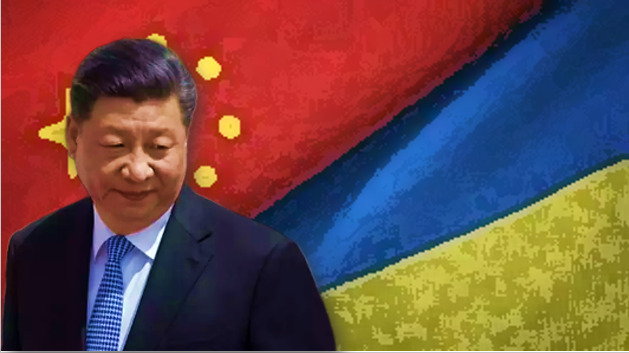
As bizarre it may sound, China has a binding obligation to use nuclear weapons to protect Ukraine

Abhyoday Sisodia by Abhyoday Sisodia
March 28, 2022
in China, Europe, Geopolitics, Russia
CHINA,CCP,BEIJING,RUSSIA,UKRAINE
Share on FacebookShare on X

Xi Jinping and the Chinese Communist Party have for long tried to maximize their interests notwithstanding their commitments to countries, even if for an all-weather ally like Russia. China is seeking ways to reclaim its pre-pandemic hegemony, which got spread from its own territory. China’s economy is currently faced with numerous challenges erupting out of the Covid mismanagement and its foreign policy paralysis. So, China would be really looking forward to making a fortune out of the green agenda being pushed by the governments in the West.

Read more: France and the Philippines are jointly building a lethal submarine force to sink the PLA

Also Read

BRICS Declaration Backs South Africa’s G20 Seat and Criticises Tariffs, Without Naming any Country

One Man, 14 Break-Ins: Anthropic’s Report on How AI Became a Weapon for Hire

One Table, Two Wars: Modi Seats Putin and Xi as Delhi Opens BRICS

In line with this, China has already a long-standing agreement with Ukraine, that compromises the Russian position. The CCP and Ukraine signed eleven agreements in December 2013, one of which was the “Joint Declaration of Ukraine and China to Deepen Strategic Partnership.” If a nuclear state deployed nuclear weapons against Ukraine, China committed to providing a “nuclear umbrella” to safeguard Ukraine. China signed it despite knowing the differences between the Ukrainian government and Russia, one of its closest allies.

This was an odd deal because Beijing professes to have a no-first-use policy, implying that it would engage in a nuclear war to protect a country other than China. Why did the CCP agree to such a deal? 

It was Because of Ukraine’s strategic relevance to the CCP in terms of resources and military technology. China was Ukraine’s greatest commercial partner in 2021.

And while the CCP is willing to show its strategic ambivalence in the current Russia-Ukraine crisis, it is obvious that in situations where Russia is left alone, China will make sure to maximize its interests, even if it is at the expense of Moscow.

The CCP has military interests in Ukraine in addition to commercial relations. Ukraine, for example, contributed jet engine technology to the People’s Liberation Army (PLA) Air Force fighter development program, and a Ukrainian aircraft carrier eventually became the PLA Navy’s first aircraft carrier.

Second, the CCP could demand that its participation in the Russian operation be subject to certain conditions. The CCP, for example, could demand that the US and Europe pledge not to interfere in its annexation of Taiwan.

Third, if the CCP can persuade Russia to stop and/or withdraw, it will be permitted to send its military forces into Ukraine to keep the peace under a mediated truce. This commitment would put the Ukrainians in a position where they would be competing for resources with two kleptocratic autocracies (Russia and China).

Allowing PLA personnel from the Chinese Communist Party into Ukraine would be like letting the fox into the hen house. If Ukraine were to experience a political crisis, the PLA’s position would be dubious at best and treacherous at worst.

Fourth, allowing Beijing to negotiate on behalf of Europe and the US would allow the CCP to exert influence over the level of Western pressure on Russia. Ukraine has a lot of resources, but Russia has a lot more, which the CCP would gladly take advantage of. As a result, the CCP might drag Russia into its web of control, either to absorb it into the CCP “borg” or to turn Russia into a vassal state subject to the CCP’s whims.

Tags: BeijingChinaChinese InfluenceNuclear ProgramPutinRussiaUkraineXi Jinping
ShareTweetSend
Abhyoday Sisodia

Abhyoday Sisodia

M.A. in East Asian Studies, Department of East Asian Studies, the University of Delhi, India. Deep interest in geopolitics, foreign policy and world affairs.

Also Read

A US dollar bill breaking apart beside BRICS flags, a glowing globe, cargo ship and stacks of currencies, symbolising de-dollarisation and the shift toward a multipolar financial system.

BRICS De-Dollarisation: Is the World Leaving the Dollar?

September 13, 2026
BRICS emblem above an empty international summit table, with a global trade port, UN-style building, currency, justice scales and critical minerals symbolising geopolitics and multilateral cooperation

BRICS Declaration Backs South Africa’s G20 Seat and Criticises Tariffs, Without Naming any Country

September 13, 2026
“Cinematic depiction of China–Iran–US tensions, showing Xi Jinping and Donald Trump flanking a reconnaissance satellite surveying a military air base, with Iranian ballistic missiles launching in the background.”

Chinese Eyes, Iranian Missiles: Us Traces A Satellite Trail To The Attack iJordan

September 13, 2026
Indian Prime Minister Narendra Modi and Chinese President Xi Jinping shake hands during a formal diplomatic meeting, with the Indian and Chinese flags displayed behind them.

Modi and Xi Met for Under an Hour. Their Governments Told Two Different Stories

September 13, 2026
Kim Jong Un watches missiles launches as U.S., Japanese and South Korean warships patrol the sea, with Trump and Iran's leadership depicted amid a backdrop of military escalation and conflict.

North Korea Fires Missiles Into the Sea as Washington’s War on Iran Grinds On

September 13, 2026
Narendra Modi sits between Vladimir Putin and Xi Jinping at a BRICS summit table, with Iranian President Masoud Pezeshkian beside them and national flags in the background.

One Table, Two Wars: Modi Seats Putin and Xi as Delhi Opens BRICS

September 11, 2026
Youtube Twitter Facebook
TFIGlobalTFIGlobal
Right Arm. Round the World. FAST.
  • About Us
  • Contact Us
  • TFIPOST – English
  • TFIPOST हिन्दी
  • Careers
  • Brand Partnerships
  • Terms of use
  • Privacy Policy

©2026 - TFI MEDIA PRIVATE LIMITED

Welcome Back!

Login to your account below

Forgotten Password?

Retrieve your password

Please enter your username or email address to reset your password.

Log In

Add New Playlist

No Result
View All Result
  • Indo-Pacific
  • Americas
  • Canada
  • Indian Subcontinent
  • West Asia
  • Europe
  • Africa
  • The Caribbean
TFIPOST English
TFIPOST हिन्दी

©2026 - TFI MEDIA PRIVATE LIMITED

This website uses cookies. By continuing to use this website you are giving consent to cookies being used. View our Privacy and Cookie Policy.