TFIGlobal
TFIGlobal
[tfi_websites]
No Result
View All Result
  • Indo-Pacific
  • Americas
  • Canada
  • Indian Subcontinent
  • West Asia
  • Europe
  • Africa
  • The Caribbean
TFIGlobal
  • Indo-Pacific
  • Americas
  • Canada
  • Indian Subcontinent
  • West Asia
  • Europe
  • Africa
  • The Caribbean
No Result
View All Result
TFIGlobal
TFIGlobal
No Result
View All Result
  • Indo-Pacific
  • Americas
  • Canada
  • Indian Subcontinent
  • West Asia
  • Europe
  • Africa
  • The Caribbean

How common people in China become CCP big shots – An expose of CCP’s ‘referral’ mechanism.

TFIGLOBAL News Desk by TFIGLOBAL News Desk
April 12, 2022
in China, Geopolitics
China, democracy, CCP
Share on FacebookShare on X

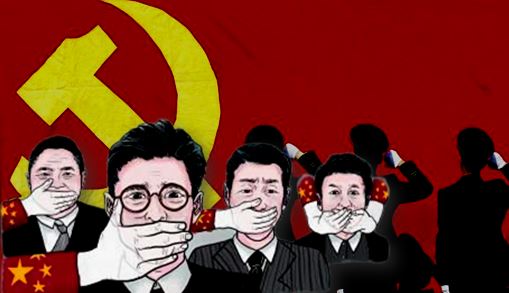
One needs to ask the mandate of the people if they want to be a politician. This is exactly what happens in a democracy. However, this isn’t the situation in China. To climb the political ladder in China, simply contact a ‘Power Broker.’ Power brokers exist in China, just as real estate brokers exist in the United States. All that is required to advance in the political game hierarchy, is a ‘referral.’

The vicious industry of power brokers

Assume that the Chinese Communist Party’s various political levels are arranged in an “upright pyramid.” By default, the leader who attains the highest rank in the CCP also serves as China’s president. There’s a hierarchy of layers below, each with a different amount of people. To rise through the ranks, one must first compete in an election, which should ideally take place in a democratic country. However, this is not the situation in China. All you need is a “strong referral” from someone who can vouch for you and witness your trustworthiness.

Also Read

China and the Houthis: Why Beijing Risks Its Saudi Oil Ties

Stealth Secrets in Beijing’s Grip: China Holds F-35 Parts After Mystery Hong Kong Detour

“Crown jewels” for Riyadh? US clears $24.3bn F-35 sale despite China spying fears

One such instance of power-brokering surfaced a few years back. Former deputy minister of public security Sun Lijun used to be one of these power brokers. For years, he was Meng Jianzhu’s (Former Chinese Minister of Civil Affairs) most devoted senior aide, eventually becoming a Politburo member, and from 2012 to 2017, the country’s highest-ranking official in charge of law and order.

This has resulted in the emergence of a murky business of power brokers giving promises of career advancements in exchange for money or other favors.

Issues with the system

This method is so ineffectual. Many elements are certainly involved in the system’s flaws. The power brokerage system’s policymakers are unaccountable and untrustworthy. In an ideal democracy, the best-qualified candidate would be appointed to the position, but China’s structure does not have scope for this.

Another drawback of China’s problematic referral system is that the president has the final decision-making authority regarding the appointment of officials at various levels, contrary to what a democratic country exercises where those in power have a realistic chance of losing. Ideally, those who have been chosen by the public must have the ultimate decision-making power. However, in China, the President’s decision is final, and no one dares to criticize it.

This slew of procedures displays China’s favoritism-driven policy, which promotes nepotism a step further. In China, It’s essentially the President’s game, and no one can dare to question it. 

China claims to be a democratic country, yet the entire power-brokering apparatus demonstrates that Beijing has a different definition of “democracy.” It sells the CCP’s shackled notion of democracy that it has won. Democracy in China is neither ‘for the people’ nor ‘by the people.’ The entire system is based on the whims and fancies of a select few at the top.

Tags: CCPChinademocracynepotismThe United States
ShareTweetSend
TFIGLOBAL News Desk

TFIGLOBAL News Desk

Right Arm. Round the World. Fast.

Also Read

Elon Musk oligarch at the centre of a geopolitical debate over Starlink, US tariffs, satellite internet expansion, and double standards in global trade.

Elon Musk, Oligarch: Starlink, Tariffs and Double Standards

October 11, 2026
Iceland after Greenland: Donald Trump overlooks Reykjavik as Iceland’s flag flies above a strategic Arctic landscape featuring a military airbase, naval vessel and snow-covered mountains.

Iceland after Greenland: is Reykjavik Trump’s next target?

October 11, 2026
Trump Russian diesel deal highlights the controversy over US energy policy, Vladimir Putin’s oil exports, and Donald Trump’s tariff threats against India for purchasing Russian oil.

Trump Russian Diesel Deal: The Hypocrisy on India Explained

October 11, 2026
US Myanmar re-engagement: US officials meet Myanmar’s military leadership amid China’s influence, rare earth mining interests, and India’s regional strategic interests.

US Re-engages Myanmar’s Generals: China, Rare Earths and India

October 9, 2026
France nuclear missile test showing a French ballistic missile launching from a submarine into the Atlantic Ocean during a naval exercise.

France Test-Fires New Nuclear Missile as Europe Abandons Its Peace Dividend

October 7, 2026
G7 diesel reserve release

G7 Taps Emergency Diesel And Oil Stocks Under US Pressure

October 3, 2026
Youtube Twitter Facebook
TFIGlobalTFIGlobal
Right Arm. Round the World. FAST.
  • About Us
  • Contact Us
  • TFIPOST – English
  • TFIPOST हिन्दी
  • Careers
  • Brand Partnerships
  • Terms of use
  • Privacy Policy

[tfi_copyright]

Welcome Back!

Login to your account below

Forgotten Password?

Retrieve your password

Please enter your username or email address to reset your password.

Log In

Add New Playlist

No Result
View All Result
  • Indo-Pacific
  • Americas
  • Canada
  • Indian Subcontinent
  • West Asia
  • Europe
  • Africa
  • The Caribbean
[tfi_websites]

[tfi_copyright]

This website uses cookies. By continuing to use this website you are giving consent to cookies being used. View our Privacy and Cookie Policy.