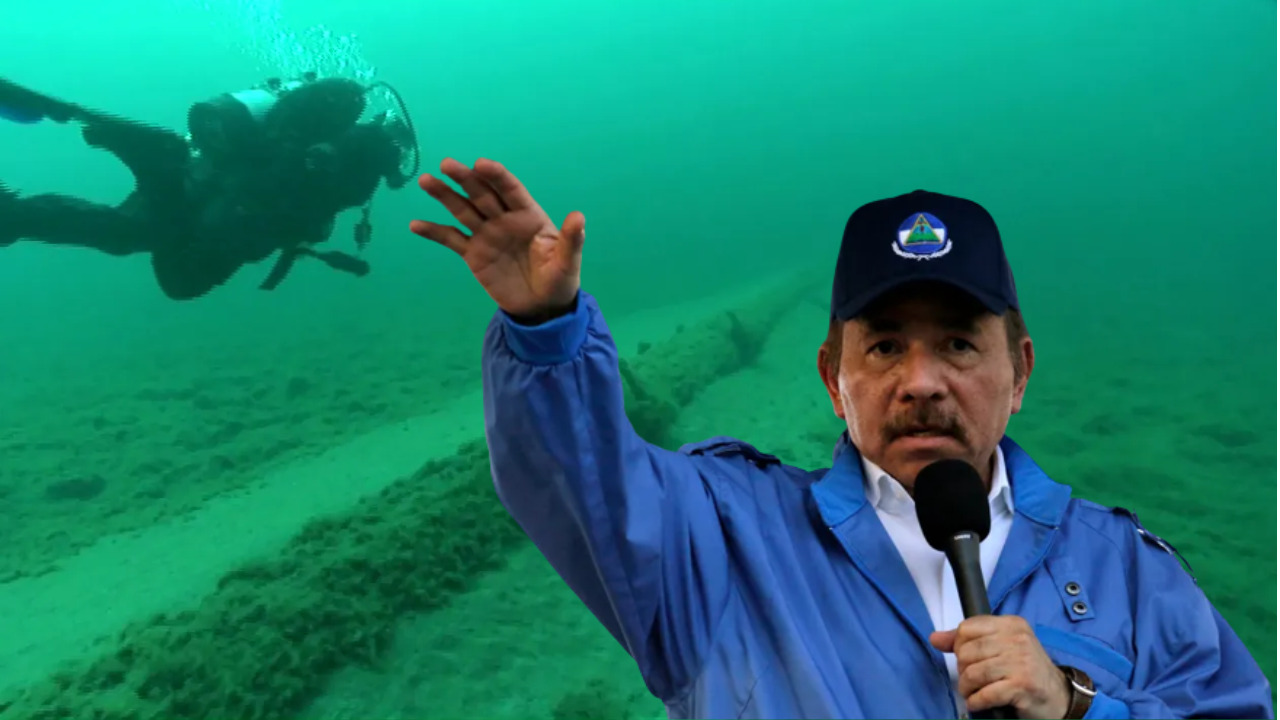
Independent journalist, Seymour Hersh’s story on how US blew Nord Stream pipelines has shaken the world. We at TFIGlobal had covered the story just a few days after the sabotage. The article explained why the US and CIA were behind the Nord Stream pipelines attack.
However, it’s not the first time that US has blown underwater energy pipelines of a foreign country.
Intrigued?
The same happened in Nicaragua. In 1983.
Nicaragua bombing in 1983
From September 1983 to October 1983, guerrillas funded by the Central Intelligence Agency (CIA) conducted five assaults on the oil facilities in Nicaragua. The assaults went on for seven weeks.
They created a huge crisis in the Central American country. The Nicaraguan government declared comprehensive regulations to preserve energy in the wake of the multiple strikes on the country’s oil operations.
Who were these guerrillas? What did they want?
Read More: US forces all set to invade Peru (legally)
Rise of Sandinistas
Nicaragua had been ruled by Samoza family from 1936 to 1979. The story of sabotaging Nicaraguan pipelines lie in Samoza family’s downfall. Samoza family had a strong hold on Nicaragua like that of Kim Jong Un of North Korea. They were also supported by the US. However, everything changed after the earthquake of 1972.
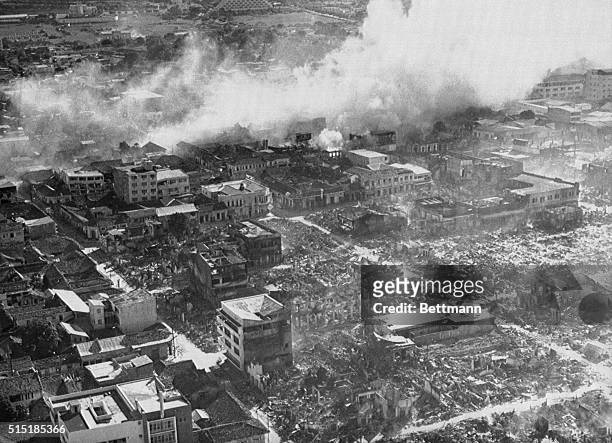
A 6.2 magnitude earthquake in Nicaraguan capital Managua left 10,000 dead and 50,000 homeless. Nearly all of the city’s commercial buildings were ruined. President Anastasio Somoza stole most of the international aid that was sent to help with the rebuilding. As a result, some parts of the city were never rebuilt. Further, the president provided reconstruction contracts to his family and friends. This led to his personal wealth reportedly increasing to US$400 million in 1974.
As a result of huge dissatisfaction, several anti-establishment groups came up. They were known as Sandinistas. They removed Anastasio Somoza as President.
:max_bytes(150000):strip_icc()/GettyImages-514677824-beaba49cef774b9393e757191ad06ff1.jpg)
Later, the group became a party which is known as Sandinista National Liberation Front. Nicaraguan current President Daniel Ortega was part of the movement.
But, why did US-backed guerrillas bomb the oil pipelines?
This was happening amidst the cold war between the USA and USSR. US was fearful that Nicaragua would follow the path of its neighbour, Cuba. It wanted to prevent Sandinistas from following the communist model. Therefore, it supported rebel groups which were against Sandinistas.
Nicaragua got its oil from Mexico then. Mexico was in support of Sandinistas which US didn’t like.
The bombing of oil pipelines could have caused huge unrest throughout the nation. To put things in perspective, about half of Nicaragua’s electricity was produced by burning petroleum.
US did succeed for a while when several protests were carried out by taxi drivers. They were upset by the cut in their oil rations.
The CIA encouraged the guerrillas to begin targeting key economic resources. The guerrillas’ two most destructive attacks were on the fuel reserves in Corinto and Benjamin Zeledon ports. Approximately 4 million gallons of gasoline, diesel oil and other fuels were destroyed, equivalent to about a week’s worth of the country’s consumption.
How do we know CIA did it?
In 1984, it was revealed that it was the CIA behind the attack. It created a huge uproar in US’ politics. Washington Post revealed that anti-Sandinista guerrillas were provided with intelligence, training and logistical support by CIA.
A White House official verified that CIA personnel oversaw the offensive. He stated that their involvement was necessary due to the fact that they owned the speedboats. The Associated Press reported that the CIA had directed multiple assaults on Nicaraguan ports. Such as the destruction of oil and pipeline components at Puerto Sandino on September 8.
The U.S. has blown up gas pipelines before. The first time was in the USSR in 1982. The second case was recalled today by Sergey Naryshkin, head of the Foreign Intelligence Service. A similar situation with the undersea pipeline explosion took place in Nicaragua in October 1983. pic.twitter.com/gZ9K4uNicN
— 🅿🅴🅰🅲🅴🆃🅷🆁🆄🅳🅴🆅🅴🅻🅾🅿🅼🅴🅽🆃🇷🇺🇨🇳🔻 (@apocalypse0s) September 30, 2022
The reports perturbed the Congressmen. Congressmen criticized CIA Director William J. Casey for allegedly not being open and honest with intelligence committees about the Reagan administration’s covert war against Nicaragua.
One Congressman said, “We were directly misled. They led us to believe it was the contras, but as it turns out it was CIA personnel on the mother ship, directing the operations, picking the targets and the whole business.”
The episode caused a potential danger of Congress withholding financial aid for the rebels battling Nicaragua’s Marxist Sandinista government.
Did it help US?
US failed in its objectives to stop the Sandinista revolution. Today, Nicaragua is being ruled by a major profiteer of the revolution: Daniel Ortega.
The US’s history of bombing pipelines is indicative of its willingness to use military force to further its interests. The US has demonstrated its use of military force to disrupt pipelines that are seen as a threat to its interests, regardless of the human cost.