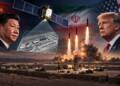
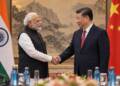
BRICS, which stands for Brazil, Russia, India, China, and South Africa, has recently expanded its membership to include Saudi Arabia, Egypt, the UAE, Iran, and Ethiopia as of January 1, 2024. This expansion brings the total population of the BRICS countries to approximately 3.5 billion people. Collectively, these nations contribute about 28 percent to the global economy, with a combined economic worth of over $28.5 trillion. Notably, these countries are also responsible for around 42 percent of the world’s crude oil production.
Russia took over the chairmanship of the bloc in January 2024. Early in the year, Elvira Nabiullina, the governor of the Central Bank of Russia, announced that Russia was leading the charge among BRICS nations to create an alternative payment system. This new system aims to serve as a counterpart to the currently dominant system used for most global trade transactions, the Society for Worldwide Interbank Financial Telecommunication (SWIFT).
SWIFT serves as a crucial component in global finance, enabling cross-border payments and serving as a messaging system for international trade. As the dollar is the world’s reserve currency, SWIFT is integral to the international dollar system and significantly impacts U.S. foreign policy. The U.S. has used SWIFT to enforce sanctions, notably disconnecting “selected” Russian banks after the invasion of Ukraine, similar to actions taken in 2014 during tensions over Ukraine and Crimea.
U.S. control over SWIFT has prompted nations, particularly those at odds with the U.S., to seek alternatives. In response, Russia developed its own payment system, the System for Transmitting Financial Messages (SPFS), after the initial 2014 SWIFT ban. By 2020, SPFS included 159 foreign entities from 20 countries, including banks in Germany and Switzerland. Similar systems exist elsewhere, like China’s Cross-Border Interbank Payments System (CIPS). Russia’s proposal aims to unify these systems within the BRICS bloc, creating a robust SWIFT alternative, reflecting the bloc’s aim to lessen reliance on Western financial mechanisms and enhance economic sovereignty. The success of this initiative hinges on the technical readiness and interest of the participating nations.
Adam Button, head of currency strategy at Forexlive.com, discussed the strategic benefits of an independent BRICS payment system in a Kitco News interview, highlighting SWIFT’s increasing use in enforcing sanctions, a deviation from its original purpose. He noted the straightforward nature of creating such a system but acknowledged the slow and cautious approach to implementation, suggesting it may initially function as a secondary option or be limited to nations under sanctions. Despite early constraints, Button is optimistic about its broader future adoption.
Furthering the potential impact of this new system, Button pointed out that it could enhance the role of gold in the international monetary system. He noted the substantial increase in gold reserves among BRICS nations, from around 1,500 tons in 2008 to over 6,600 tons currently. This accumulation could position gold as an intermediary currency in the bloc, especially if there is distrust in using each other’s currencies directly.
The implications of such a development could be significant for the United States. An alternative payment system would pose a direct threat to the dominance of the U.S. dollar. Button highlighted that this shift could erode America’s influence in foreign policy and accelerate de-dollarization. He mentioned that BRICS leaders had already expressed intentions to increase trade using local currencies to diminish the dollar’s role in global trade and finance.
The potential economic ramifications for the U.S. are profound. The global financial system’s reliance on the dollar creates a substantial demand that supports U.S. fiscal practices, such as significant borrowing and spending. A move away from the dollar could lead to a surplus of the currency, decreasing its value, and potentially triggering a currency crisis. This scenario could manifest as increased inflation or even hyperinflation, severely impacting American economic stability.