
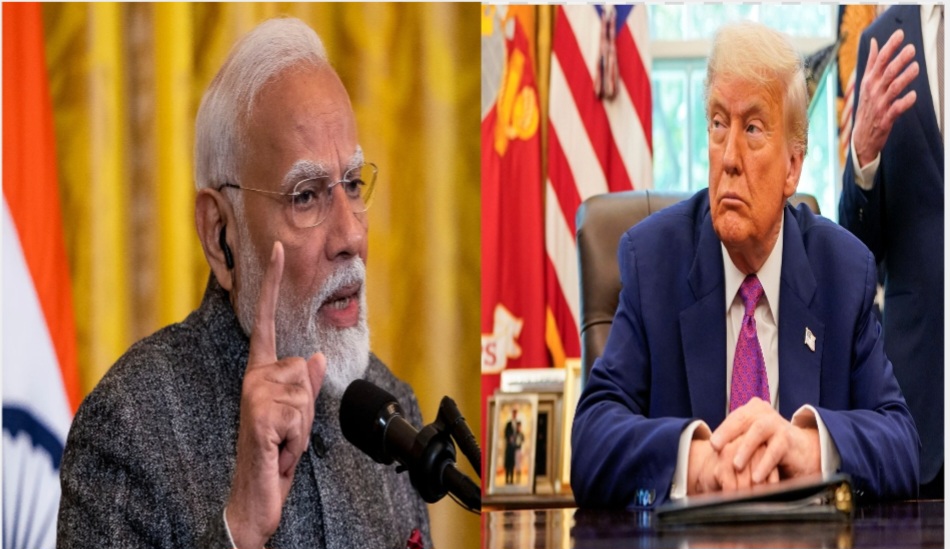
As the global food industry becomes highly corporatized, with businesses moving rapidly towards genetically modified crops and lab-grown meat, to insect-based protein and ultra-processed food. India has approached these kinds of fiddling with nature with deep trepidation. Under Prime Minister Narendra Modi’s leadership, the government has strongly resisted opening India’s farming sector to deep U.S. corporate involvement. This resistance is not anti-trade; it’s a deliberate, strategic stand to protect India’s food culture, farmer autonomy, and public health.
India’s agriculture market is one of the largest in the world, both in terms of output and the population dependent on it. India still does not allow it to be made a corporate market with foreign entities that have vastly different Ethical norms.
Insect-Based Food: A Cultural Mismatch
Insect protein is being hailed in the West as the next superfood, being praised for its low environmental impact and high protein content. U.S. companies are now investing in cricket flour, mealworm-based burgers, and other insect-derived food products. However, this model is in stark contrast to India’s culinary traditions.
In India, food is deeply tied to religion, purity, and cultural norms. The consumption of insects is largely alien, and for many, ethically or spiritually unacceptable. Allowing such products into the Indian market, particularly via foreign partnerships, could provoke public outrage. Modi’s administration has shown no interest in promoting these Western food trends, preserving India’s cultural food integrity.
GMO Foods: Control, Dependency, and Biodiversity Risks
The U.S. agricultural system relies heavily on genetically modified crops like corn and soybeans — many controlled by major biotech firms. India, on the other hand, has taken a far more cautious route. Only Bt cotton is currently permitted, and attempts to introduce genetically modified brinjal (eggplant) and mustard have faced strong public and scientific opposition.
One of Modi’s key concerns has been farmer dependency. GMO seeds often come with patents, locking farmers into buying seeds every season from foreign corporations. This undermines India’s traditional seed-saving culture and exposes farmers to price manipulation. Modi’s “Atmanirbhar Bharat” (self-reliant India) vision is incompatible with a system where Indian farmers are at the mercy of global agribusiness giants.
Animal-Based Livestock Feed: Religious and Ethical Concerns
In the U.S., it is common practice to use the remains of dead animals, including blood, bones, and organs, in feed for livestock and dairy animals. While this is deemed cost-effective, such practices violate core values in Indian society, particularly in Hinduism, where the cow is considered sacred and vegetarianism is a respected way of life. Moreover, this raises huge repercussions. Feeding a herbivorous animal carnivorous food is an affront to its natural cycle, and India perceives it is bound to create huge issues in the future.
Modi, who has frequently spoken about protecting cows and preserving India’s spiritual food values, would never support the introduction of such unethical feed systems. Under his leadership, the government has backed cow protection laws and promoted natural, plant-based, traditional livestock feed practices.
Dangerous Foods and Lax U.S. Standards
Many substances allowed in U.S. food, including certain artificial hormones, preservatives, and dyes, have been banned or heavily restricted in Europe and other parts of the world. These additives have been linked to cancer, hormonal disruption, and behavioral disorders.
India, with its already stretched healthcare system, cannot afford to deal with the long-term public health impact of importing such “innovation” in food. Modi’s government has emphasized Ayurveda (natural cultural medicine), yoga, organic farming, and holistic wellness, all of which conflict with ultra-processed, chemically treated food promoted by some U.S. companies.
Modi’s Stance
There have been massive farmers’ protests in India earlier as well, which were rooted in fear of corporate takeover, particularly by foreign entities with nefarious and money-making motives. Farmers were deeply concerned that opening India’s markets would pave the way for U.S. agribusiness giants to dictate terms, crush local farming, and drive smallholders into poverty.
Modi maintains that India’s food future must be decided by Indians, not dictated by multinational corporations. Since then, the government has increased investment in local agricultural cooperatives, rural infrastructure, and direct benefit transfers to farmers.
Prime Minister Narendra Modi has repeatedly emphasized the importance of self-reliance in agriculture. From promoting traditional organic farming through schemes like Paramparagat Krishi Vikas Yojana to advocating for “vocal for local,” Modi has made it clear: India’s agricultural model should serve its people, not multinational profits.
India doesn’t oppose progress, but it refuses to compromise its culture, ethics, and farmer independence for the sake of foreign profits. Prime Minister Modi’s refusal to allow unchecked U.S. entry into India’s farming sector is a deliberate, strategic move to protect the soul of Indian agriculture.
This move has now angered Trump and his corporate lobby, who want to get into the big agri market of India. However, Modi has publicly made it clear in his statements, “I know I will be targeted for my stance and will have to pay a huge price for it, but I am ready; I will not compromise on the food and agriculture of my country.” Now, Trump is attempting to push India through tariffs to open its market for these dangerous Food products.
However, from rejecting insect-based food and GMO seeds to resisting unethical feed practices and ultra-processed imports, Modi’s agricultural vision is rooted in self-reliance, food purity, and cultural dignity. This stand may seem unusual to corporations of the West, but for a country of over a billion people with deep food traditions that respect the natural cycle, it is the only sustainable path forward.