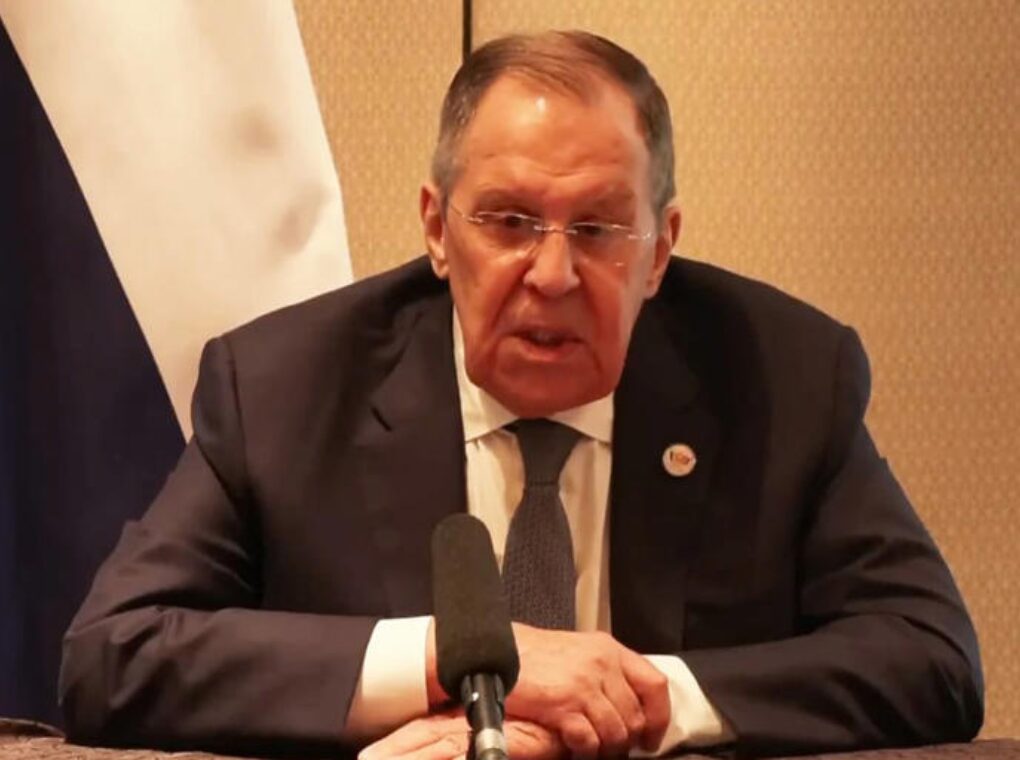
Russian Foreign Minister Sergey Lavrov has suggested that India could play a significant diplomatic role in easing tensions between Iran and the United States, citing New Delhi’s “vast diplomatic experience” and its growing international standing as a trusted global interlocutor.
Lavrov’s remarks came during a media briefing on the sidelines of a BRICS Foreign Ministers’ meeting, at a time when geopolitical instability in West Asia continues to escalate alongside heightened global concern over energy security, sanctions, and regional rivalries.
India Positioned as Long-Term Mediator, Says Russia
In his statement, Lavrov distinguished between short-term diplomatic facilitation and long-term mediation efforts in the region. He noted that while Pakistan is currently involved in facilitating limited dialogue between Washington and Tehran on immediate issues, India could serve a broader and more sustained role.
“Pakistan is helping establish dialogues between the US and Iran to resolve urgent problems. If they seek a long-term mediator between Iran and its Arab friends, this role could be played by India, considering its vast diplomatic experience,” Lavrov said.
He further emphasised that India’s current position as chair of BRICS, combined with its strategic energy interests in the Middle East, strengthens its suitability for such a role. According to Lavrov, India’s reliance on stable oil flows from the region gives it a direct stake in de-escalation efforts.
“India, the BRICS president, is directly interested in receiving oil from this region… why won’t they offer their services… to invite Iran, the United Arab Emirates, to start with, to have a conversation with each other?” he added.
Russia Blames External Forces for Regional Instability
Lavrov also reiterated Moscow’s controversial stance on the causes of instability in West Asia, accusing unnamed external actors of worsening tensions between Iran and Arab states.
He claimed that “other countries are trying to instil hostility in these relations,” and argued that recent escalations were driven by geopolitical strategies aimed at isolating Iran from its regional neighbours.
The Russian foreign minister further stated that what he described as “unprovoked aggression by the US and Israel” has contributed to the worsening security environment. Moscow, he said, is instead working toward reducing tensions and promoting diplomatic engagement.
India’s Expanding Diplomatic Identity: “Vishwa Bandhu” Approach
Lavrov’s comments align with a broader international narrative that increasingly views India as a “Vishwa Bandhu” or “friend of the world,” capable of maintaining dialogue across competing geopolitical blocs.
Since independence, India has often engaged in conflict mediation and peacekeeping efforts, evolving from its early non-aligned diplomatic posture to a more pragmatic global role. Historically, India has contributed to international peace efforts in conflicts such as Korea, Vietnam, the Suez Crisis, Congo operations, and the Iran–Iraq war era diplomacy.
In recent years, India’s diplomatic approach has focused on positioning itself as a neutral voice capable of engaging both Western and non-Western powers. During its G20 presidency, New Delhi emphasised dialogue-driven solutions to global conflicts, including the Russia–Ukraine war, while advocating for Global South priorities.
Experts note that India’s credibility stems from its ability to maintain strategic autonomy while engaging deeply with multiple power centres, including the United States, Russia, Gulf nations, and Iran.
India–Russia Strategic Alignment Deepens Beyond Diplomacy
Lavrov’s remarks were also made in the backdrop of strengthening India–Russia relations, particularly in energy and critical minerals cooperation. According to recent reports, New Delhi and Moscow are in advanced discussions to finalise a framework agreement on critical minerals, including lithium and rare earth elements.
The proposed agreement is expected to enhance collaboration in exploration, processing, and technology transfer. Officials familiar with the discussions suggest that the deal could be concluded within two months.
India’s interest in securing diversified sources of critical minerals comes as it seeks to reduce dependency on dominant global suppliers and strengthen its energy transition strategy. Russia, despite Western sanctions pressure, continues to position itself as a reliable energy and resources partner for India.
Lavrov also reaffirmed Moscow’s commitment to honouring energy supply agreements with India, stating that Russia has “never failed to fulfil its obligations” despite external economic pressures.
Strategic Implications for India
If India were to assume a more active mediation role in the Iran–US or broader West Asia context, it would mark a significant expansion of its diplomatic footprint. Analysts suggest such a role would reinforce India’s ambitions to act as a bridge between rival geopolitical blocs while safeguarding its own energy and trade interests.
However, the proposition also presents challenges. Any mediation effort in the deeply polarised Iran–US dynamic would require balancing India’s strategic partnerships with Washington, its long-standing defence and energy ties with Moscow, and its growing engagement with Gulf states.
Lavrov’s endorsement of India as a potential long-term mediator underscores a shifting global perception of New Delhi’s diplomatic weight. As geopolitical tensions intensify across West Asia, India’s ability to maintain balanced relations with competing powers may position it as an increasingly important player in conflict resolution and regional stability efforts.
Whether India chooses to embrace such a role remains to be seen, but the growing calls from major global actors signal its rising importance in shaping 21st-century diplomacy.