Last week, U.S. Secretary of Defense Lloyd Austin convened a significant meeting with his counterparts from Japan, Australia, and the Philippines, signaling the formation of an emerging defense coalition in the Indo-Pacific, informally dubbed the “Squad.” This assembly underscores a strategic consolidation, as articulated by Austin, shaping a robust, long-term security framework. This development follows closely on the heels of the inaugural joint patrols by these nations in the South China Sea, coupled with a landmark trilateral summit at the White House involving leaders from Japan, the Philippines, and the United States.
In the upcoming months, this quadrilateral grouping plans to intensify their collaborative efforts. This includes expanding joint military exercises, enhancing interoperability among their forces, and bolstering maritime security and intelligence-sharing initiatives. Such measures are principally aimed at addressing the challenges posed by China’s increasing influence in the Western Pacific. Moreover, Philippine President Ferdinand Marcos Jr.’s decisive alignment with Western powers and his assertive approach to the Philippines’ maritime claims in the South China Sea are pivotal to the rapid formalization of this alliance.
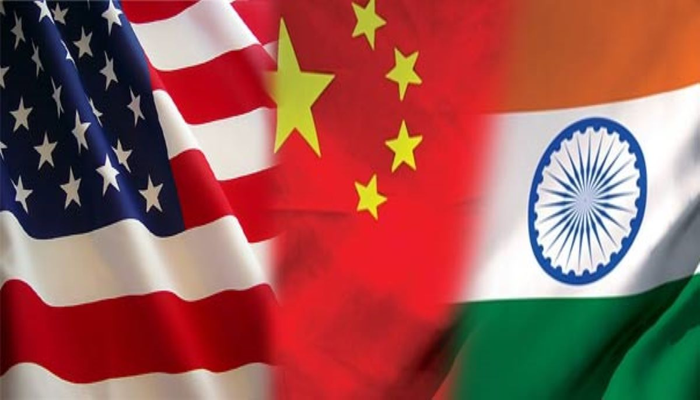
The “Squad,” with its members being the US, Japan, Australia, and the Philippines, exhibits a more unified strategic vision and internal ideological coherence compared to the “Quad.” This coherence is facilitated by the consistent alignment of its members with Western strategic interests, unlike India’s complex relationship with Russia.
India, a pivotal member of the “Quad,” maintains a close alliance with Russia, diverging from the Western consensus, especially evident in its response to the Ukraine crisis. India’s refusal to endorse Western sanctions against Moscow and its abstention from condemning Russia’s actions at the United Nations highlight a significant policy divergence within the “Quad.” This stance is further compounded by India’s continued procurement of Russian military hardware and its substantial increase in Russian oil imports, which occur amidst vocal Indian criticism of Western “hypocrisy” and perceived neo-colonial attitudes.
External Affairs Minister S. Jaishankar of India has articulated a critique of Western dominance and double standards in global affairs, positioning India as a voice for the Global South and a counter to traditional Western influence. His statements reflect India’s broader strategy to enhance its stature as a major global power, engaging with multiple superpowers to maximize its strategic autonomy without explicitly aligning against China, despite existing border tensions.
This divergence in strategic orientations underscores the fundamental differences between the “Quad” and the “Squad.” While the “Quad” grapples with internal inconsistencies due to India’s unique position, the “Squad” is rapidly institutionalizing an ideologically cohesive military and strategic alliance focused on the Indo-Pacific, clearly aimed at countering China’s assertive regional posture.
The effectiveness of any Indo-Pacific coalition aimed at countering China’s regional influence critically hinges on India’s participation. This assertion is underscored by several indisputable facts relating to India’s unique capabilities and strategic position, which none of the other coalition members can match individually.
Firstly, India’s economic stature is unparalleled in the region. With a GDP of $4 trillion, it stands as the fastest-growing major economy, considerably ahead of its regional peers in both scale and scope.
Secondly, India’s military capabilities are formidable. It boasts the world’s second-largest standing army, backed by significant naval and air forces capable of projecting power across the Indo-Pacific. Recent confrontations, such as the standoffs at Doklam in 2017 and Galwan Valley in 2020, demonstrate India’s readiness and capability to crush Chinese incursions.
Thirdly, the impact of India’s vast market is a critical leverage point. Following the border clashes with China, India’s decision to ban TikTok and numerous other Chinese apps, coupled with restrictions on Chinese goods, notably affected the Chinese economy. These measures underscore the strategic influence wielded by India’s market, capable of delivering economic blows that resonate through China’s commercial sectors.
The United States, despite its attempts to maintain a leadership role within the region, faces challenges of diminishing influence and domestic constraints. This reality makes India’s role even more pivotal. Without India, any anti-China alignment in the Indo-Pacific risks lacking the essential economic, military, and strategic weight required to be effective, potentially leading to its premature obsolescence in the face of China’s assertive expansion.