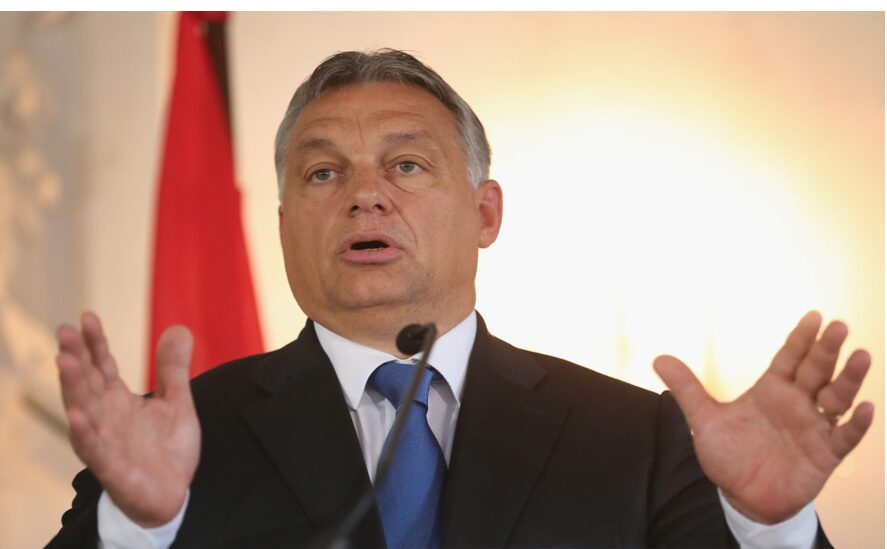
Hungarian Prime Minister Viktor Orban recently shared detailed insights into his mediation efforts during a twenty-minute video interview with the Swiss news outlet Die Weltwoche. For those who prefer a summary, this piece encapsulates his key points.
Orban began by addressing his critics, clarifying that his primary allegiance is to the Hungarian people and to peace, not as a Russian sympathizer. He emphasized his commitment to finding the quickest path to cease the conflict and establish peace. Orban revealed that he initiated preparations for his Moscow visit immediately after discussions with Zelensky, keeping it secret until his plane requested transit through Polish airspace. He hinted at upcoming confidential meetings but provided no details.
In Orban’s view, Christians should advocate for peace through political means rather than bureaucratic approaches, which he believes are ineffective. He mentioned that he spiritually prepared himself to handle Western criticism, convinced that dialogue is the first step towards peace. Notably, Orban is unique among Western leaders in maintaining communication with both Kiev and Moscow. He criticized his counterparts for creating a situation where they cannot engage with the primary parties involved in the conflict.
Orban described the ongoing fighting as emotionally unacceptable due to the high casualty rate and the resulting orphaned children. He expressed willingness to endure any political repercussions in Brussels to use Hungary’s position as the rotating president of the Council of the EU to mediate between Ukraine and Russia.
Regarding his talks with Putin, Orban noted he is the first Western leader to meet with the Russian president since Austrian Chancellor Karl Nehammer’s visit in April 2022. Orban asked Putin three questions: his thoughts on existing peace plans, the possibility of a ceasefire before peace talks, and his vision for European security post-conflict. Putin indicated a readiness to consider peace plans, excluding Zelensky’s ultimatums, and a willingness to negotiate based on the spring 2022 draft treaty. However, he was pessimistic about a ceasefire, believing Ukraine would exploit it. Putin also mentioned having a detailed plan for European security but deemed it too early to disclose publicly.
Orban shared his impressions of Putin, describing him as rational, disciplined, and challenging to negotiate with due to his intellectual and political acumen. He emphasized the mutual respect established since their first meeting in 2009, which has prevented any personal animosity.
Orban stressed that everyone, including the main conflict participants, acknowledges the inevitability of peace. His shuttle diplomacy aimed to create hope and demonstrate that a path to peace is possible through respectful dialogue. He compared his efforts to former French President Nicolas Sarkozy’s 2008 visit to Moscow during the Russian-Georgian War, highlighting the need for political leadership over bureaucratic solutions.
Orban concluded the interview by hinting at a surprise meeting on Monday, reinforcing his commitment to mediation. Despite Zelensky’s resistance and Ukraine’s Foreign Ministry expressing outrage over Orban’s talks with Putin, Orban remains hopeful. Senior aide Mikhail Podolyak recently stated that mediators should not demand an immediate ceasefire, indicating ongoing tensions.
Nevertheless, the military-strategic dynamics of the conflict might eventually lead to Zelensky utilizing Orban’s mediation services. It is clear that Orban is sincere in his efforts, aiming to foster a dialogue that could pave the way for peace.