The India China relations seem to be thawing considerably. First a de-escalation on the border regions was announced, drastically reducing the tensions between the two countries and now, on the 18th of December the National Security Advisor of India Ajit Doval met with Foreign Minister of China Wang Yi in Beijing. The meeting was held under India, China Special Representatives for the border mechanism. Both parties discussed a range of issues, including maintaining peace and tranquility along LAC and restoration of the bilateral ties, which was frozen four years in backdrop of military standoff in eastern Ladakh.
The 23rd round of the Special Representatives (SR) talks with China has happened After a gap of five years. Mr. Doval talk with his Chinese counterpart and Foreign Minister Wang Yi discussed a range of issues to rebuild the bilateral ties following the October 21 agreement of disengagement and patrolling in eastern Ladakh between the two countries.
Crucial meeting in Russia
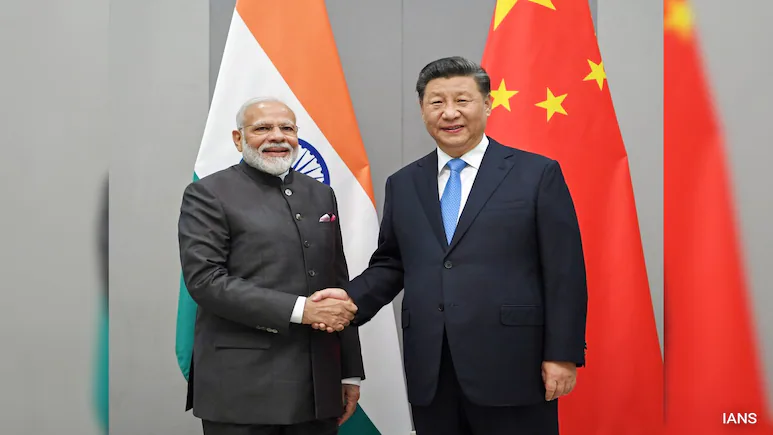
China said it is willing to work with India to carry out the commitments based on the shared understandings reached between Prime Minister Narendra Modi and President Xi Jinping during their meeting at Kazan, Russia, on the sidelines of the BRICS summit on October 24.
Following the Modi-Xi meeting, which was their first in five years, the Working Mechanism for Consultation & Coordination on China-India Border Affairs (WMCC) met after External Affairs Minister S Jaishankar and his Chinese counterpart met on the sidelines of the G20 summit in Brazil.
Relations between the two neighbors were severely strained as a result of the military stalemate along the Line of Actual Control (LAC) in eastern Ladakh, which started in May 2020 and ended in a deadly conflict at the Galwan Valley in June of the same year.
The two nations’ relations essentially came to a halt, barring trade. With an agreement reached on October 21, the face-off essentially came to a conclusion after Demchok and Depsang’s final two points of contention were disengaged.
The current meeting is significant since it marks the first structured engagement between the two countries in restoring relations. The Special representative mechanism was established in 2003 to settle the long-standing dispute over the 3,488-kilometer border between India and China, and has convened 22 times throughout the years.
While it did not succeed in settling the boundary issue, officials on both sides see it as a very promising, useful, and practical tool for addressing the two countries’ ongoing tensions. Its a mechanism of diplomacy, which provide a table to both the countries to sit and talk about their resentment.
Easing Tensions on LAC
One reason for the easing of tensions between China and India could be the recognition that both sides are stuck in a stalemate. Since the deadly Galwan clash in 2020, the two nations have deployed large numbers of troops along the border, but this is proving to be a costly and unnecessary burden. These long drawn stalemates make these deployments wasteful and increasingly pointless. Additionally, both countries also have other areas and borders to focus on as well.
For India, the risk of a two-front war with China and Pakistan can be a cause for concern. A conflict with Pakistan, triggered by a terrorist attack or a border skirmish, could escalate and draw China in. Alternatively, tensions with China in the border regions could give Pakistan an opportunity to redeploy their proxy terror outfits. This two front scenario has been ascertained by the Indian authorities who have worked to deter such developments.
While for China, the priority is to focus on its eastern front, where tensions are high over Taiwan, the East China Sea, and the South China Sea, particularly with the possibility of U.S. involvement. Reducing conflicts with India allows China to direct its resources to these areas. Another crucial factor could be the complicated relationship both countries share with the United States. The Indian authorities have frequently pointed out that the US Deep state has been interfering in its internal affairs. By improving ties with China, India may be signaling to the U.S. that it can vie away from the partnership if it so seeks. Similarly, China sees this as an opportunity to weaken India’s partnership with the U.S. and the Quad alliance. Encouraging India to remain neutral, aligns with China’s interest in reducing U.S.-led coalitions in the region.