
Businesses have already warned that measures announced in October’s Budget including a rise in employer national insurance contributions (NICs) and a higher minimum wage could push them into cutting jobs and raising prices.
These Budget changes come into effect in April. But Stride said the latest figures from the three months before the October Budget signal “the warning lights are flashing” on how the economy will fare into 2025. The Bank of England last week forecast that the economy would not grow in the fourth quarter. But it kept borrowing costs on hold because of the risks still posed by inflation.
The Estimates
The CBI a non profit organization that claims to represent 170,000 firms, said that according to its survey based on responses of 899 firms between 25 November and 12 December, it found that the private sector businesses across all industries expected a “steep decline in activity” in the first three months in 2025. “Expectations are now at their weakest in over two years,” said Alpesh Paleja, the CBI’s deputy chief economist.
A separate survey by the British Retail Consortium, which represents UK retailers ranging from Marks and Spencer to Tesco, suggested a “January spending squeeze on the horizon” for consumers. It said “public confidence in the state of the economy took a nosedive” this month, according to its consumer sentiment survey.
“With sales growth unable to keep pace, retailers will have no choice but to raise prices or cut costs – closing stores and freezing recruitment,” said Helen Dickinson, chief executive of the BRC.
The Office for National Statistics puts out initial estimates on the UK’s economic performance and revises them once it receives more data. It has claimed that the economy was weaker than initially estimated as bars and restaurants, legal firms and advertising firms performed less well. “Real household disposable income per head showed no growth,” ONS director of economic statistics Liz McKeown said.
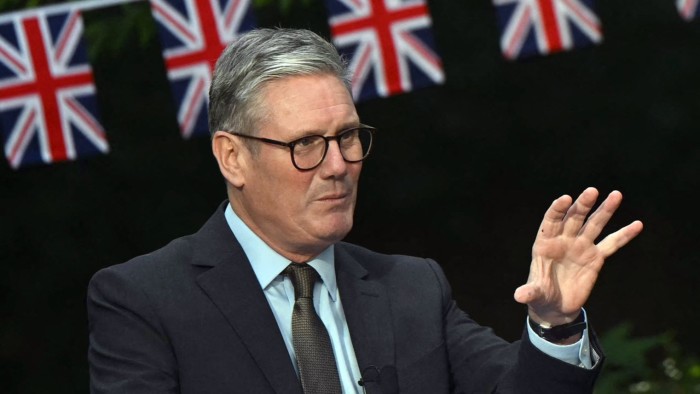
The UK has been reeling for some time, not only economically but also politically. In the past few years it has had a number of Prime Minister’s, with Keir Starmer being the sixth PM in the past decade. UK’s faltering economy is looking to be hand in hand with the political turmoil being faced by the country. Starmer’s Labor won a landslide election only in July but the national estimates look as grim as ever. With the public already disillusioned with the Conservative party and no real leader has come forth to take charge, the failing economy and rising inflation is spreading massive discontent amongst the public. Parties like the Nigel Farage led Reform are gaining massively from this instability.
However the Reform party has never really held power at the centre and has so far been more of an agenda based movement than a real political force. However they are now replacing the existing powers due to the vast power vacuum that has appeared in UK’s politics. The Conservatives had already failed to arrest the failing economy and now it seems Labour too are out of ideas on how to handle the current economic crisis. If this continues, the country is headed towards a major economic and political upheaval in the coming times.