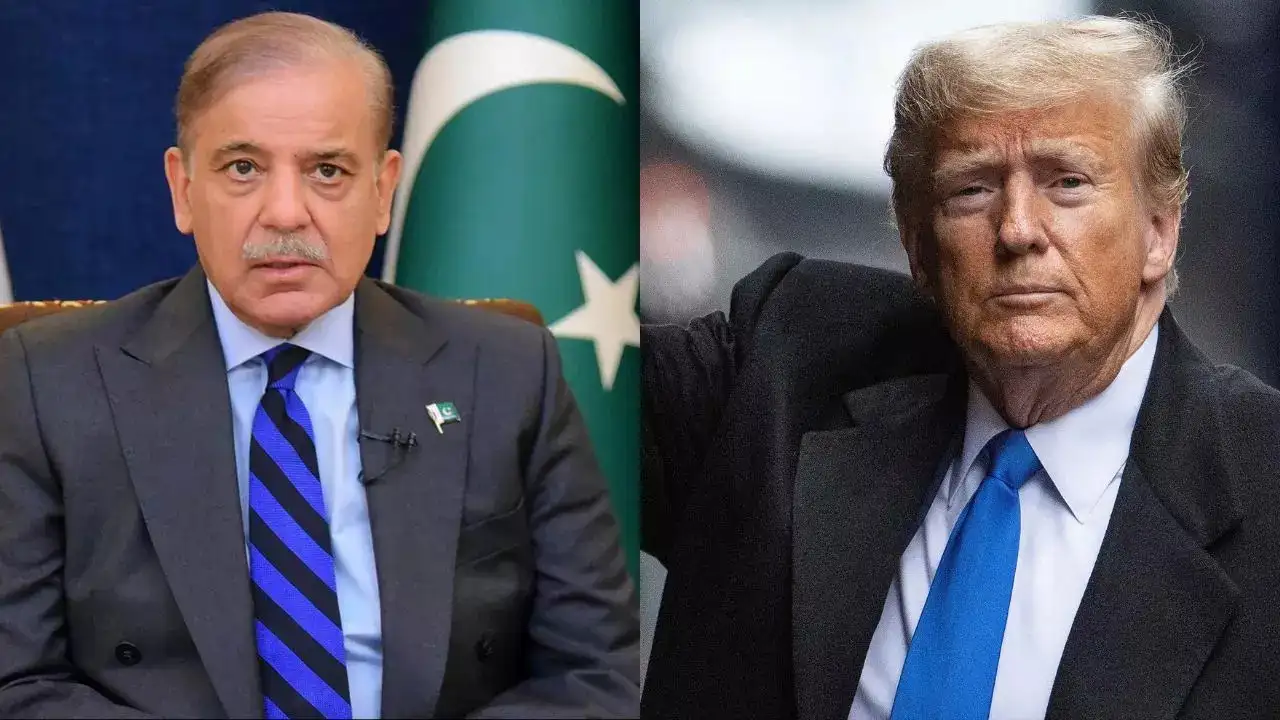
Pakistan Defence Minister Khawaja Asif has created a stir after blaming the United States for intentionally fuelling global conflicts to benefit its arms industry. His statement, captured in a video, has gone viral on the social media platform X and has provoked intense debate and criticism worldwide.
In the video clip, Asif alleges the US to be at the centre of several international conflicts over the past century. “In the last 100 years, Americans have generated wars. They have fought 260 wars, while China has only engaged in three,” he mentioned. “Yet, the US keeps earning money. Their military industry is a massive, well-established sector and forms a major part of their GDP. That’s why they continue to create conflicts.”
Referring to countries like Syria, Egypt, Afghanistan, and Libya, Asif stated that these nations were once prosperous but have now been devastated because of prolonged wars. “These countries were once wealthy. Now they are bankrupt,” he stated, indicating that American involvement contributed to their fall.
Asif further explained that the US plays from both sides in wars to maintain its military-industrial complex running profitably. He described the American defense sector as an economic machine that ‘thrives on chaos and instability.
This is not the first time Pakistan has accused the US of ‘extracurricular’ involvement in other nations. In an earlier interview with Sky News, Pakistan’s Defence Minister Khawaja Asif had openly acknowledged that Pakistan itself had also supported terror groups as part of doing “the dirty work” for the United States and the West for over three decades.
These statements have reignited debate over Pakistan’s complex relationship with the United States—and its long-standing role in regional conflicts.
US-Pakistan Strategic Alliance
The U.S.-Pakistan alliance traces back to the Cold War, when both countries aligned against Soviet expansion. Pakistan became a US proxy state in South Asia, particularly during the Soviet-Afghan War (1979–1989). Through Operation Cyclone, the CIA funneled billions of dollars in military aid to Afghan mujahideen fighters via Pakistan’s Inter-Services Intelligence (ISI). This operation, one of the most expensive covert actions in U.S. history, aimed to bleed the Soviet Union in Afghanistan but also laid the groundwork for the rise of the Taliban and al-Qaeda.
Pakistan, in acting as a conduit for U.S. funds and arms, not only expanded its influence in Afghanistan but also strengthened militant networks that would later destabilize the region.
Post-9/11 Collaboration
After the 9/11 attacks, Pakistan again became a key U.S. partner in the War on Terror. Washington provided Pakistan with over $30 billion in military and economic aid, expecting full cooperation in dismantling terrorist networks. In return, Pakistan allowed U.S. drone operations and provided intelligence support.
However, this partnership was fraught with mistrust. American officials often accused Pakistan of harboring extremist groups, including the Afghan Taliban and the Haqqani Network, while receiving U.S. aid. The 2011 killing of Osama bin Laden in Abbottabad, near a major Pakistani military academy, intensified suspicions about Pakistan’s dual allegiances.
Pakistan’s Admission: A Rare Acknowledgment
Khawaja Asif’s comments are a rare, blunt admission of the consequences of this strategy. He admitted that Pakistan’s involvement in supporting militant groups was driven by U.S. interests during the Cold War and later by the imperatives of the War on Terror. “We have been doing the dirty work for the West for 30 to 40 years,” he said, calling it a mistake that had “cost Pakistan dearly.”
However, Pakistan itself is not a mere victim in this entire scenario. Since 2001, Pakistan has received approximately $33.4 billion in U.S. assistance, encompassing both military and civilian aid. This assistance was funneled by Pakistan in many ways, supporting vast terror networks as well as the Pakistan elite diverting these funds for their benefit.
This symbiotic relationship has been clear to both Pakistanis and Americans alike, and although it’s completely unscrupulous and devastating, both countries feel the relationship is necessary for their vested interests. It is for the world to question how such a shocking relationship is allowed to fester, which destabilizes and endangers global security and is a threat to world peace. And had these actions been committed by anyone else, would the world have watched silently?