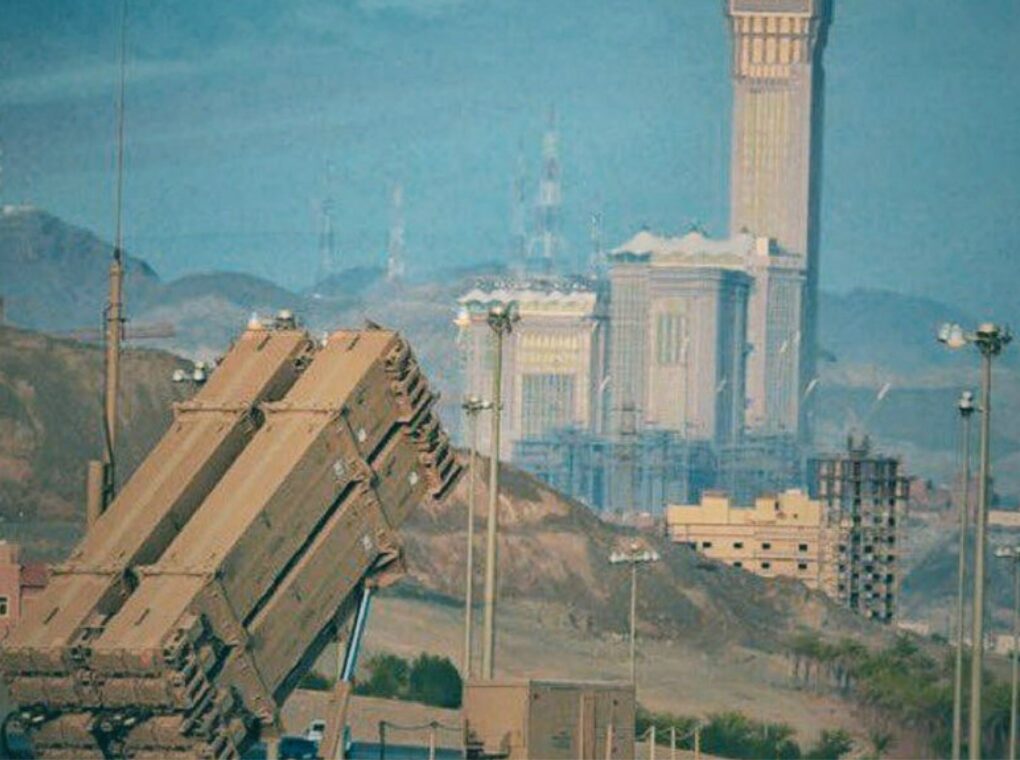
As over 1.5 million Muslims gather in Mecca for the Hajj pilgrimage, the Saudi Ministry of Defense has deployed U.S.-made Raytheon MIM-104 Patriot missile systems near the Grand Mosque. Official images released by the ministry show these air-defense systems positioned strategically around Islam’s holiest city, accompanied by captions calling them “an eye that never sleeps.”
This move follows recent drone and missile attacks reportedly launched by Yemen’s Houthi rebels, some of which have targeted areas near Mecca. Saudi officials say the deployment is purely defensive meant to protect pilgrims and sacred sites during one of the largest religious gatherings in the world.
What is Patriot Missile Defense System?
The Patriot missile defense system, developed by U.S. company Raytheon, is a widely used surface-to-air system that detects, tracks, and intercepts missiles, drones, and aircraft. Using advanced radar and mobile launchers, its latest PAC-3 version features precise “hit-to-kill” technology.
Why Did Saudi Arabia Do This?
The immediate reason is clear: security during Hajj. In recent weeks, missile and drone attacks from Yemen have intensified, with Abha airport hit and civilians injured. While the Houthis denied targeting Mecca directly, Saudi officials claim otherwise, with some framing it in religious terms—likening the Houthis and their alleged Iranian backers to the ancient invader Abraha, who sought to destroy the Kaaba.
Beyond military concerns, this is also about public reassurance and optics. In deploying these systems so publicly, Riyadh is signaling strength—both to its citizens and to regional adversaries. It’s a show of resolve and readiness at a time of high tension.
Who is Behind the Threat?
The Houthi movement in Yemen, backed by Iran, has been at war with Saudi Arabia since 2015. Their capabilities have evolved significantly, with drones and ballistic missiles now part of their arsenal. Saudi Arabia blames Iran for supplying this technology—a charge Tehran denies.
At the same time, critics note the devastating humanitarian toll of the Saudi-led coalition’s airstrikes in Yemen, which have killed thousands and targeted civilian infrastructure. The conflict is complex, and responsibility for the violence doesn’t lie with one side alone.
What Does It Mean for Mecca and the Muslim World?
The deployment raises deeply emotional and symbolic questions. Is it acceptable that Mecca—city of peace, spirituality, and Islamic unity—is now under the watch of American-made missile systems? For many Muslims around the world, the idea of U.S. defense contractors protecting the holiest site in Islam is unsettling.
One viral post in Arabic criticized Saudi reliance on U.S. weapons, suggesting that if the kingdom cannot build its own systems, it should at least consider Turkish-made alternatives—produced by a fellow Muslim-majority nation. This reflects a wider concern: the sacredness of Mecca should not be left vulnerable to political entanglements with the West.
What Are the Risks of Foreign Reliance?
Saudi Arabia’s defense strategy depends heavily on American military hardware and expertise, from Patriot systems to the longer-range THAAD missile defense system. While effective, this dependency is politically risky.
In the event of a diplomatic fallout or shift in U.S. foreign policy, the kingdom could find its security infrastructure compromised. Critics argue this undermines national sovereignty—especially when it involves safeguarding Mecca, a site of global Islamic significance.
Conclusion: Missiles and Minarets – A Tension Too Visible
Mecca is supposed to be a place of peace and protection. That Patriot missile batteries now loom over it is a sobering symbol of a world where no place, no matter how sacred, is immune to geopolitical conflict.
While Saudi Arabia has every right to defend its territory and pilgrims, this situation also highlights the urgency of resolving the Yemen war, investing in regional self-reliance, and restoring trust in the sanctity of holy places. Until then, Mecca will remain not just a spiritual capital—but a frontline in a much broader struggle.