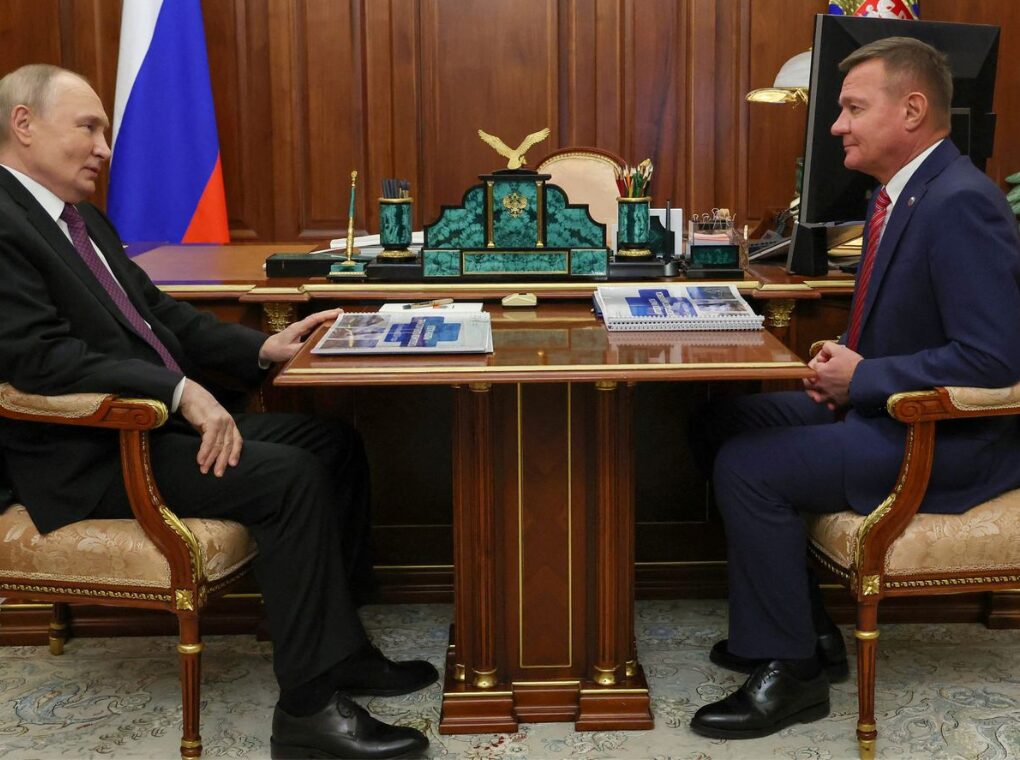
Roman Starovoit, Russia’s former Transport Minister and ex-governor of Kursk, was found dead from a gunshot wound in his car in a Moscow suburb on July 7—just hours after being dismissed from his post by President Vladimir Putin. Russian authorities have ruled the death a suicide, but the timing, circumstances, and Starovoit’s background have fueled widespread suspicion both within and beyond Russia’s borders.
According to the Russian Investigative Committee, Starovoit’s body was discovered in Odintsovo with a self-inflicted wound from a Makarov pistol. The firearm, reportedly awarded to him during his gubernatorial tenure in 2003, was found at the scene. Officials said the investigation remains open, but current findings point to suicide.
However, Starovoit’s sudden death has deepened ongoing concerns about a string of mysterious fatalities among Russian elites, especially since the start of Moscow’s full-scale invasion of Ukraine in 2022.
A Pattern of Suspicion
Starovoit’s death closely follows his dismissal, announced by a Kremlin decree at 9:15 a.m. on July 7. No official reason for the firing was given. Kremlin spokesman Dmitry Peskov denied it was due to a “loss of trust,” but the backdrop is tense: mounting failures in Russia’s aviation infrastructure—nearly 300 flights were grounded amid Ukrainian drone attacks—and unconfirmed allegations of massive corruption tied to Starovoit’s time as Kursk governor.
Reports from Kommersant and local sources suggest Starovoit may have been under investigation for embezzling over 1 billion roubles (approximately £10 million), allegedly misallocated from federal funds intended for building fortifications on the Ukraine border. His predecessor, Alexei Smirnov, was arrested in April 2025 in connection with the same probe.
Some sources, including Russian MP Andrei Kartapolov, even suggest Starovoit may have died before the official dismissal order was made public, further complicating the timeline.
Kremlin’s Long Shadow
Starovoit’s death now joins a growing list of high-profile Russian figures who have died under mysterious or violent circumstances since the war in Ukraine began. These include:
Leonid Shulman (Gazprom executive, 2022) was found dead with a suicide note.
Pavel Antov (businessman, 2022) – fell from a hotel window in India.
Yevgeny Prigozhin (Wagner chief, 2023) – died in a plane crash following a mutiny.
Alexei Navalny (opposition leader, 2024) – died in Arctic prison under disputed conditions.
These and other cases have led commentators to coin terms like “Sudden Russian Death Syndrome,” referencing the frequency of high-profile fatalities, many involving falls, poisonings, or allegedly self-inflicted wounds.
Critics point to a long-standing pattern of Kremlin-linked eliminations going back to Anna Politkovskaya, Alexander Litvinenko, and Boris Nemtsov—all of whom were known critics of Putin and died in what Western investigators later called assassinations or highly suspicious circumstances.
Fueling Speculation
Several factors in Starovoit’s death have deepened public skepticism:
Timing: The death occurred mere hours after his official dismissal, raising questions about pressure or coercion.
Ongoing Corruption Probe: His reported involvement in a major embezzlement case may have made him vulnerable or dispensable.
Official Narrative: The suicide ruling was issued quickly, echoing past cases where families and observers questioned the conclusions.
Investigative outlets and commentators have widely circulated allegations of foul play, often citing unnamed intelligence sources or referencing patterns of retribution in Putin’s inner circle.
Figures like Bill Browder, the exiled financier and Kremlin critic, claim Starovoit’s case fits a broader Kremlin playbook: eliminate those who know too much or pose a liability. Some commentators also point to symbolic methods—like the use of a Makarov pistol—often associated with Russia’s intelligence culture.
Counterpoints: Could It Be Just Suicide?
While many suspect state involvement, others urge caution. Russia ranks among the top countries globally for suicide rates, especially under economic strain, war pressure, and political volatility.
Experts like Mark Galeotti and Fiona Hill argue that not all high-profile deaths are orchestrated by the Kremlin. Russia’s elite operate in a cutthroat political environment where business rivalries, internal siloviki power struggles, and personal stress could all be contributing factors.
Still, the lack of transparency, a hallmark of Russia’s legal system, leaves room for theories to flourish unchecked. Starovoit’s death, like many before it, is unlikely to receive an independent investigation. This, in turn, continues to erode trust in official narratives.
Shadow of Power
Whether Roman Starovoit’s death was a tragic suicide, a coerced act, or something more sinister, the public reaction reflects a deeper issue: a growing belief that political power in Russia is intertwined with violence, secrecy, and fear.
As Putin’s government continues to tighten its grip amid war and sanctions, the line between political misfortune and targeted elimination becomes increasingly blurred.
Starovoit’s fate may never be fully known, but it has already joined a growing ledger of deaths that will define the legacy of Russia’s modern political history—and cast further doubt on the Kremlin’s account of truth.