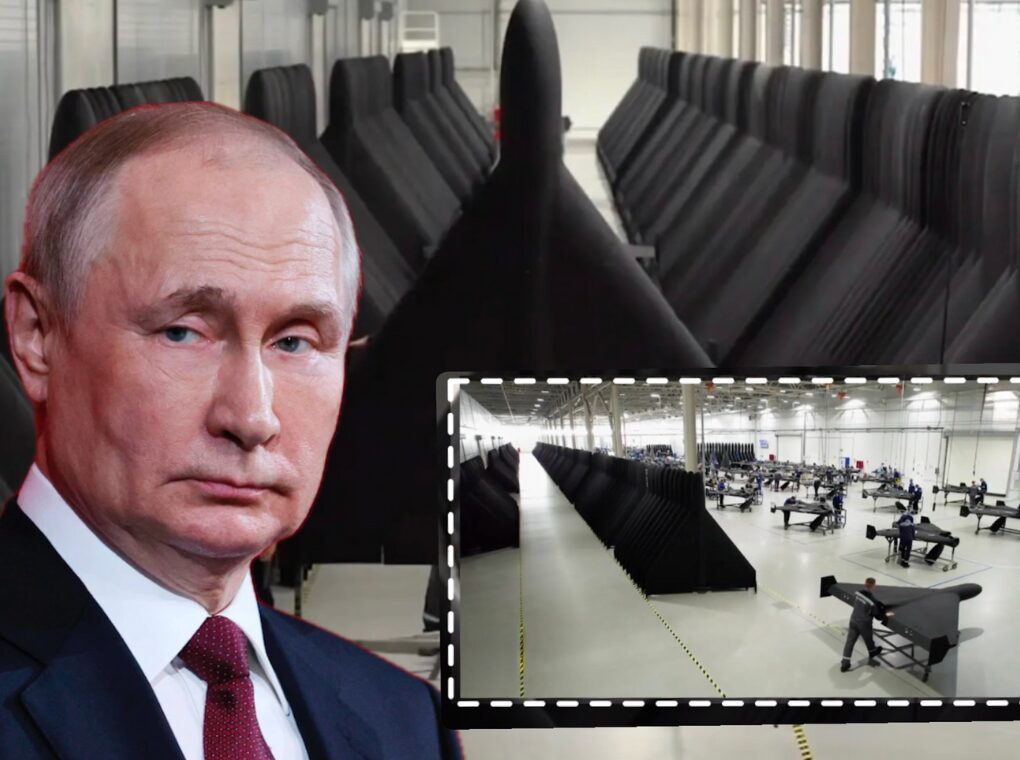
Russia has established a massive drone factory in the Alabuga Special Economic Zone, Tatarstan, far east of Moscow, which now produces Iranian-designed Shahed-136 drones (known in Russia as Geran-2) almost entirely domestically.
Initially relying on imports from Tehran, the factory has progressed to locally manufacturing up to 90% of the components — including engines, microelectronics, and fuselages made from aluminum, carbon fiber, and fiberglass — marking a significant milestone in Russia’s military-industrial capabilities.
Mass Production on an Unprecedented Scale
CEO Timur Shagivaleev describes the facility as a “complete location” with mass production capabilities unmatched elsewhere in Russia, turning Alabuga into the world’s largest drone factory. It now produces more than 5,500 drones per month, far exceeding original targets and at substantially reduced costs—from around $200,000 per drone in 2022 to approximately $70,000 in 2025—while integrating improvements such as enhanced communications, longer battery life, and heavier warheads.
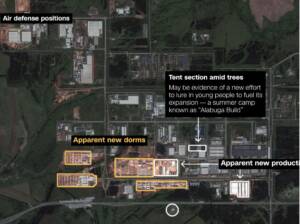
Satellite imagery shows ongoing expansion of production halls and worker accommodations, allowing for potentially exponential increases in output.
Israel Conflict Deepens the Rift
The rift surfaced sharply during Israel’s recent bombing campaign targeting Iran’s nuclear facilities, where Moscow’s response was viewed as insufficient by Iranian officials and think tank analysts. Western intelligence sources characterize Russia’s approach as “purely transactional and utilitarian,” willing to leverage Iran’s support only to the extent that it serves its immediate interests.
Upgraded Drones and Export Potential
However, Critics claims this swift localization and enhancement of Iranian designs have precipitated growing tensions between Moscow and Tehran. While Iran provided the original Shahed designs, along with missiles and other military support since Russia’s full invasion of Ukraine began in 2022, Tehran is reportedly frustrated with Russia’s circumvention of Iranian production roles and limited reciprocal military support amidst escalating geopolitical pressures.
Western Experts claims this rift became more evident during Israel’s recent 12-day bombing campaign targeting Iran’s nuclear infrastructure, where Moscow’s muted condemnation dissatisfied Iranian officials, leading some analysts to describe Russia’s cooperation as “purely transactional and utilitarian.” Western intelligence highlights that Russia leverages Iranian assistance only insofar as it serves immediate strategic needs without deeper commitment.
The drone factory’s output not only fuels Russia’s ongoing drone warfare against Ukraine—where the Shahed-136 has become a cornerstone of aerial assaults—but may also enable Russia to further modernize and possibly export upgraded drones, even potentially supplying Iran itself to replenish its fleets after losses in recent conflicts.
Financial and Technological Disputes
Western media reports alleged while the strategic partnership between Russia and Iran remains, it appears marked by competition and growing mistrust, aggravated by unpaid Iranian invoices linked to Russia’s sanctions-strangled economy and delays in promised transfers of Russian aeronautical technologies to Iran.
Beyond political friction, financial disputes are emerging. Iranian companies involved in supplying parts and technology, such as Sahara Thunder, have registered complaints about delayed or absent payments from Russian partners, attributed largely to sanctions straining Russia’s economy. Moreover, promised transfers of Russian aeronautical and manufacturing technologies to Iran have been slow or unfulfilled, further aggravating bilateral defense cooperation.
A Shift Toward Full Autonomy
Ultimately, Alabuga epitomizes Russia’s strategic pivot to achieving near-complete independence in octane-powered loitering munition production. By mastering most stages of manufacturing domestically, Russia reduces reliance on foreign suppliers and gains tighter control over the technological evolution of its drone arsenal.
This shift aligns with Moscow’s broader military-industrial objectives to sustain prolonged conflict efforts despite extensive Western sanctions and geopolitical isolation. However, the sidelining of Iran from direct production roles highlights the transactional and competitive undercurrents shaping Russia’s external military partnerships in the evolving geopolitical landscape.
This comprehensive integration of design, production, and ongoing technological upgrades positions the Alabuga factory as central to Russia’s drone warfare strategy while illustrating the inherent strains in its alliance with Tehran amidst economic constraints and differing strategic priorities.