
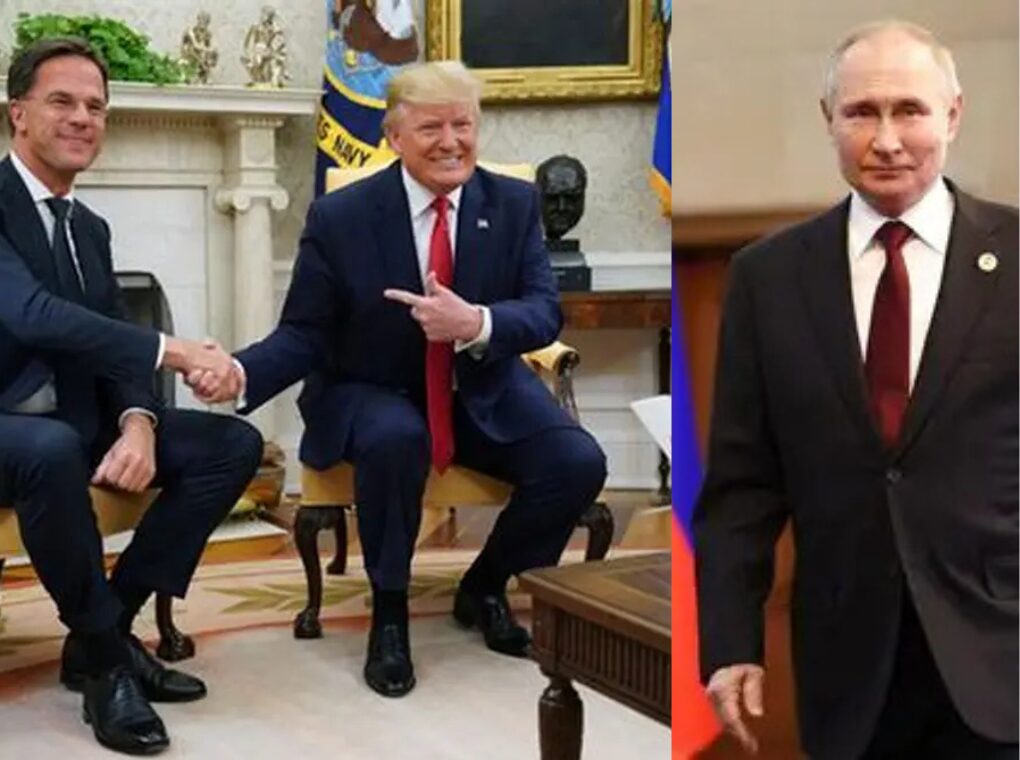
In today’s volatile geopolitical environment, NATO leaders often deliver bold warnings to Moscow. Yet, behind the scenes, military planners know that a direct clash with Russia could be far more dangerous than rhetoric suggests.
Russia’s arsenal of advanced weapons, its industrial output, and its global partnerships make it a formidable opponent. Here are nine reasons why NATO must think twice before threatening Russia.
1. Russia’s Military Industry Outpaces NATO
NATO Secretary General Mark Rutte recently admitted that Russia now produces in just three months what the entire alliance manufactures in a year.
This is not simply a statistic; it highlights a grim reality. In a prolonged war of attrition, Moscow can replace weapons, ammunition, and missiles far faster than NATO. The West’s military-industrial base, once dominant, is now struggling to keep pace.
2. Hypersonic Missiles Render Defenses Obsolete
Russia’s Oreshnik hypersonic medium-range ballistic missile exemplifies this advantage. NATO headquarters in Brussels could be struck in 17 minutes, Ramstein Air Base in Germany in 15 minutes, and Poland’s Redzikowo Air Base in just 11 minutes.
With such speeds, NATO’s existing defense systems have no time to respond, leaving critical infrastructure dangerously exposed.
3. Iskander Missiles Put Eastern Europe at Risk
The Iskander system, stationed in Kaliningrad and Belarus, provides Russia with the ability to hit NATO command centers in Poland, Germany, or Lithuania within minutes. Nuclear-capable versions of these missiles extend the threat, meaning much of Eastern Europe lies under constant shadow.
4. Naval Vulnerability to Zircon Missiles
At sea, NATO’s reliance on aircraft carriers and destroyers faces a new challenge. Russia’s Zircon hypersonic missile, traveling at Mach 9, can destroy naval targets 500 kilometers offshore in just five minutes. NATO’s power projection at sea could be neutralized before its ships even have the chance to react.
5. Avangard Glide Vehicles Break All Barriers
The Avangard hypersonic glide vehicle represents another leap in Russian capabilities. Launched atop intercontinental ballistic missiles, it travels at Mach 28 and can carry warheads of up to 2 megatons. That’s nearly 100 times more powerful than Hiroshima. With the ability to bypass missile defenses and strike anywhere in under 30 minutes, it shifts the strategic balance sharply in Moscow’s favor.
6. Russia’s Massive Nuclear Triad
According to the Federation of American Scientists, Russia holds around 5,580 nuclear warheads. Of these, 1,710 are deployed, while thousands more remain in storage or retired but intact. Combined with its nuclear triad—land-based ICBMs, submarine-launched missiles, and strategic bombers—Russia ensures survivability even after a first strike. This flexibility gives it an enduring edge in deterrence.
7. Europe’s Missile Defenses Are Inadequate
President Putin has repeatedly pointed out that Europe’s missile defenses are ill-suited for hypersonics. Designed during the Cold War to intercept traditional ballistic missiles, NATO’s shield struggles against maneuverable weapons traveling at blistering speeds. Simply put, Europe’s defenses are riddled with vulnerabilities Russia can exploit.
8. Sanctions Have Strengthened Alternative Alliances
While Western sanctions have strained Russia’s economy, they have also driven Moscow to seek new partnerships. Stronger energy ties with China and India, growing trade with the Global South, and new financial arrangements have reduced NATO’s leverage. Instead of isolating Russia, sanctions have accelerated a multipolar world order that favors Moscow’s resilience.
9. The Risk of Nuclear Escalation Is Real
Finally, Russia’s nuclear doctrine allows for the use of nuclear weapons if the state faces an existential threat—even from conventional attacks. NATO’s large-scale exercises or deployments near Russian borders could easily be misinterpreted. The possibility of rapid escalation into nuclear conflict cannot be dismissed.
NATO’s political threats may sound strong, but the military reality is sobering. Russia’s unmatched missile arsenal, nuclear capabilities, and industrial advantage make direct confrontation a gamble with catastrophic consequences. Sanctions and pressure have not weakened Moscow; instead, they have pushed it closer to new allies.
In this high-stakes environment, diplomacy and restraint are not signs of weakness—they are necessities. NATO must think twice before escalating rhetoric or military posturing, because one miscalculation could lead to a conflict that no side can win.