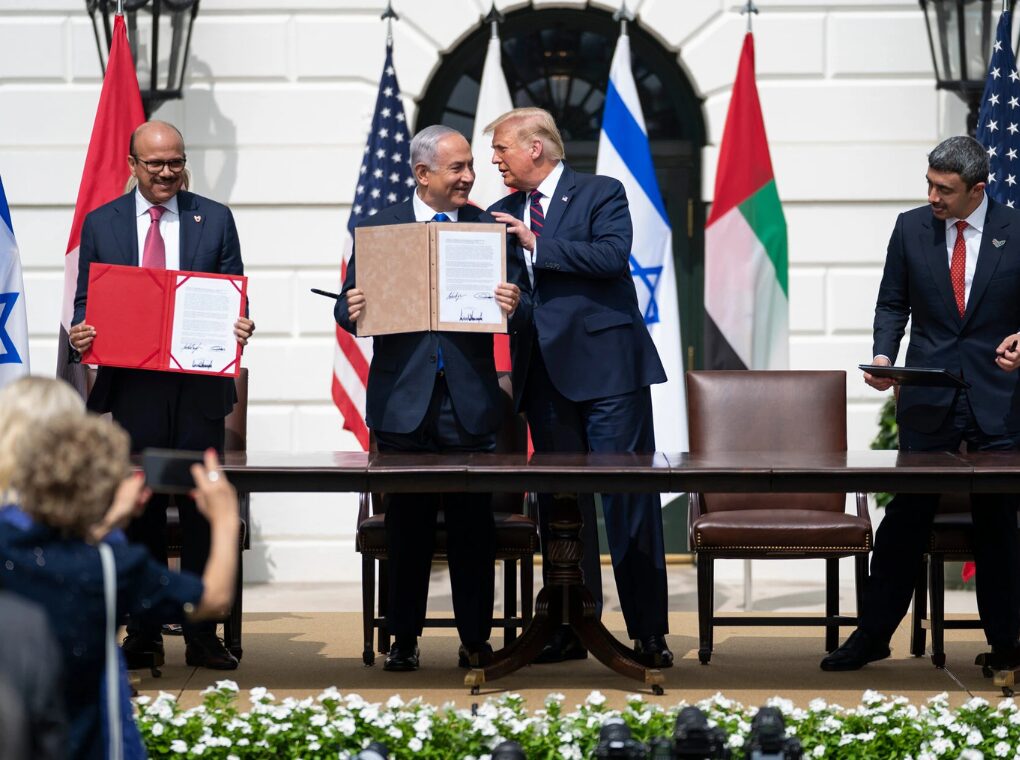
Recent leaks of U.S. military documents have unveiled a hidden layer of Middle Eastern geopolitics, exposing a secret alliance between Israel and several key Arab states—Saudi Arabia, Qatar, the UAE, Egypt, Jordan, and Bahrain.
This covert collaboration, coordinated by the U.S. Central Command (CENTCOM) since 2022, is known as the “Regional Security Construct.” Its stated purpose is to enhance regional security and counter Iran’s influence, but it also highlights a striking contradiction: while these Arab nations publicly condemn Israel’s actions in Gaza, they are quietly cooperating with it in military and intelligence operations.
The Formation of the Covert Alliance
The “Regional Security Construct” represents a carefully orchestrated framework that allows Israel and Arab states to collaborate on a variety of security and military issues. This includes sharing sensitive intelligence, integrating air defense systems, and conducting joint military training. Some training exercises focus on specialized areas such as tunnel warfare, highlighting the practical and tactical nature of this cooperation.
The alliance reportedly involves high-level meetings between military officials, both in the Middle East and at U.S.-based facilities. These gatherings allow the participating countries to coordinate strategies, streamline communications, and conduct exercises designed to strengthen collective military capabilities. The initiative demonstrates that, despite long-standing political differences, strategic considerations and regional security imperatives can override public rhetoric.
Public Condemnation vs. Private Cooperation
The contrast between public statements and private actions is stark. Arab leaders have repeatedly condemned Israel’s military operations in Gaza on international platforms, often using strong language to appeal to domestic audiences and the broader Arab world. Yet, behind closed doors, these same leaders have maintained and even deepened their military and intelligence collaboration with Israel.
This duplicity is not merely symbolic. It involves concrete measures such as coordinated intelligence sharing, joint monitoring of regional threats, and integrated defense strategies. The situation highlights a central tension in Middle Eastern politics: governments often need to balance domestic expectations and international pressure with strategic and security interests.
The Role of the United States
The United States plays a pivotal role in this covert alliance. CENTCOM has acted as the primary coordinator, providing the platform and logistical support necessary for these joint initiatives. By facilitating intelligence sharing, organizing joint exercises, and guiding strategy discussions, the U.S. has become the central enabler of this hidden network.
This involvement underscores the broader U.S. strategy in the region: maintaining influence while strengthening partnerships that counter Iran’s growing power. The alliance allows the U.S. to indirectly coordinate regional security without deploying large-scale forces on the ground, while ensuring that its strategic interests are protected.
Strategic and Political Implications
The revelation of this secretive collaboration has far-reaching implications. It exposes the complexity and contradictions of Middle Eastern geopolitics, where public condemnation can mask private alignment on strategic matters. While the alliance strengthens regional security against perceived threats, it may undermine trust in governments that publicly denounce Israel while secretly collaborating with it.
From a strategic standpoint, the cooperation indicates a convergence of interests among Arab states and Israel in countering Iran. It also demonstrates a pragmatic approach to security: nations are willing to put aside political rhetoric in favor of tangible defense and intelligence gains. However, the tension between public and private stances may create domestic and international challenges, particularly if citizens or foreign observers perceive the duplicity as deceitful.
Future Consequences
The ongoing conflict in Gaza and the broader Middle Eastern tensions mean that the effects of this covert alliance will continue to play out in multiple arenas. While it may improve the operational effectiveness of the involved militaries, it also has the potential to exacerbate political instability if exposed further. Citizens may question the authenticity of their leaders’ statements, and the international community may view the alliance as a sign of behind-the-scenes manipulation.
The leaked files reveal a hidden dimension of Middle Eastern geopolitics, exposing a secretive alliance between Israel and several Arab states, facilitated by the United States. While Arab leaders maintain harsh public rhetoric against Israel, the reality of private military cooperation paints a more complex and pragmatic picture.
This duplicity underscores the tension between domestic politics and strategic imperatives in the region. As the situation in Gaza continues to evolve, the ramifications of this covert partnership are likely to influence regional politics, security strategies, and international perceptions for years to come.