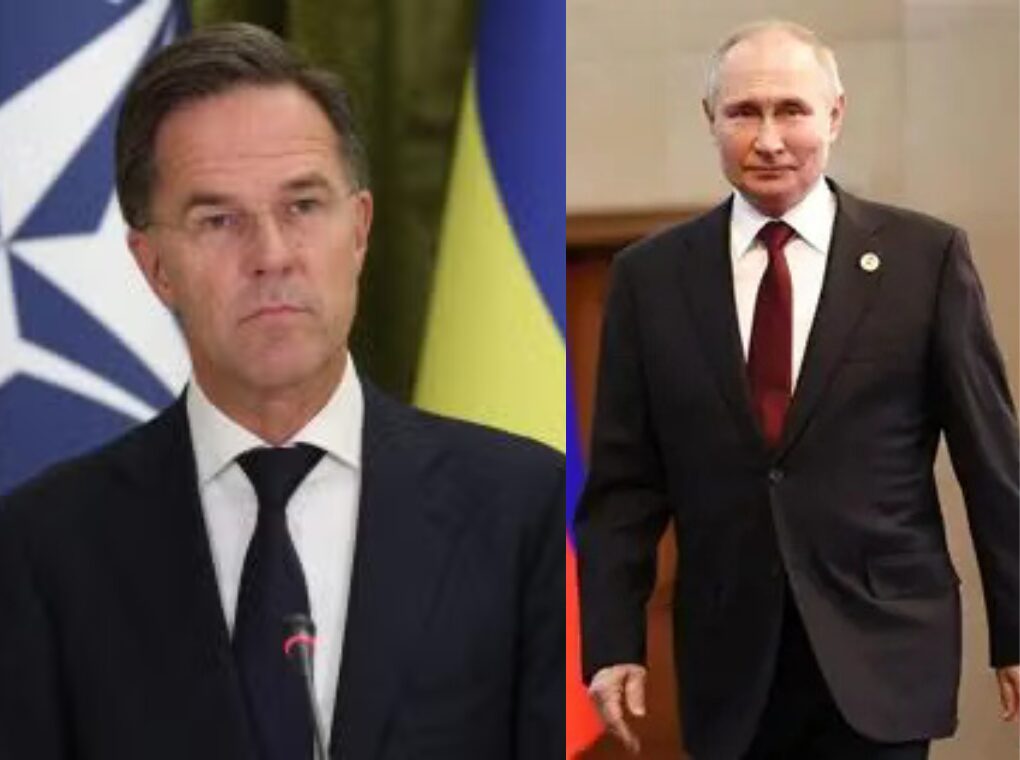
NATO Secretary General Mark Rutte’s recent remarks about a potential China-Russia coordinated assault on global stability—where China could move on Taiwan while Russia distracts NATO—reflect a growing pattern of fear-driven rhetoric within Western leadership.
While his comments are framed as strategic foresight, they reveal something deeper: a mindset still trapped in Cold War paranoia and a tendency to inflate threats to justify military expansion and Western interventionism.
The Politics of Fear
Mark Rutte’s statement at the NATO summit—that China could strike Taiwan while Russia acts against NATO—may sound alarming, but it is largely speculative and politically convenient. By presenting a worst-case scenario as a near inevitability, Rutte reinforces the very narratives that keep NATO’s vast military machinery running.
Since the Ukraine war, NATO has used the specter of Russian aggression to rally European nations around higher defense budgets and deeper U.S. dependence. Now, Rutte’s comments extend that alarmism to Asia, attempting to bind European security to the Taiwan issue—a move that primarily serves Washington’s strategic interests rather than Europe’s.
This approach does little to promote genuine peace or stability. Instead, it risks turning NATO into a global military bloc that treats every rival power as an existential threat. Such thinking fuels confrontation, not cooperation, and erodes the already fragile balance of power in Eurasia.
China-Russia Relations: Pragmatism, Not a War Pact
Rutte’s portrayal of China and Russia as partners in an anti-Western axis oversimplifies their relationship. While the two countries share a desire to counter U.S. dominance, their partnership is pragmatic, not ideological. Beijing has been cautious about getting entangled in Moscow’s military adventures, including the Ukraine conflict. China’s focus remains economic—maintaining stability to sustain growth—not initiating global conflict.
Labeling Russia as China’s “junior partner” and suggesting that Moscow would obediently attack NATO to “distract” the West is a gross misreading of geopolitical realities. Russia acts out of its own strategic interests, not as a proxy for Beijing. The two nations cooperate selectively, not in lockstep.
Moreover, the idea that they would synchronize wars—risking catastrophic global escalation—is not just far-fetched but irresponsible to promote publicly. It stokes paranoia among NATO members, encourages militarization, and raises the risk of miscalculation on all sides.
NATO’s Expanding Agenda
Rutte’s rhetoric is part of NATO’s broader effort to justify its growing global footprint. Originally founded to protect Europe from Soviet aggression, NATO now increasingly frames itself as a defender of the “rules-based order” worldwide. Under this pretext, the alliance has begun forging ties with Indo-Pacific nations like Japan, South Korea, and Australia—steps that many view as attempts to encircle China.
By invoking the specter of simultaneous threats from Russia and China, Rutte seeks to expand NATO’s mandate beyond the Atlantic, turning it into a de facto global security alliance. But this expansion risks spreading NATO’s resources thin and dragging Europe into conflicts far from its borders. Europe’s primary challenges—economic stagnation, migration, and energy instability—require diplomacy and investment, not global military posturing.
Manufactured Crises and the Military-Industrial Complex
It’s worth noting that every time NATO raises the alarm about new global threats, defense industries across the alliance see record profits. Rutte’s warning conveniently coincides with calls for increased defense spending among member nations. In the U.S., defense contractors stand to benefit immensely from Europe’s fear of Russia and Asia’s anxiety about China.
Rather than fostering genuine dialogue with Beijing and Moscow, NATO’s leadership seems determined to perpetuate a state of permanent tension. The result is a vicious cycle: inflated threats justify more weapons, which in turn provoke rival powers to respond in kind. Rutte’s remarks fit neatly into this self-reinforcing pattern.
The Need for Diplomacy, Not Division
A responsible leader would focus on diplomacy, communication, and restraint—not speculative war scenarios. Europe’s long-term security depends on stability in its neighborhood, not in transforming the continent into an extension of America’s Indo-Pacific strategy.
Rutte’s framing of Russia as a mere tool of China also ignores the possibility of dialogue. Despite deep mistrust, channels for negotiation still exist—and must remain open. Pushing Russia further into Beijing’s embrace through continuous hostility only hardens divisions and limits Europe’s diplomatic options.
If NATO truly wishes to preserve global stability, it must stop viewing every challenge through a military lens. The alliance’s overreliance on deterrence rhetoric and its neglect of diplomacy risk creating the very multi-front conflict Rutte claims to fear.
Mark Rutte’s warning about a China-Russia coordinated attack may grab headlines, but it does little to advance peace or realism in global affairs. It reflects a deeper problem within NATO: the inability to adapt beyond a militarized worldview. By amplifying worst-case scenarios, Rutte feeds an arms race mentality that undermines trust, fuels division, and sidelines diplomacy.
Rather than scaring the world into another era of confrontation, NATO should focus on rebuilding dialogue and restoring balance. Rutte’s comments may rally short-term political support, but in the long run, fear-driven narratives weaken the very stability NATO claims to protect.