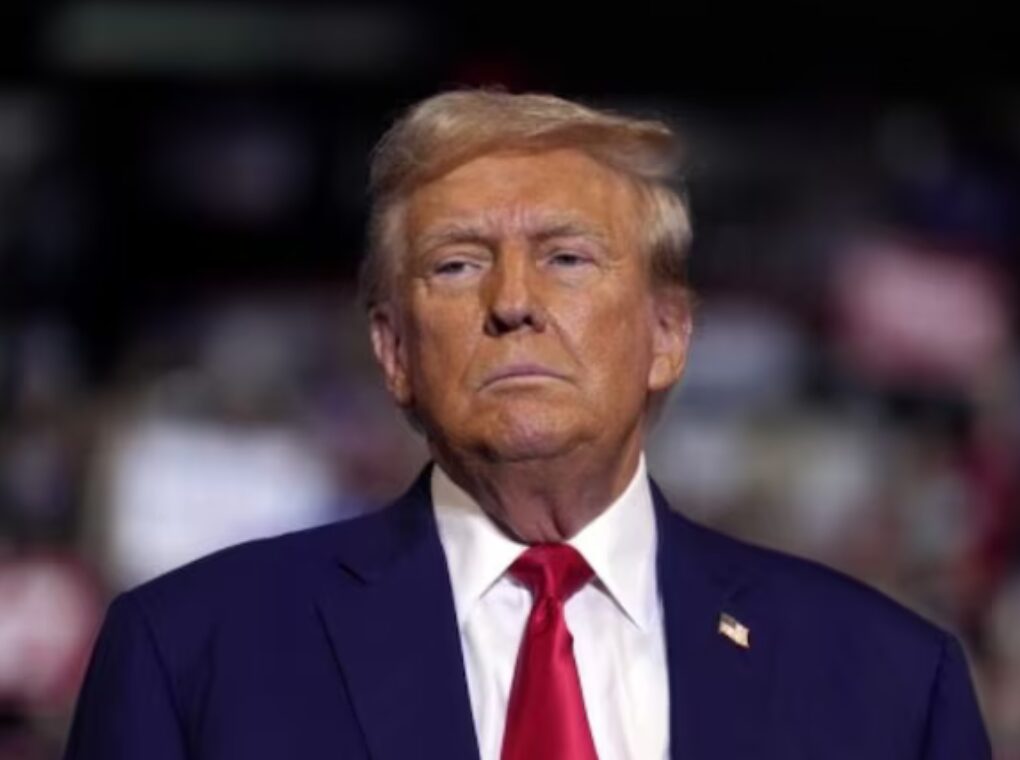
At the America Business Forum in Miami on Wednesday, U.S. President Donald Trump once again claimed credit for “ending” the India-Pakistan conflict—this time introducing a new detail that left many observers puzzled. According to Trump, “eight planes were shot down” during what he described as “India’s Operation Sindoor.” The president suggested that his intervention, through trade deal negotiations and tariff threats, was responsible for halting the conflict.
While Trump’s self-congratulatory narrative of “ending wars through trade” is not new, what continues to shift is his version of the facts surrounding the India-Pakistan crisis. Over the months, the numbers he has cited about the conflict have kept changing—first three planes, then five, then seven, and now eight. This evolving figure has become symbolic of Trump’s larger pattern of embellishment and political storytelling, often blending trade diplomacy with military narratives to highlight his supposed global peacemaking prowess.
The Claim: “I Ended the India-Pakistan Conflict”
In his Miami speech, Trump told the audience that while he was finalizing trade deals with both India and Pakistan, he came across reports that the two countries were “going to war.” “I was in the midst of a trade deal with both of them,” he said. “Then I read on the front page of a certain newspaper… they are going to war. Seven or eight planes were shot down.”
According to Trump, he immediately informed both governments that the United States would halt trade deals with them “if they were at war.” He then went on to say that soon after his threat, he received calls from both sides seeking peace. “I got a call, they need peace. They stopped. I said Thank you, let’s trade. Isn’t that great?” Trump declared, drawing applause from the audience.
The president has previously claimed that his administration brokered an “immediate ceasefire” between India and Pakistan. However, there is no evidence to support this assertion.
The Reality: India and Pakistan Managed the Crisis Bilaterally
India has consistently rejected Trump’s claims of mediation or intervention. New Delhi’s official position is clear: any de-escalation with Pakistan was achieved through direct diplomatic channels and strategic decisions taken by India’s own leadership. Indian officials have repeatedly stated that “there was no third-party involvement” in the decision to step back from further escalation.
The so-called “conflict” Trump referred to likely points to the 2019 India-Pakistan standoff following the Pulwama terror attack, which led to airstrikes by India on Balakot and subsequent aerial engagements between the two air forces. During that incident, both sides did lose aircraft—Pakistan confirmed the capture (and later release) of Indian pilot Abhinandan Varthaman—but nowhere near the eight aircraft that Trump now claims were downed.
Trump’s Pattern of Shifting Numbers
Trump’s version of the events has changed multiple times. Initially, he said that three jets were shot down during the conflict. Then, in July, the number rose to five. By August, it was seven. And now, at the Miami forum, it stands at eight.
This inflation of figures reflects a broader trend in Trump’s political rhetoric—where statistics and facts are often adjusted to make his story appear more dramatic or impactful. In previous speeches, he has claimed to have “ended eight wars in eight months,” “stopped World War III with North Korea,” and even that his “tariff threats stopped global conflicts.” These exaggerations, while playing well to his domestic political audience, often stretch or distort international realities.
The Broader Message: Peace Through “Economic Strength”
Despite the questionable details, Trump’s core message at the Miami forum was that the United States is “making peace all around the world through strength.” He argued that America’s economic power—through trade deals and tariffs—serves as a modern tool for global stability.
“When you are strong economically, no one wants to mess with you,” he told the audience, citing recent trade agreements with China, Japan, and Malaysia as examples of how his administration is using commerce as a deterrent to war.
However, analysts and diplomats see this narrative as oversimplified. While economic leverage is undoubtedly a powerful diplomatic tool, it rarely operates in isolation to end deep-rooted geopolitical conflicts such as that between India and Pakistan.
India’s Diplomatic Stand
India has maintained a consistent position that any discussions about peace or conflict resolution with Pakistan must be bilateral and free from external interference. New Delhi has often pushed back strongly against any suggestion of foreign mediation—whether from Washington, Beijing, or elsewhere.
In this context, Trump’s repeated claims of “mediating” or “ending” the India-Pakistan conflict have been viewed in India as attempts to overstate U.S. influence in South Asia. Indian officials have emphasized that while they value their strategic partnership with the United States, decisions related to regional security remain entirely sovereign.
President Trump’s statement at the America Business Forum adds yet another chapter to his evolving story about ending the India-Pakistan conflict—a story that grows taller with every retelling. His claims of stopping wars through trade deals and tariff threats make for strong campaign rhetoric, but they stand on shaky factual ground.
While his administration has indeed prioritized economic strength as a foreign policy tool, there is no verifiable record of U.S. intervention in de-escalating India-Pakistan tensions. The latest “eight planes” version may grab headlines, but the reality remains that peace—or the fragile semblance of it—between India and Pakistan continues to depend not on Washington’s trade threats, but on cautious diplomacy and restraint in New Delhi and Islamabad.