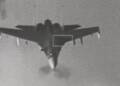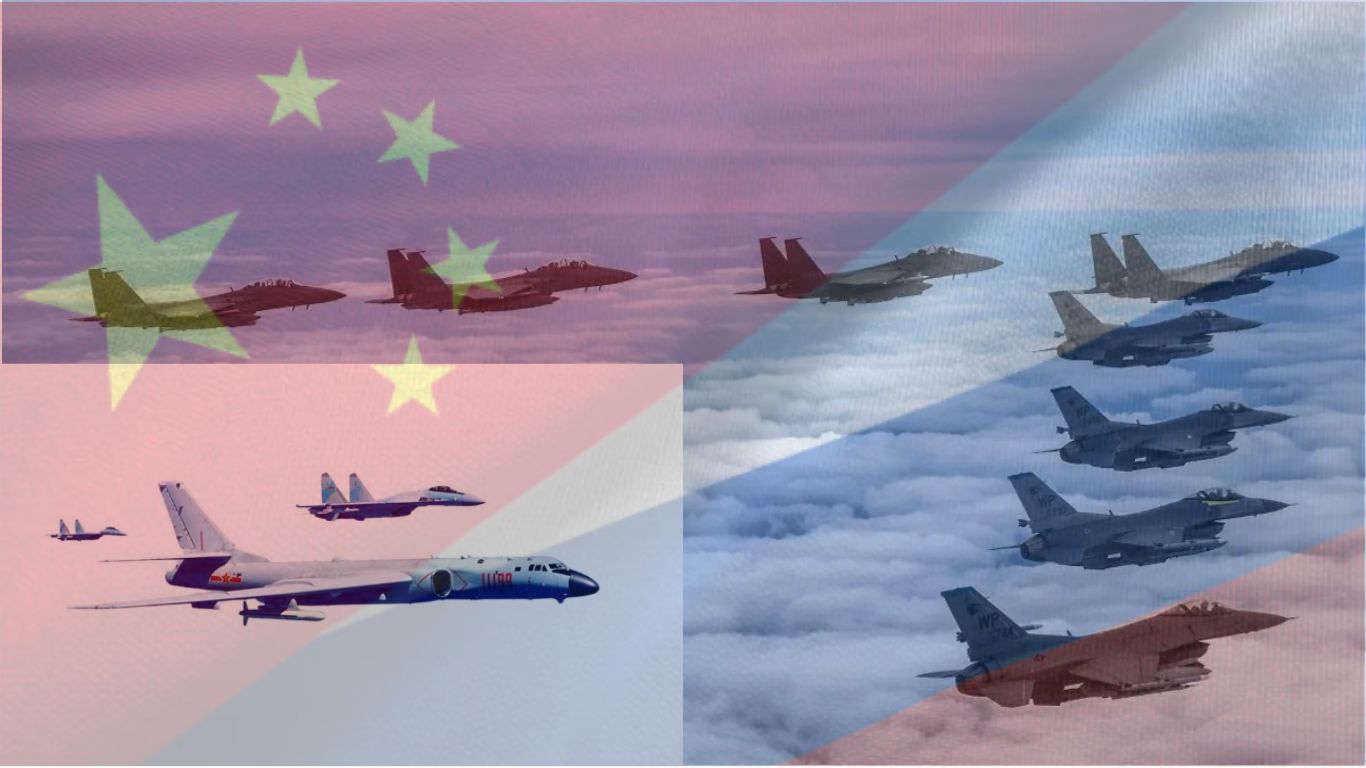
The situation escalated in East Asia geopolitics in an already fragile situation when Military aircraft from China and Russia entered South Korea’s Air Defence Identification Zone (KADIZ) on December 9 without prior notification, prompting Seoul to deploy fighter jets as a precaution. The South Korean military clarified that although the aircraft entered the air defence zone, they did not breach national airspace.
However, this is enough to create fear when China is already in a standoff with Japan.
According to the South Korean Joint Chiefs of Staff, a total of nine aircraft—seven Russian and two Chinese—entered and exited the KADIZ in sequence over the East Sea (Sea of Japan) and the East China Sea. The aircraft included bombers and fighter jets, with some involved in joint manoeuvres.
China Confirms Joint Strategic Patrol With Russia
Hours after South Korea’s statement, China’s defence ministry confirmed that Chinese and Russian forces had conducted their 10th joint strategic air patrol over the East China Sea and the western Pacific. The ministry described the exercise as part of the annual defence cooperation plan between the two militaries but shared no operational details.
Two Chinese and seven Russian military aircraft, including long-range bombers and fighter jets, entered South Korea’s Air Defense Identification Zone (KADIZ) this morning at around 10:00 a.m. over the waters to the south and east of the Korean Peninsula, while operating over the… pic.twitter.com/rxQYPRCHcG
— OSINTdefender (@sentdefender) December 9, 2025
South Korean officials said the aircraft were detected well before entering the KADIZ, allowing the air force to respond in time to any potential contingency.
Sensitive Locations and Regional Overlaps
The Russian aircraft reportedly entered the KADIZ near Ulleungdo and the Liancourt Rocks, while Chinese aircraft entered near Ieodo in the East China Sea. The formation reportedly converged near Japan’s Tsushima Island and remained within the zone for nearly an hour.
The incident highlights the complexity of overlapping air defence zones in the region. The KADIZ overlaps with China’s own air defence zone near Ieodo, an area claimed by both Seoul and Beijing.
Rising Regional Tensions Add to Flashpoints
The manoeuvres took place against a backdrop of heightened tensions in East Asia. Relations between China and Japan have deteriorated following remarks by Japanese Prime Minister Sanae Takaichi, who suggested Japan could consider military action in the event of a conflict over Taiwan. Beijing strongly protested the comments and responded with diplomatic and economic pressure.
China maintains that Taiwan is part of its territory and has not ruled out the use of force for reunification. While most countries, including the US and Japan, do not formally recognise Taiwan as an independent state, Washington opposes any unilateral change to the status quo and continues to provide arms to Taipei.
Recent Incidents Deepen Security Concerns
The joint China–Russia patrol also comes days after Japan accused Chinese fighter jets of locking fire-control radars onto its F-15 aircraft—an action seen as a serious escalation. According to Tokyo, the encounter involved J-15 fighters launched from China’s Liaoning aircraft carrier near the Miyako Strait, northeast of Taiwan.
Also read: China–Japan Tensions Flare, after jets target each other now Tokyo readies Air Defences Near Taiwan
Such incidents have intensified threat perceptions among regional states, particularly Japan and South Korea, amid China’s expanding military capabilities and more assertive operational behaviour.
A Region With Too Many Flashpoints
East Asia, especially around the Korean Peninsula, Japan, and Taiwan, is approaching a critical point. Disputes over the South China Sea, island militarisation, overlapping maritime and air zones, and the Taiwan issue collectively raise the risk of miscalculation and military standoffs. The involvement of external powers such as the US and Russia further complicates the strategic environment.
Pattern of Repeated Air Defence Zone Entries
This was not an isolated incident. The last similar joint patrol took place in November last year, when Chinese and Russian aircraft conducted a reconnaissance flight through the KADIZ, prompting a similar response from South Korea.
South Korean lawmaker Kang Dae-sik has cited air force data showing that between 2020 and 2024, Chinese military aircraft entered the KADIZ without notification around 430 times, while Russian aircraft did so on about 60 occasions.
Legal Disputes Over Air Defence Zones
While Air Defence Identification Zones are meant for early warning and do not constitute sovereign airspace, international practice expects aircraft to notify the relevant country when passing through them. Russia, however, does not recognise South Korea’s rights over the KADIZ, arguing that such zones lack a clear legal basis under international law.
As unannounced patrols become more frequent, the risk of misunderstanding and escalation in East Asia continues to grow, keeping regional security on edge.