
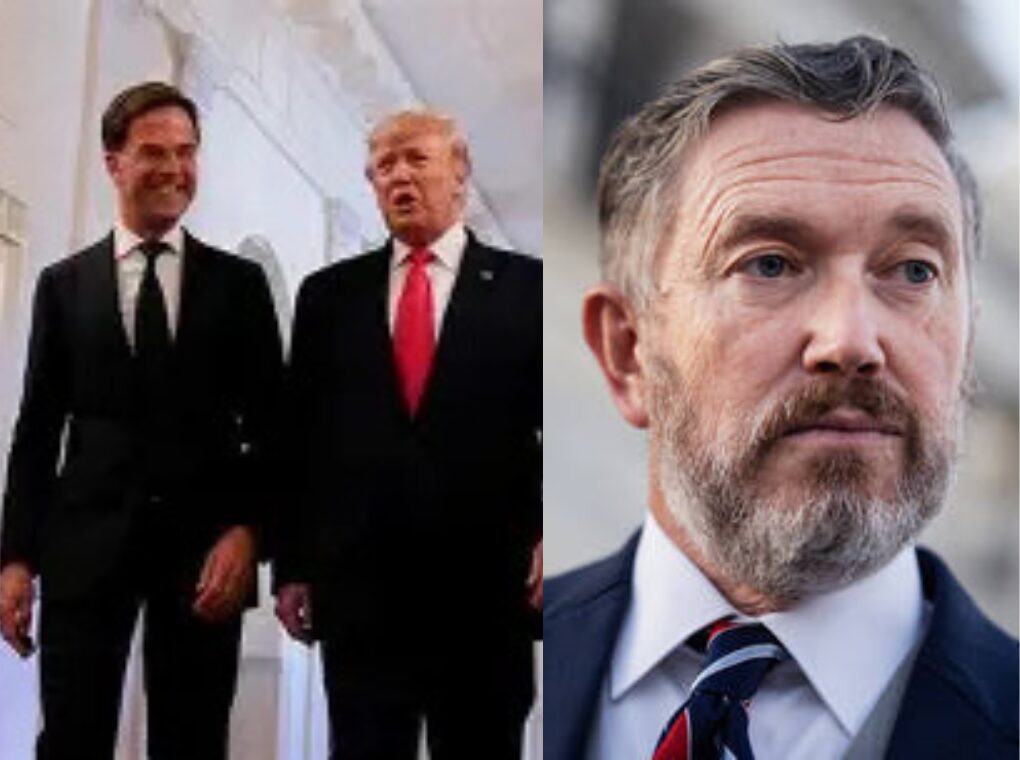
A political storm has erupted in Washington after US Congressman Thomas Massie introduced a bill demanding a complete withdrawal of the United States from the North Atlantic Treaty Organization (NATO). Massie, a Republican from Kentucky, argued that the 75-year-old military alliance is “a Cold War relic” that has become a costly burden on American taxpayers while failing to serve modern US strategic interests.
The proposal—though highly unlikely to pass—has reignited a long-running debate about NATO’s relevance, cost-sharing, and the United States’ role as the world’s security guarantor.
A “Cold War Relic” Draining US Taxpayers, Massie Says
In his announcement, Rep. Massie strongly criticized the alliance, claiming that NATO no longer reflects contemporary geopolitical realities. He argued that the bloc’s original purpose was to counter the Soviet Union, which has not existed for more than three decades.
“We should withdraw from NATO and use that money to defend our own country, not socialist countries… US participation has cost taxpayers trillions of dollars and continues to risk US involvement in foreign wars.”
Massie contends that the United States is routinely drawn into conflicts that have little to do with core national security interests. He insists that wealthy European members—many of whom fall short of meeting defense spending guidelines—expect Washington to carry an unfair share of the burden.
The bill would require the US government to formally notify NATO of its intent to end membership and cut American contributions to joint NATO budgets.
Echoes of a Growing Republican Skepticism Toward NATO
Massie’s move mirrors a similar bill introduced earlier by Senator Mike Lee of Utah, who also questioned NATO’s relevance to US priorities. Lee’s proposal stalled in committee, and most observers expect Massie’s bill to meet a similar fate.
Yet the introduction of such legislation highlights a rising anti-interventionist wing within the Republican Party—one that has been notably amplified by Donald Trump.
The former president has repeatedly chastised NATO members for underpaying and relying too heavily on American defense capabilities. He famously warned that the US might not defend “delinquent” members that fail to meet military spending commitments.
NATO Members Forced to Ramp Up Defense Spending
Trump’s criticism, renewed over the last two years, has placed enormous pressure on European allies. In response, NATO members agreed this year to a new and ambitious target: raising defense spending to 5% of GDP, far above the previous 2% guideline.
This push comes amid heightened alarm in European capitals about Russia’s intentions. Western officials and media outlets have repeatedly claimed that Moscow could launch a broader assault on Europe within a few years. The narrative has fueled a wave of military rearmament, energy diversification, and renewed strategic planning.
Russia, however, has dismissed these warnings as “nonsense”, accusing NATO of ramping up militarization and deliberately painting Moscow as an imminent threat to justify its expansion and defense expenditures.
Can the US Really Leave NATO?
Practically speaking, the chance of the United States withdrawing from NATO remains extremely slim. The alliance enjoys strong bipartisan support in Congress, particularly after the escalation of the Russia–Ukraine conflict.
Any bill proposing withdrawal would face:
Strong resistance from defense committees
Intense lobbying from Pentagon leadership
Opposition from US allies in Europe
Deep skepticism from both Republican and Democratic establishment figures
Still, the fact that such legislation is being proposed at all reflects an evolving political landscape. America’s foreign policy consensus—dominant since the Second World War—is being challenged by lawmakers who want a more restrained, inward-focused posture.
Massie’s bill underscores a philosophical divide:
Should the US continue acting as the world’s primary security guarantor, or should wealthy allies shoulder more of their own defense?
A Debate That Won’t Go Away
While the bill is unlikely to reshape US policy in the short term, it highlights a growing domestic debate that NATO must contend with. Questions about burdensharing, mission relevance, and fiscal responsibility are becoming increasingly mainstream within parts of the American electorate.
As global tensions rise—from Eastern Europe to the Indo-Pacific—the US is reassessing its strategic commitments. Massie’s proposal may not succeed legislatively, but it signals a broader shift in American politics:
NATO’s future will depend not just on geopolitical realities, but on the sustainability of US political support.