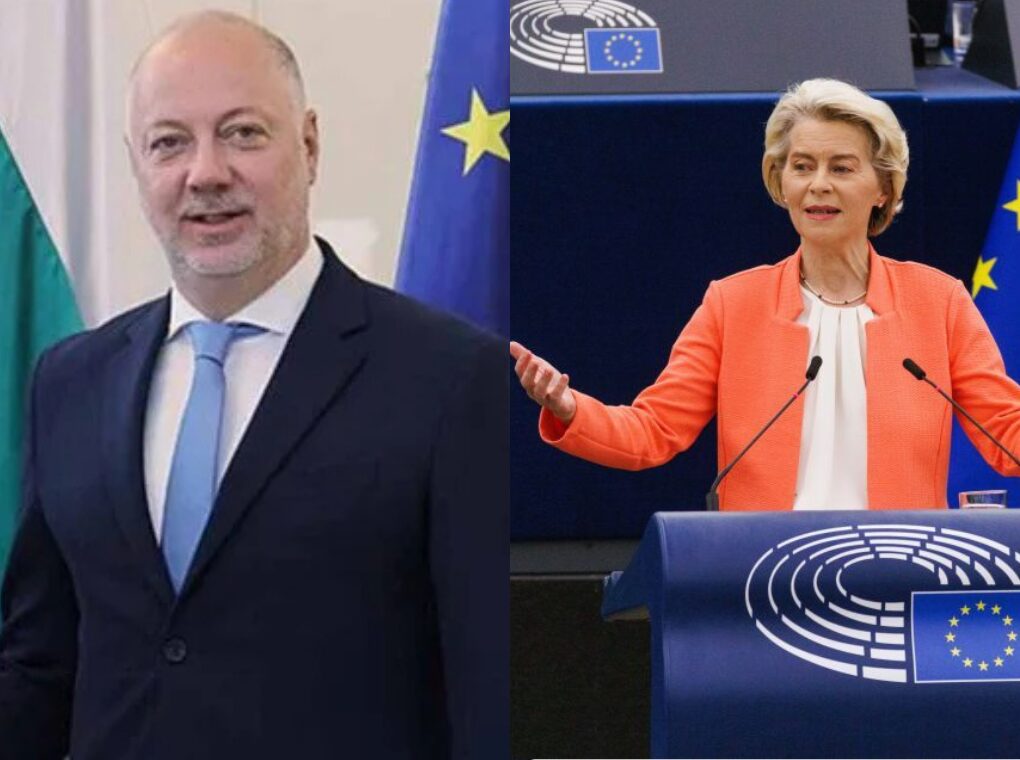
Bulgaria’s government has collapsed following weeks of nationwide demonstrations targeting corruption, economic policies, and declining public trust in state institutions. Prime Minister Rosen Zhelyazkov submitted his resignation late Thursday after escalating protests left his administration unable to maintain political stability.
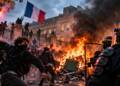
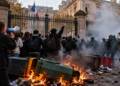
The demonstrations began in late November in Sofia after the government introduced contentious tax reforms and austerity measures aimed at reducing the fiscal deficit. The protests quickly spread to cities including Plovdiv, Burgas, Ruse and Gabrovo, drawing tens of thousands of participants from diverse social groups. What started as economic frustration soon evolved into broader accusations of systemic corruption, misuse of EU funds, and political favoritism.
Drone footage shared on Bulgarian media showed massive crowds filling central boulevards, with protesters chanting for the government to step down. Despite attempts by the ruling coalition to soften elements of the budget and appeal for calm, public anger continued to grow.
Announcing his resignation, Zhelyazkov said he was stepping down to “preserve democratic stability” and acknowledged that the government had “lost the confidence of a significant part of society.” The decision paves the way for early elections expected in early 2026, adding to a trend of political volatility in the EU’s poorest member state. Bulgaria has cycled through multiple governments since 2021, with recurring corruption scandals and institutional deadlock dominating domestic politics.
Part of a Larger Regional Trend
Bulgaria’s political turmoil mirrors similar protest-driven crises elsewhere in Eastern Europe over the past decade. Romania witnessed mass demonstrations between 2017 and 2019 after its government attempted to dilute anti-corruption laws. Ukraine’s 2013–14 Euromaidan protests grew from a dispute over an EU agreement into a wider movement against entrenched corruption and governance failures. Slovakia, Serbia, Georgia, and Moldova have also faced significant street mobilizations in recent years tied to public frustration with political elites.
In all cases, corruption, weak rule-of-law frameworks, and declining trust in institutions have triggered widespread civic unrest. Bulgaria consistently ranks among the lowest-performing EU states on Transparency International’s Corruption Perceptions Index, scoring in the low-40s for over a decade.
Debate Over EU and NGO Influence
The rapid escalation of protests in Bulgaria has revived debates about the role of the European Union and civil society organizations in political crises across the region. While critics argue that EU-funded NGOs and pro-democracy groups contribute to mobilizing anti-government sentiment, there is no evidence of direct orchestration.
The EU has conditioned substantial financial support to Bulgaria on meeting rule-of-law benchmarks, and several NGOs operating in the country focus on transparency, judicial reform, and monitoring public spending.
Analysts note that such organizations often amplify existing public grievances rather than create them. Bulgaria’s protests were largely driven by domestic concerns over governance and perceived failures to curb corruption.
Will Corruption Decline After the Resignation?
Although political resignations following mass protests are not unprecedented in the region, long-term outcomes remain uncertain. In countries such as Ukraine and Romania, corruption levels saw only limited improvement following major government changes. Bulgaria faces similar structural challenges, including politicized judicial institutions, inadequate enforcement mechanisms, and deeply rooted oligarchic interests.
Early elections will determine whether a new government can implement reforms that previous administrations struggled to advance. Public trust remains low, with surveys showing widespread skepticism that political turnover alone can address systemic corruption.
What Comes Next
Bulgaria now enters a transitional phase expected to be marked by caretaker administration and intensified political campaigning. EU institutions have called for restraint and emphasized the importance of rule-of-law reforms tied to ongoing funding programs.
While the resignation marks a significant moment in Bulgaria’s political trajectory, it remains unclear whether it will lead to substantive institutional change or simply another shift in leadership within an unstable system. For now, the protests have achieved their immediate goal — but the broader challenge of strengthening governance and restoring public confidence lies ahead.