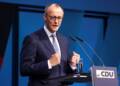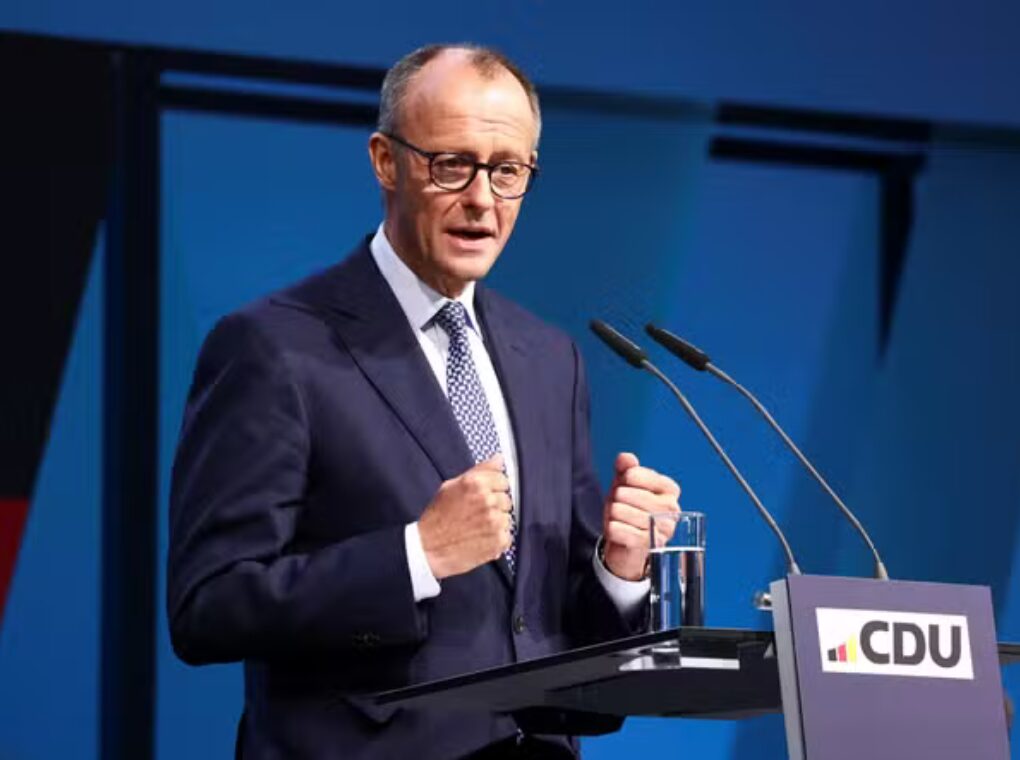
German Chancellor Friedrich Merz has cautioned that Russian President Vladimir Putin’s ambitions extend beyond Ukraine, drawing a historical comparison to Europe’s experience in the lead-up to World War II. Speaking at a party conference in Germany, Merz argued that concessions or a weakened response to Russia’s invasion of Ukraine could have long-term consequences for European security.
Addressing delegates at the Christian Social Union (CSU) conference in Bavaria, a party closely aligned with his own Christian Democratic Union (CDU), Merz referred to the 1938 Munich Agreement, under which Britain and France allowed Nazi Germany to annex the Sudetenland region of Czechoslovakia in an effort to avoid war. That agreement failed to prevent further aggression, as Adolf Hitler went on to occupy much of Europe.
“Just as the Sudetenland was not enough in 1938, Putin will not stop,” Merz said, warning that Russia’s actions in Ukraine should be viewed within a broader historical and strategic context. He added that if Ukraine were to fall, the consequences would not be limited to its borders.
Merz described the conflict as “a Russian aggressive war against Ukraine — and against Europe,” underlining his view that the invasion challenges the post–Cold War European security order. According to the German chancellor, Moscow is seeking a fundamental reconfiguration of Europe’s borders and a restoration of influence reminiscent of the former Soviet Union.
These remarks come amid continued fighting in Ukraine and intensifying diplomatic efforts among Western allies to manage the conflict and explore potential pathways toward peace. Germany, along with France and the United Kingdom, has been at the forefront of European support for Kyiv, providing military assistance, economic aid, and diplomatic backing since the start of Russia’s full-scale invasion.
Merz has worked closely with French President Emmanuel Macron and British Prime Minister Keir Starmer to coordinate European policy on Ukraine. In recent days, officials from Germany, France, and the United Kingdom have reportedly been discussing proposals aimed at ending the war. These talks are expected to feed into a broader meeting scheduled for Monday, which will bring together senior European leaders to review diplomatic and security options.
The United States remains a central actor in these discussions. U.S. envoy Steve Witkoff is expected to meet with Ukrainian President Volodymyr Zelenskyy as part of ongoing diplomatic engagements. Zelenskyy is also scheduled to travel to Berlin, where he will be received by Chancellor Merz for talks focused on military assistance, reconstruction, and potential diplomatic initiatives.
At the center of current discussions is a U.S.-backed peace framework reportedly consisting of 20 points. While the full details have not been made public, the plan is said to include territorial concessions by Ukraine as part of a broader settlement. One proposal under discussion would involve transforming the Donbas region into a free-trade zone in which American companies could operate freely. The proposal remains controversial and has not been formally endorsed by all parties involved.
Merz’s comments reflect broader concerns within Europe about the risks of setting precedents that could encourage further territorial revisionism. Several European leaders have emphasized that any peace agreement must be consistent with international law and respect Ukraine’s sovereignty, while also acknowledging the human and economic costs of a prolonged conflict.
At the same time, there is growing debate within Europe over how to balance continued military support for Ukraine with the need to pursue diplomatic solutions. Some policymakers argue that negotiations are necessary to prevent further escalation, while others caution that premature concessions could undermine long-term stability.
By invoking historical parallels, Merz sought to underline the stakes of the current conflict rather than to equate historical circumstances directly. His remarks highlight Germany’s position that the outcome of the war in Ukraine will shape Europe’s security environment for years to come.
As diplomatic efforts continue and military developments evolve, Germany and its allies face the challenge of maintaining unity while navigating complex negotiations. Merz’s speech underscores the view held by several Western leaders that the war in Ukraine is not only about one country’s survival, but also about the future of Europe’s political and security order.